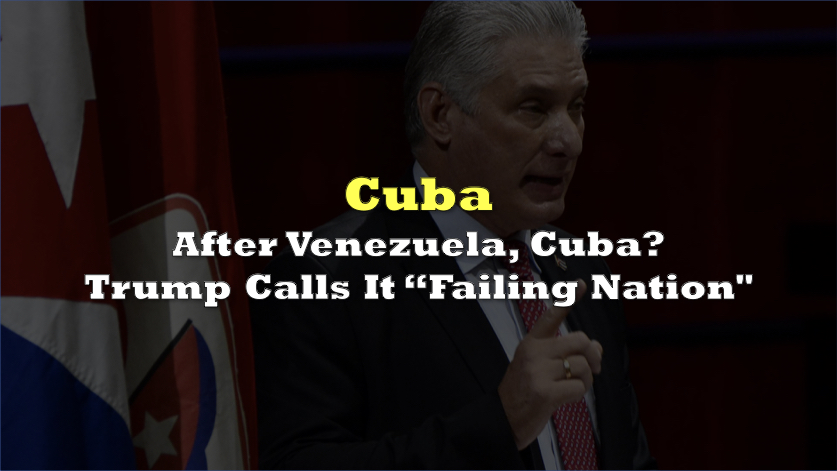

Following Venezuela attacks, the thesis is US messaging is escalating around Cuba. It was reported that President Donald Trump indicating Cuba is next, commenting, “It’s something we are going to talk about… Cuba is a failing nation.”
Secretary of State Marco Rubio reinforced the signal, saying “When the president speaks, you should take him seriously.”
President Trump indicates that Cuba is next, "It's something we are going to talk about… Cuba is a failing nation."
— OSINTtechnical (@Osinttechnical) January 3, 2026
Rubio: "When the president speaks, you should take him seriously."
In an interview, Rubio was asked whether the Cuban government is the Trump administration’s next target.
“Well, the Cuban government is a huge problem. Yeah… they’re in a lot of trouble, yes!” he answered.
In addition, Trump delivered two adjacent signals: “Cuba looks like it’s ready to fall,” followed almost immediately by, when asked about US action in Cuba, “don’t know it needs it.”
*TRUMP: CUBA LOOKS LIKE IT'S READY TO FALL
— *Walter Bloomberg (@DeItaone) January 5, 2026
*TRUMP ASKED ABOUT US ACTION IN CUBA: DON'T KNOW IT NEEDS IT
— *Walter Bloomberg (@DeItaone) January 5, 2026
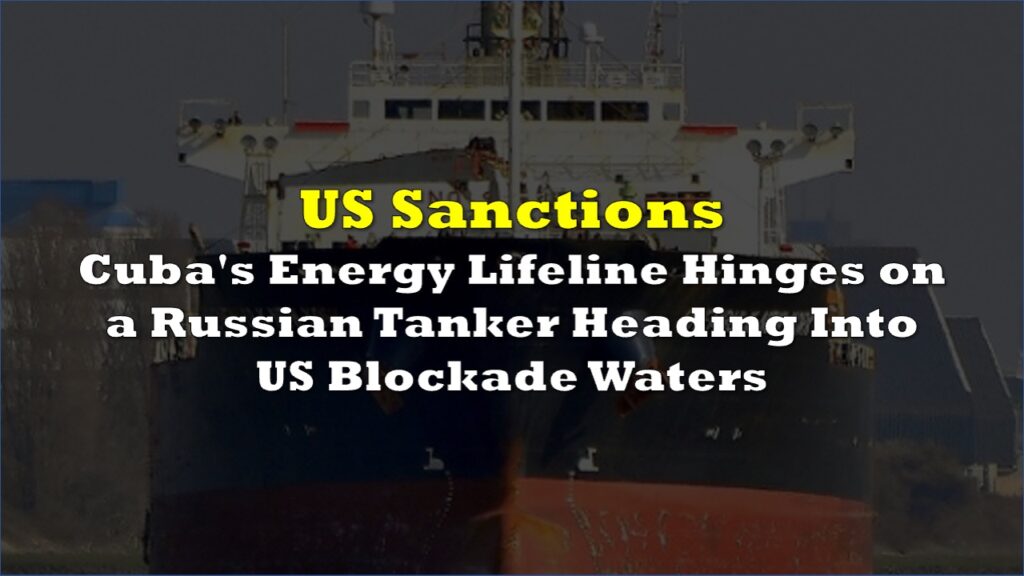
A circulating analytical claim positions Cuba as the downstream target of Venezuela-focused pressure by attacking Cuba’s energy and financial inflows. The key quantitative pillar is oil: Venezuela is described as having sent Cuba up to 100,000 barrels per day at peak, framed as an energy lifeline that, if interrupted, could tighten Cuba’s fiscal and power-generation constraints.
Additional scale claims include thousands of Cuban personnel embedded across Venezuela over more than 20 years, including roles tied to security and surveillance systems. These figures are presented as assertions in the material provided and are not independently verified within it.
I've been doing some digging, and the real target of the Venezuela attack was not China, it was Cuba.
— Yishan (@yishan) January 4, 2026
Here's it is:
First, we can probably assume that one of the key architects of this plan was Marco Rubio. Rubio is one of the smartest and most competent members of the current…
Operationally, the same argument proposes that control of coastal logistics points could be sufficient to interdict shipments without full-country occupation, including the creation of “Green Zones” around ports. It also projects a long lead time for oil-extraction buildout, described as taking a decade, and frames near-term leverage as control over distribution endpoints rather than immediate extraction gains.
In Havana, Cuban President Miguel Díaz-Canel condemned the US operation in Venezuela as “state terrorism” driven by imperial interest in Venezuelan oil, a pressure point because Venezuela supplies roughly 30% of Cuba’s already limited oil.
In Colombia, President Gustavo Petro linked US behavior to domestic scandal politics, saying that “so the list doesn’t come out” they “send warships to kill fishermen,” casting the regional escalation as oil-driven coercion rather than security policy.
PRESIDENT OF CUBA 🇨🇺: “An act of state terrorism… the object of imperialist desire is Venezuelan oil… down with imperialism!”
— The Tennessee Holler (@TheTNHoller) January 4, 2026
PRESIDENT OF COLOMBIA 🇨🇴: “To keep the Epstein list from coming out (Trump) kills fishermen… this invasion is about oil, driven by greed & violence.” pic.twitter.com/dIVn5ANm6O
Guyana is referenced as a neighboring exposure point because of oil discoveries described as “vast,” with fields currently operated by ExxonMobil.
Meanwhile, Russia is said to be more deeply embedded in Venezuela than China, with references to Russian contractors including Wagner remnants.
Information for this briefing was found via the sources mentioned. The author has no securities or affiliations related to this organization. Not a recommendation to buy or sell. Always do additional research and consult a professional before purchasing a security. The author holds no licenses.