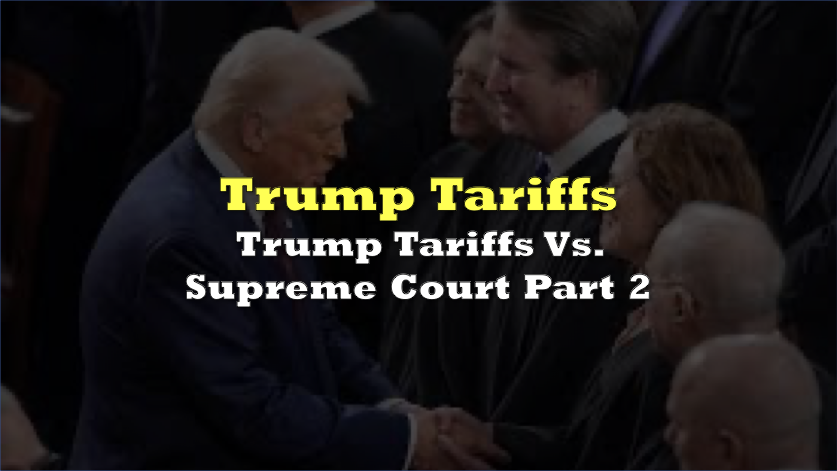

Trump’s latest tariff regime is back in court less than two months after the Supreme Court struck down most of his earlier duties, setting up a new test of how far a president can go in imposing import taxes without Congress.
A three-judge panel of the US Court of International Trade heard arguments over the legality of the administration’s new 10% global import tax, which took effect on February 24. The lawsuits were brought by 24 mostly Democratic-led states and two small businesses, all arguing that the White House is trying to sidestep the Supreme Court’s February 20 ruling by switching legal theories rather than changing the underlying policy.
The previous Trump tariffs were imposed under the International Emergency Economic Powers Act. On February 20, the Supreme Court ruled 6-3 that IEEPA did not authorize the president to impose tariffs, handing the administration a major defeat and reaffirming that tariff power sits with Congress unless Congress clearly says otherwise.
The ruling also left open the possibility of a refund fight over more than $175 billion in tariffs already collected under the invalidated regime.
Trump responded the same day by announcing a replacement tariff under Section 122 of the Trade Act of 1974, which allows duties of up to 15% for up to 150 days in cases involving “large and serious United States balance-of-payments deficits” or to prevent an imminent depreciation of the dollar. The administration says the new tariff is a lawful response to persistent trade deficits caused by the US importing more goods than it exports.
The plaintiffs say that reading stretches Section 122 beyond recognition. Their core argument is that the law was designed for short-term monetary emergencies, not for routine trade deficits that have existed for decades. They also argue that a standard goods trade gap is not the same thing as a true balance-of-payments crisis in the economic sense contemplated by the statute.
Section 122 is not as flexible as IEEPA. It caps duties at 15% and limits them to 150 days unless Congress approves an extension.
The business plaintiffs were spice importer Burlap & Barrel and toy company Basic Fun through the Liberty Justice Center. Burlap & Barrel co-founder Ethan Frisch said sudden global tariffs make it harder for small importers to operate, harder for farming partners to sell crops, and more expensive for American families.
For Trump, the case is about more than one tariff line. Tariffs have become a central pillar of his second-term foreign and economic policy, and Reuters reported he has repeatedly claimed sweeping authority to impose them without congressional input.
Information for this story was found via Reuters and the sources and companies mentioned. The author has no securities or affiliations related to the organizations discussed. Not a recommendation to buy or sell. Always do additional research and consult a professional before purchasing a security. The author holds no licenses.