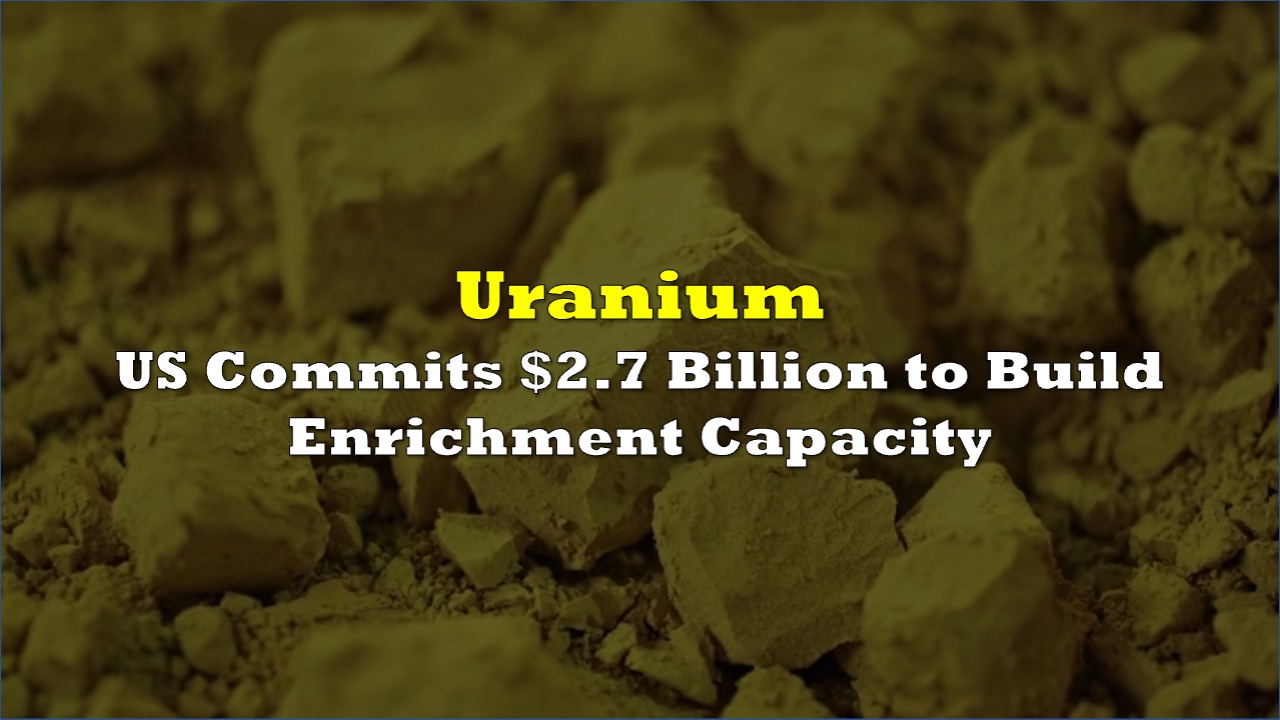

The United States faces a three-to-five-year wait before new domestic uranium enrichment facilities can begin production, even as the Trump administration commits $2.7 billion to rebuild capacity that has eroded over decades.
The Department of Energy announced Monday it will split the funding equally among three companies — American Centrifuge Operating, General Matter, and Orano Federal Services — giving each $900 million to establish production of both standard reactor fuel and the more concentrated varieties required for advanced nuclear designs. Payments hinge on companies meeting specific production milestones.
— U.S. Department of Energy (@ENERGY) January 5, 2026
The initiative reflects growing concern over US dependence on foreign uranium suppliers, particularly Russia, which currently dominates global production of high-assay low-enriched uranium needed for next-generation reactors. The funding forms part of a broader Trump administration push on critical minerals that has included executive orders on seabed mining and streamlined permitting for projects on federal lands.
Related: US Commits $100 Billion to Break China’s Grip on Critical Minerals
But industry analysts caution that rebuilding enrichment infrastructure presents substantial obstacles. Current labor and supply chain constraints could limit new nuclear capacity additions to just three gigawatts annually, according to a June analysis by investment firm T. Rowe Price.
The uranium industry workforce has declined 95% since its 1980s peak, and the US lacks domestic forging capabilities for some reactor components.
Centrus Energy, parent company of American Centrifuge Operating, projects its expanded operations will begin in 2029. The company started manufacturing centrifuges last month at its Oak Ridge, Tennessee facility to support enrichment activities at its Piketon, Ohio plant.
The awards will support production of low-enriched uranium for the nation’s 94 commercial reactors and high-assay low-enriched uranium for advanced reactor designs under development. Energy Secretary Chris Wright said the investment demonstrates the administration’s commitment to rebuilding domestic nuclear fuel supply chains.
The department separately awarded $28 million to Global Laser Enrichment to advance experimental enrichment technologies. The company had sought one of the larger $900 million contracts, but will instead develop its laser-based enrichment process through the smaller technology development award.
Information for this story was found via the sources and companies mentioned. The author has no securities or affiliations related to the organizations discussed. Not a recommendation to buy or sell. Always do additional research and consult a professional before purchasing a security. The author holds no licenses.