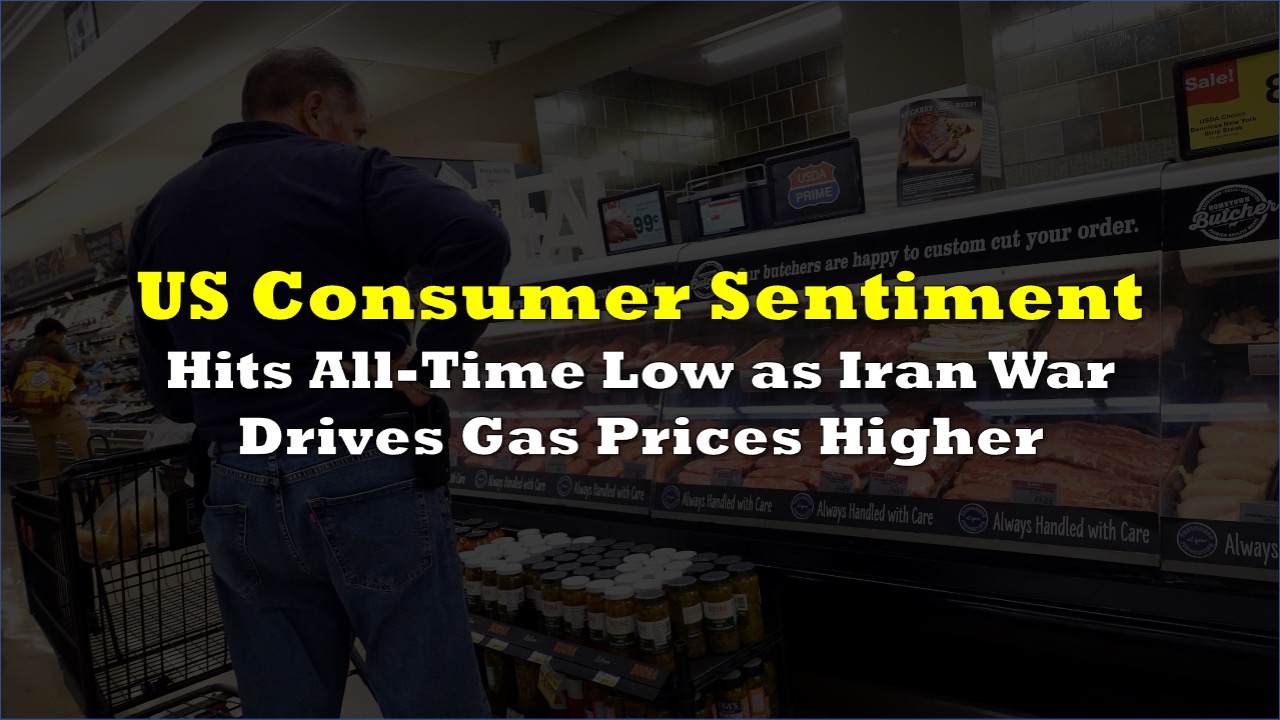

US consumer sentiment fell to its lowest recorded level in May, according to the University of Michigan’s final monthly survey released Friday, as soaring fuel costs tied to the ongoing Iran conflict pushed Americans’ economic outlook to historic depths.
The University of Michigan’s Index of Consumer Sentiment dropped to 44.2 in May — its third consecutive monthly decline and the lowest reading since the survey began in 1952. April’s prior record low stood at 49.8, and before that, June 2022 registered 50.
“The cost of living continues to be a first-order concern, with 57% of consumers spontaneously mentioning that high prices were eroding their personal finances, up from 50% last month,” said Joanne Hsu, director of the university’s Surveys of Consumers.
 Sponsored · Cambria Gold Mines
The US-Israeli war in Iran disrupted oil supply chains, sending pump prices sharply higher and worsening an affordability crisis that predates the conflict. In the survey’s preliminary May reading, about one-third of respondents cited gasoline prices unprompted and roughly 30% mentioned tariffs.
Year-ahead inflation expectations rose to 4.8% in May, up from 4.7% in April and well above the 3.4% recorded in February, before the Iran war began.
Lower-income consumers and those without college degrees recorded the steepest declines, reflecting their greater exposure to rising costs for gasoline and everyday essentials. Both independents and Republicans hit their lowest sentiment readings under the current administration, while sentiment among Democrats held roughly steady.
Hsu said sentiment is unlikely to recover meaningfully until energy supply disruptions stemming from the Middle East conflict are fully resolved and fuel prices retreat.
Historical data for the index is maintained by the Federal Reserve Bank of St. Louis.
Information for this story was found via the sources and companies mentioned. The author has no securities or affiliations related to the organizations discussed. Not a recommendation to buy or sell. Always do additional research and consult a professional before purchasing a security. The author holds no licenses.