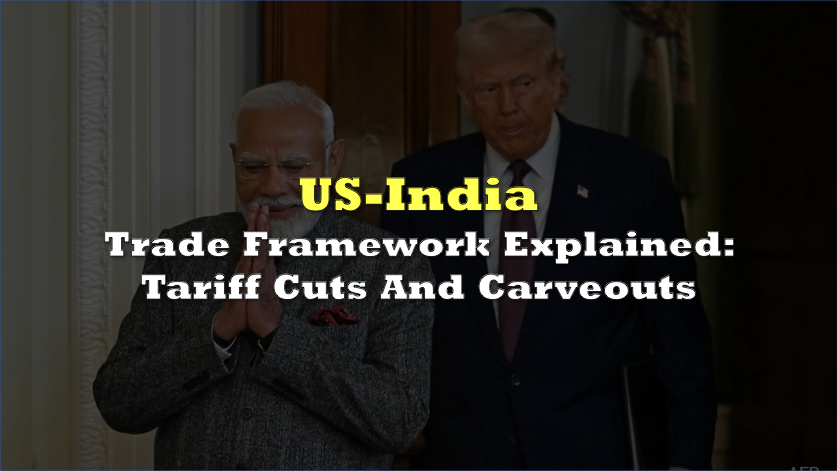

The US and India say they have a framework for an interim trade agreement, meant to move quickly on tariffs now while feeding into a broader bilateral trade process launched by President Donald Trump and Prime Minister Narendra Modi.
India offers tariff cuts on US imports. The US offers a defined “reciprocal” tariff setup for Indian exports, plus a path to remove tariffs on select categories if the interim deal is successfully concluded.
Great news for India and USA!
— Narendra Modi (@narendramodi) February 7, 2026
We have agreed on a framework for an Interim Trade Agreement between our two great nations. I thank President Trump for his personal commitment to robust ties between our countries.
This framework reflects the growing depth, trust and dynamism of… https://t.co/zs1ZLzamhd
Separately, an executive order excerpt links an additional US duty rollback to India’s stated commitment to stop importing Russian oil.
Instead, India is referenced to have committed to purchasing US energy products and expanding defense cooperation over the next 10 years. It says Trump determined India took significant steps to address the national emergency concerns, and therefore eliminated an additional ad valorem duty imposed on imports from India.
OIL MARKET: President Trump formally removes the extra 25% tariff he imposed India for importing Russian oil.
— Javier Blas (@JavierBlas) February 8, 2026
In the executive order released over night, Trump says “India has committed to stop directly or indirectly importing Russian Federation oil.” pic.twitter.com/fxqjjjIc6y
The joint statement says India will eliminate or reduce tariffs on all US industrial goods. It also lists a wide range of US food and agricultural items where India will cut tariffs, including dried distillers’ grains, red sorghum for animal feed, tree nuts, fresh and processed fruit, soybean oil, and wine and spirits, plus additional products.
On the US side, the joint statement says the US will apply a reciprocal tariff rate of 18% on originating goods of India under Executive Order 14257 dated April 2, 2025, as amended. It also spells out the sectors covered in its description, including textile and apparel, leather and footwear, plastic and rubber, organic chemicals, home décor, artisanal products, and certain machinery.
Then comes the “if the interim deal closes” part: the US says it will remove reciprocal tariffs on a broader set of goods listed in a Potential Tariff Adjustments for Aligned Partners tied to Executive Order 14346 dated September 5, 2025, as amended. The joint statement names generic pharmaceuticals, gems and diamonds, and aircraft parts.
India’s commerce minister Piyush Goyal described this outcome as tariffs going down to zero across a wide range including those same categories.
On pharmaceuticals, the joint statement references the findings of a Section 232 investigation and says India will receive “negotiated outcomes” regarding generic pharma and ingredients.
The joint statement also points to removing US tariffs on certain aircraft and aircraft parts of India that were imposed under national security authorities: aluminum, steel, and copper. India would also receive a preferential tariff rate quota for auto parts.
This comes after India and the EU earlier this year concluded a free trade agreement designed to expand market access and reduce high Indian import barriers, with the biggest single numeric signal a staged cut in Indian tariffs on EU cars from 110% to 10%.
Information for this briefing was found via the sources mentioned. The author has no securities or affiliations related to this organization. Not a recommendation to buy or sell. Always do additional research and consult a professional before purchasing a security. The author holds no licenses.