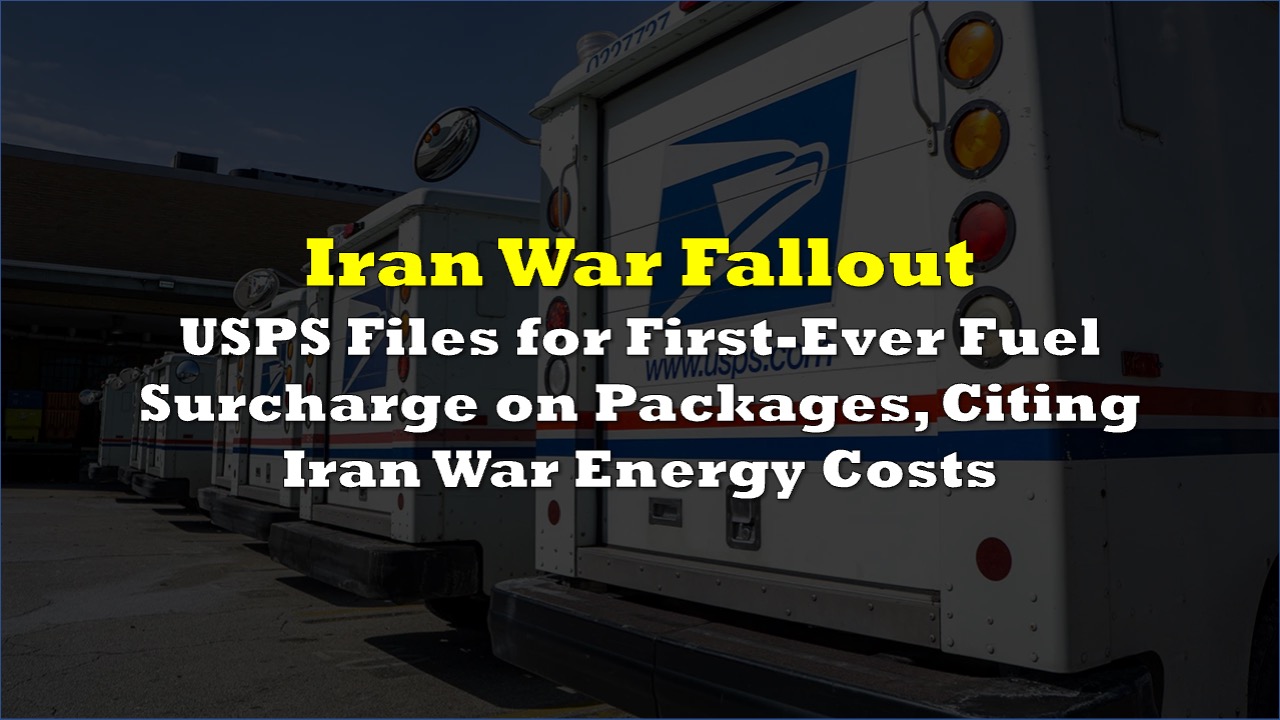

The US Postal Service filed for a temporary 8% surcharge on package deliveries this week, marking the first time in the agency’s history it has sought a fuel-specific fee — a direct consequence of surging oil prices tied to the ongoing conflict in Iran.
USPS submitted the filing to the Postal Regulatory Commission on Wednesday. Pending the commission’s approval, the surcharge would take effect April 26 and remain in place through January 17, 2027, at which point the agency said it would reassess its cost structure.
BREAKING: USPS will impose its first-ever surcharge on packages — an 8% fee to cover the rising cost of fuel.
— More Perfect Union (@MorePerfectUS) March 25, 2026
The 8% increase applies to Priority Mail Express, Priority Mail, USPS Ground Advantage, and Parcel Select services. First-class stamps and standard letter mail are not affected.
“This temporary price adjustment will provide needed flexibility for the Postal Service by helping to ensure that the actual costs of doing business are covered, as required by Congress,” USPS said in its announcement. The agency added that it has “steadfastly avoided surcharges,” and noted the fee amounts to less than one-third of what FedEx and UPS charge for fuel alone.
The filing directly links the surcharge to the Iran conflict. Oil prices have climbed more than 40% since the US and Israel launched strikes against Iran on February 28. Diesel, which powers USPS’s ground delivery fleet, now averages $5.37 per gallon — up from $3.75 a month ago. The national average for regular gasoline is approaching $4 per gallon, according to AAA.
FedEx and UPS, which together deliver nearly 20 billion packages annually compared to USPS’s 6.8 billion, have carried fuel surcharges for years. Those fees have risen sharply in recent weeks as energy markets absorbed the shock of the Middle East escalation.
The surcharge arrives as the postal agency confronts a deepening financial crisis. USPS posted a $9 billion loss in 2025 and has lost more than $100 billion since 2007, driven by a structural decline in mail volume. Postmaster General David Steiner told a House Oversight subcommittee earlier this month that the agency risks exhausting its cash reserves within 12 months.
Steiner has called on Congress to authorize higher stamp prices — potentially raising the cost of a first-class stamp from 78 cents to as much as 95 cents — along with expanded borrowing authority and reforms to pension and retirement fund obligations.
USPS described the fuel surcharge as a bridge toward a permanent cost-recovery mechanism aligned with industry practice, rather than a one-time fix.
Information for this story was found via the sources and companies mentioned. The author has no securities or affiliations related to the organizations discussed. Not a recommendation to buy or sell. Always do additional research and consult a professional before purchasing a security. The author holds no licenses.