
US lawmakers introduced bipartisan legislation Thursday to create a $2.5 billion Strategic Resilience Reserve that would buy and stockpile critical minerals to stabilize prices and push domestic mining and refining activity.
The 68-page bill frames the move as a response to China “weaponiz[ing] its influence over prices and volumes in the contest for access to critical minerals,” with the reserve designed to “insulate US from foreign threats” while supporting supply chains tied to electric vehicles and high-tech defense needs.
The proposal establishes a seven-person board modeled on the Federal Reserve’s governance structure, with members appointed by the president and confirmed by the Senate. The board would oversee the fund, decide which minerals to purchase based on US agency “critical” designations, and manage stockpiling across warehouses nationwide.
Senate aides highlighted storage requirements and risks, including lithium derivatives that emit hydrogen when exposed to water, implying the board would need specialized expertise to avoid losses, safety incidents, or degraded material quality.
Purchases would prioritize recycled material, while allowing minerals sourced from mines. Allied countries could participate if they contribute at least $100 million.
Minerals could be sold for private-industry or defense purposes. Profits would be recycled into additional purchases, with the bill stating the stockpile would remain active in perpetuity through reinvestment.
The bill gives the board flexibility on procurement strategy. Senate aides said the reserve could agree to pay twice the existing market price for rare earths if that supported US mines.
“It’s certainly possible this reserve could create a Western price for certain critical minerals,” a Senate aide said.
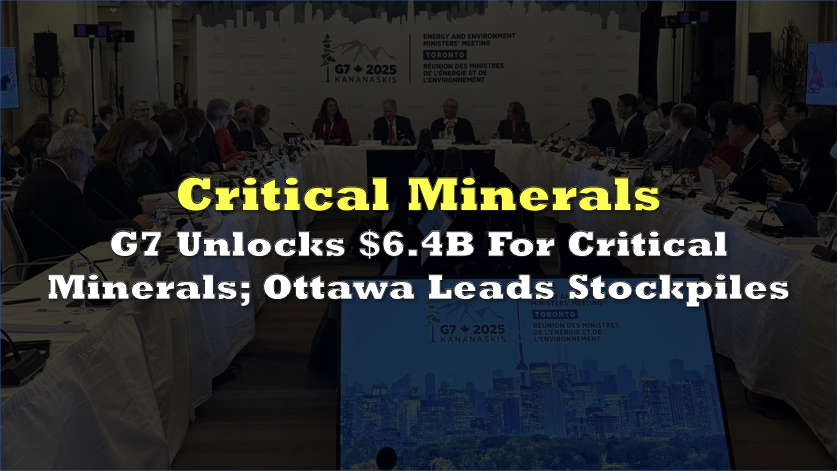
The proposal lands alongside other pricing discussions. G7 finance ministers discussed floors for minerals prices this week, and President Donald Trump said Wednesday that US over-reliance on other nations for critical minerals is a national security threat.
China has rejected claims of market manipulation. In November, it said it is committed to “upholding the security and stability of global production and supply chains.”
Information for this story was found via Reuters and the sources and companies mentioned. The author has no securities or affiliations related to the organizations discussed. Not a recommendation to buy or sell. Always do additional research and consult a professional before purchasing a security. The author holds no licenses.