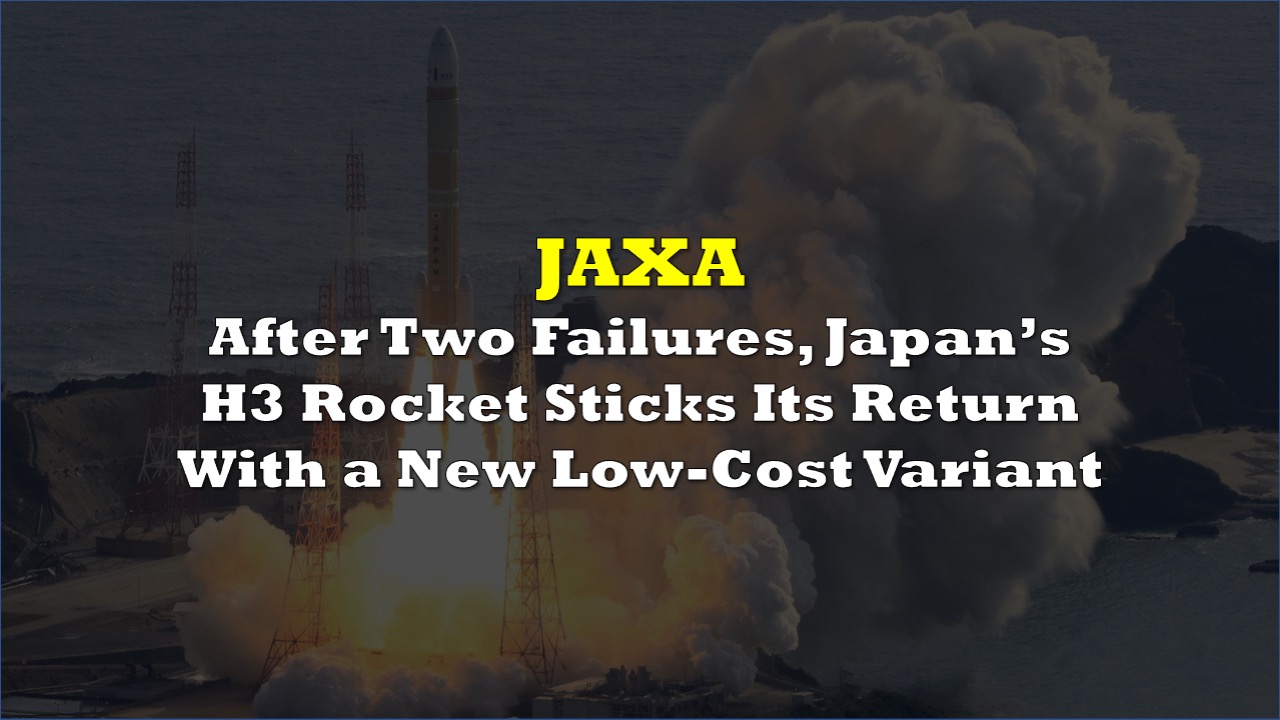

Japan’s H3 rocket lifted off from the Tanegashima Space Center at 9:53 a.m. JST on Friday in the debut flight of its new “30 configuration” — a booster-free, lower-cost variant that represents both a technical milestone and a critical rebound for a programme that has endured two mission failures.
JAXA confirmed the mission a success during its livestream, with the second stage reaching its targeted orbit. The rocket carried a dummy primary payload (VEP-5) alongside six small secondary satellites from academic and commercial operators. Friday marked Flight 6 in the H3 programme’s irregular sequence, and the first H3 launch in roughly six months, following the December 2025 failure of Flight 8.
That failure was traced to delamination in the satellite adapter — a composite structure whose adhesive had been weakened when the manufacturing drying process ran hotter than specified. During ascent, the adapter failed under the satellite’s weight; the payload shifted, severing the second stage’s fuel line and shutting down the engine prematurely.
 Sponsored · Selkirk Copper Mines
JAXA published its root cause analysis in April 2026 following a ministry review, revised the manufacturing process, and conducted a comprehensive vehicle inspection before clearing Friday’s attempt.
The H3-30 variant relies solely on three LE-9 liquid-fuel engines in the first stage, carrying no solid rocket boosters — a configuration that JAXA had never previously flown. Project Manager Makoto Arita described it as “vital for securing the H3’s international competitiveness” and a “technical foundation for future reusable rocket development.” He said the launch carried “two major meanings: taking on new technology and rebounding from failure.”
Japan cannot afford another failure. JAXA targets the next H3 launch — the HTV-X2 cargo resupply mission to the International Space Station — for July 2026. After that comes Japan’s most consequential assignment: the Martian Moons eXploration (MMX) mission. Japan has one shot at the Mars alignment window in fiscal year 2026 — missing it pushes the mission to 2028.
Related: Blue Origin’s New Glenn Rocket Explodes on Launch Pad During Static Fire Test
Japan’s space transport sector faces mounting pressure from SpaceX‘s reusable Falcon 9 and a widening field of commercial competitors. Friday’s clean success puts Japan’s flagship rocket back on a commercial trajectory — and back in the conversation.
Information for this story was found via the sources and companies mentioned. The author has no securities or affiliations related to the organizations discussed. Not a recommendation to buy or sell. Always do additional research and consult a professional before purchasing a security. The author holds no licenses.