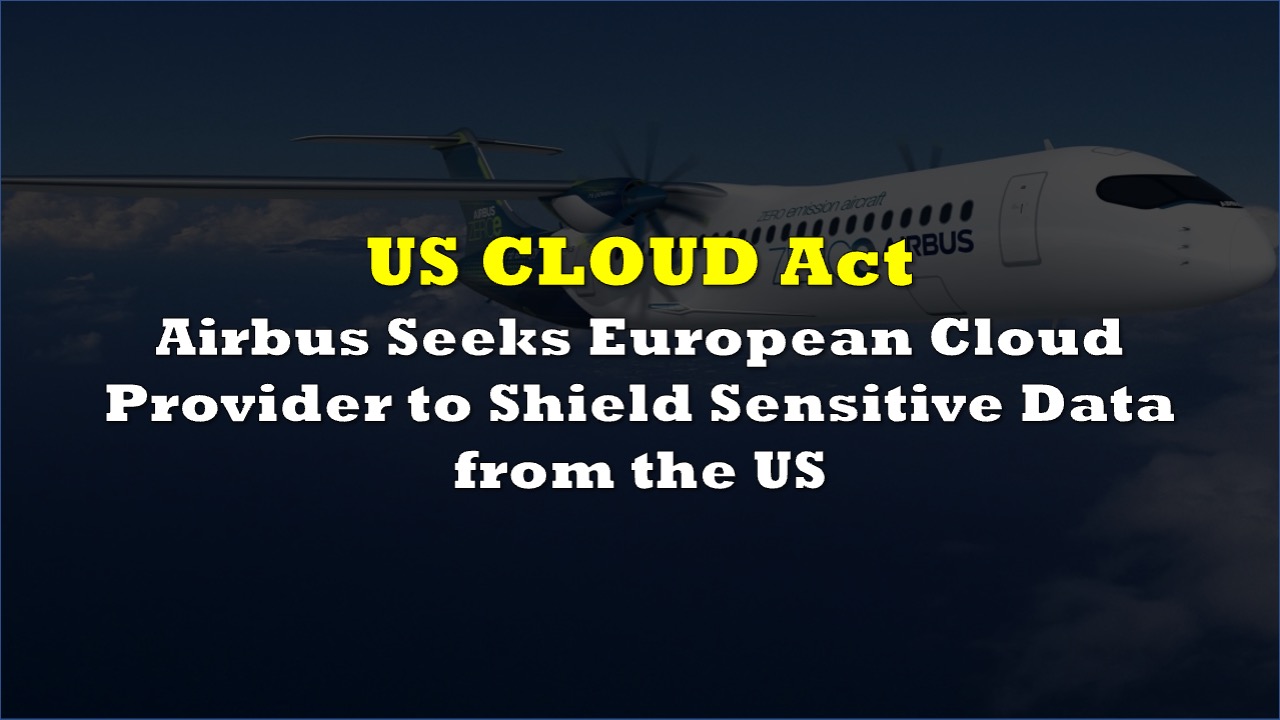

Europe’s largest aerospace manufacturer plans to test whether the continent can provide cloud computing infrastructure independent of American tech giants, launching a tender in January that could reshape the region’s approach to digital sovereignty.
Airbus will seek bids exceeding €50 million ($52 million) to migrate aircraft design files, manufacturing systems, and business operations to European cloud providers. The decision, expected before summer 2026, carries weight beyond aerospace as European companies increasingly question their reliance on US technology.
🇺🇸🇪🇺✈️ Airbus wants a sovereign EU cloud to keep its sensitive data out of reach of US regulation, especially the Cloud Act.
— Emmanuel Pernot-Leplay (@PernotLeplay) December 25, 2025
I'm certain sovereignty won’t happen unless the market needs it. The recent Air France–Starlink episode made that clear.
What has changed is the… https://t.co/kvo99L7i2I pic.twitter.com/hFTQe2NLVo
The move stems from legal vulnerabilities exposed when Microsoft acknowledged to French senators in July that it cannot shield European customer data from US authorities. Catherine Jestin, Airbus’s executive vice president of digital, told The Register the company needs infrastructure where “information remains under European control.”
The 2018 US CLOUD Act grants American authorities the power to compel US companies to hand over data stored anywhere globally. Anton Carniaux, Microsoft France’s director of public and legal affairs, testified in a French Senate hearing that his company must comply with valid US court orders regardless of where data resides physically.
The company uses Google Workspace for some functions but wants to move enterprise resource planning, manufacturing systems, and aircraft designs away from US platforms. Meanwhile, vendors like SAP now develop features exclusively for cloud platforms, forcing customers to choose between technological advancement and data sovereignty.
The tender reveals Europe’s infrastructure gap. Airbus estimates only an 80% chance of finding a European provider capable of handling the scale and complexity, underscoring why previous sovereignty initiatives failed.
Geopolitical tensions accelerated these concerns after Donald Trump returned to the White House in January. The International Criminal Court announced in October it would replace Microsoft products with European alternatives, citing sovereignty concerns.
Jestin said she awaits regulatory clarity on whether European cloud infrastructure would shield Airbus from extraterritorial laws and whether political tensions could disrupt access, questions that matter for a company handling both commercial aviation and defense contracts.
The 10-year contract would test whether European providers can scale quickly enough to compete with Amazon Web Services, Microsoft Azure, and Google Cloud. Success could encourage other European companies to follow, while failure would reinforce the continent’s dependence on US technology infrastructure.
Information for this story was found via the sources and companies mentioned. The author has no securities or affiliations related to the organizations discussed. Not a recommendation to buy or sell. Always do additional research and consult a professional before purchasing a security. The author holds no licenses.