

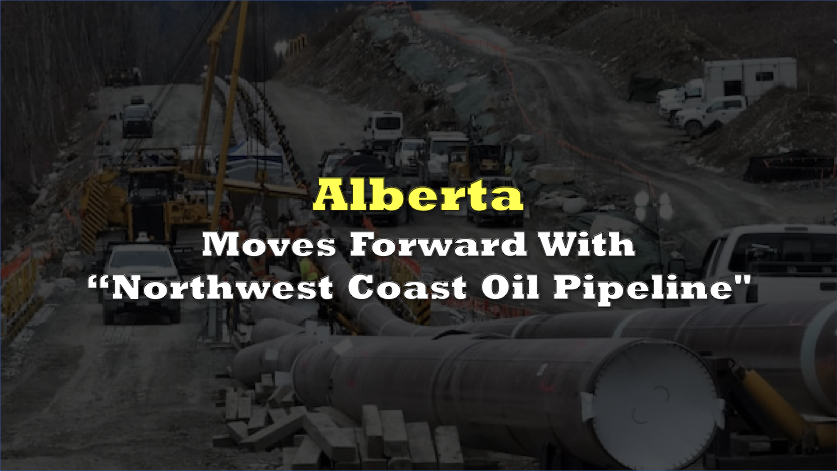

Alberta is moving forward with a proposed “Northwest Coast Oil Pipeline” by positioning the province as the initial proponent and targeting a submission to the federal Major Projects Office by July 1, 2026 for potential designation as a project of national interest.
The government’s stated objective is a world-class, Indigenous co-owned oil pipeline to the northwest coast of British Columbia that would increase tidewater access to Asian markets and reduce reliance on US markets for Alberta oil products. Capacity of the pipeline is currently estimated as being in excess of one million barrels of oil per day, which will be delivered to a strategic deep water port.
Alberta frames the commercial case around durability of demand, stating oil and gas demand will remain strong for decades, especially in Asia, and arguing that Alberta’s reserves support long-run supply of “reliable, responsibly produced energy.”
The province says its Major Projects Office submission will include engagement and collaboration with Indigenous communities, a “general path and size” for the pipeline, a costs-and-benefits case for Canada, and an assessment of market demand, economic viability, and the need for a new pipeline.
The filing is also expected to present a combined social, environmental, and economic argument for recommending the project, with Indigenous perspectives shaping environmental protections, marine safety, a proposed route, construction methods, and economic opportunities.
Today, we have launched the Northwest Coast Oil Pipeline website.
— Brian Jean (@BrianJeanAB) January 6, 2026
This pipeline has the potential to transform Canada into a global energy superpower. However, the road to shovels in the ground is a long one and this website will act as a central hub for project information and… pic.twitter.com/5k0ZFcLOiV
Alberta also says the project will comply with existing Canadian measures such as mandatory pilotage, tug escorts, and restricted navigation zones, while researching and adopting best practices globally to further enhance marine safety.
On pipeline integrity, Alberta cites a system-level performance benchmark, stating that on average each year 99.99% of oil transported via federally regulated pipelines moves safely, and uses that statistic to support pipelines as the safest and most reliable transport mode across Canada.
Alberta says relationship-building conversations with Indigenous communities in Alberta and British Columbia began during engagement and pre-work and will continue as part of ongoing commitments to meaningful engagement.
The province lists November 2025 as the start of submission development, with a technical advisory group reviewing criteria for a national-interest project and assembling technical experts to begin preliminary assessment work, leading into the planned submission window culminating by July 2026.
Information for this briefing was found via the sources mentioned. The author has no securities or affiliations related to this organization. Not a recommendation to buy or sell. Always do additional research and consult a professional before purchasing a security. The author holds no licenses.







One Response
And then there is PP crowing about how we need said pipeline…that is clearly already in the works. That guy is always 3 steps behind.