


The Bank of Canada has renewed its mandate to keep inflation within the 2% target range, but did formally announce that it is prepared to let price pressures overshoot in order to reach maximum, sustainable employment.
In a revived mandate announced on Monday alongside the federal government, the Bank of Canada reinstated that it will maintain its 2% target for inflation, but did add a new provision that it will use the 1% to 3% control range to “continue” supporting the labour market until employment reaches its maximum level. The latest renewal adds new emphasis on the target range, particularly the call for increased consideration of the country’s recovering labour market.
Both the central bank and the Liberal government agreed that “monetary policy should continue to support maximum sustainable employment, recognizing that maximum sustainable employment is not directly measurable and is determined largely by non-monetary factors that can change through time,” according to the statement. In addition, “the government and the bank agree that because well-anchored inflation expectations are critical to achieving both price stability and maximum sustainable employment, the primary objective of monetary policy is to maintain low, stable inflation over time.”
For more than seven months, inflation levels have substantially exceeded the Bank of Canada’s target range, with the latest CPI reading sitting at 4.7%— the highest in 20 years. The Bank of Canada’s statement did somewhat elaborate on how the updated mandate would work, with the central bank using the the full scope of the target range during times of poor labour market outcomes, but with full transparency to the public.
As per the statement, the central bank’s policy makers will use the flexibility “only to an extent that is consistent with keeping medium-term inflation expectations well anchored to 2 per cent.” Moreover, the mandate also includes a provision that will see the federal government taking on partial responsibility in reaching maximum sustainable employment, which could mean that borrowing costs will remain low for a longer period of time.
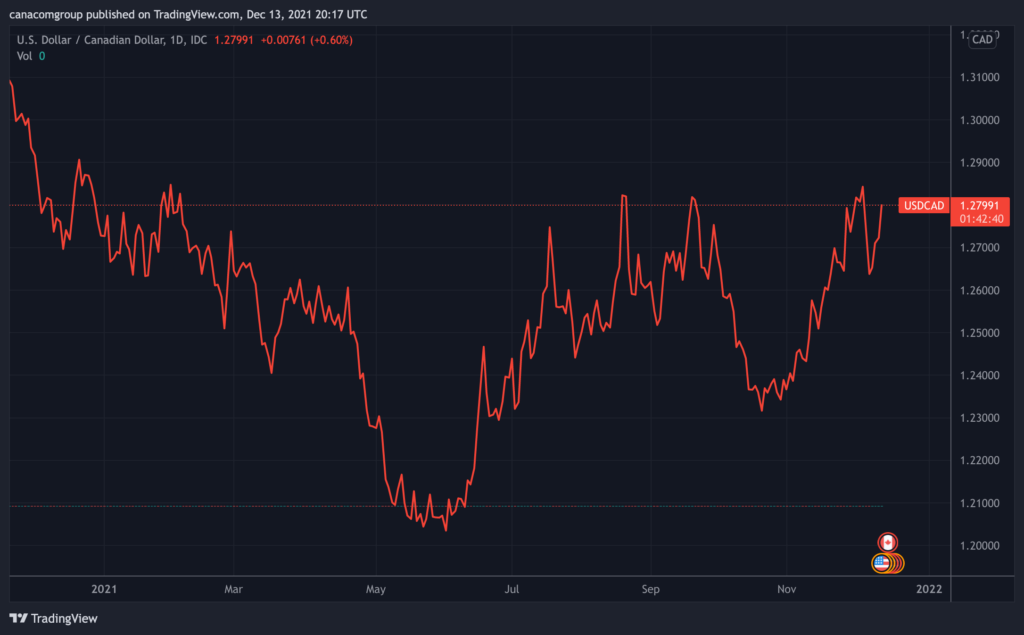
Following the announcement, the Canadian dollar slumped 0.5% to around $1.27 per US dollar.
Information for this briefing was found via the BoC. The author has no securities or affiliations related to this organization. Not a recommendation to buy or sell. Always do additional research and consult a professional before purchasing a security. The author holds no licenses.








One Response
Thanks for this article, i have experience that this is really well explained other then most sites.