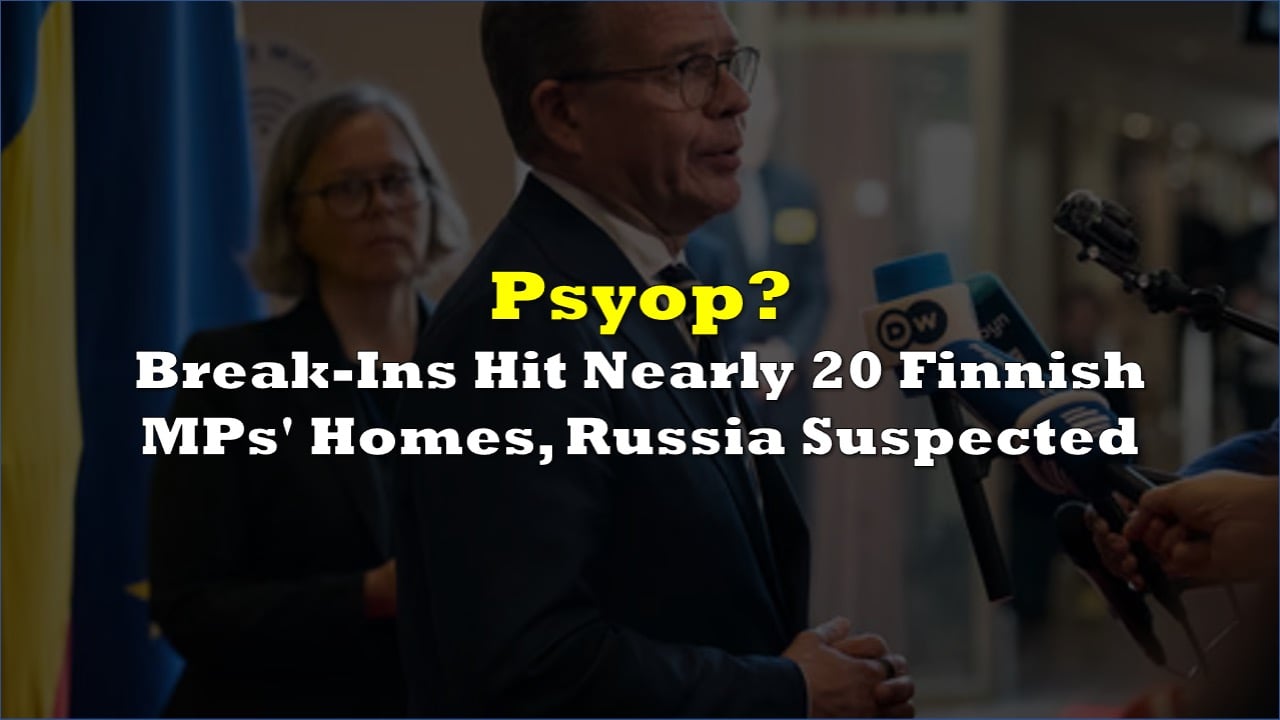

About 20 Finnish lawmakers have reported suspected break-ins at their homes over the past year, none involving forced entry or anything stolen. The pattern surfaced after First Deputy Speaker Paula Risikko noticed signs someone had been inside her own home on the evening of September 23, a discovery she flagged to parliament’s security director the next day, after which other MPs began coming forward with similar accounts.
What people actually found was subtle. MPs described small, unnerving details rather than anything dramatic — a door standing open despite being sure it was shut, a light switched on that nobody remembered using, and in one case a toilet left unflushed, which the lawmaker initially chalked up to his own forgetfulness. Speaker Jussi Halla-aho said it’s possible the signs were left on purpose, so the person responsible would be noticed.
Related: Russian Intelligence Takes Over Wagner Group for European Sabotage Operations
 Sponsored · Silver47 Exploration Inc.
Halla-aho called the number of suspected cases “significant,” declining to give an exact figure, and said investigators have found no pattern connecting the affected MPs by party or gender. President Alexander Stubb said “an attack against a member of parliament is an attack against democracy,” and that it shouldn’t be tolerated in any form.
Prime Minister Petteri Orpo said foreign interference is “quite possible in this day and age,” though he left the investigation itself to police and security services. Helsinki Police confirmed on October 1 that a preliminary inquiry was underway, with Finland’s National Bureau of Investigation assisting, and said the case remains at an early stage with no confirmed motive or suspect.
Finland’s security and intelligence service, SUPO, didn’t dismiss the possibility. The agency pointed out that this kind of covert home entry is a known surveillance method for intelligence agencies answering to authoritarian governments — just not one it has previously documented in Finland or anywhere else in Europe.
Ben Zyskowicz, the longest-serving member in the history of Finland’s parliament at more than 47 years, offered his own theory. He believes the intrusions are “a way for the Russian intelligence service to show that people are being monitored,” rather than an attempt to gather any specific information.
In a separate interview, Zyskowicz offered a more specific motive — he thinks whoever is responsible wants Finland to scale back the aid it’s been sending Ukraine. Finland has been one of Kyiv’s steadier European backers since Russia’s full-scale invasion in 2022.
Related: Is Russia Preparing to Attack NATO?
Police haven’t identified a suspect, and say it’s too early to know whether the cases are even connected. But the intrusions follow a wider pattern of suspected Russian sabotage against NATO’s eastern and Baltic members this year.