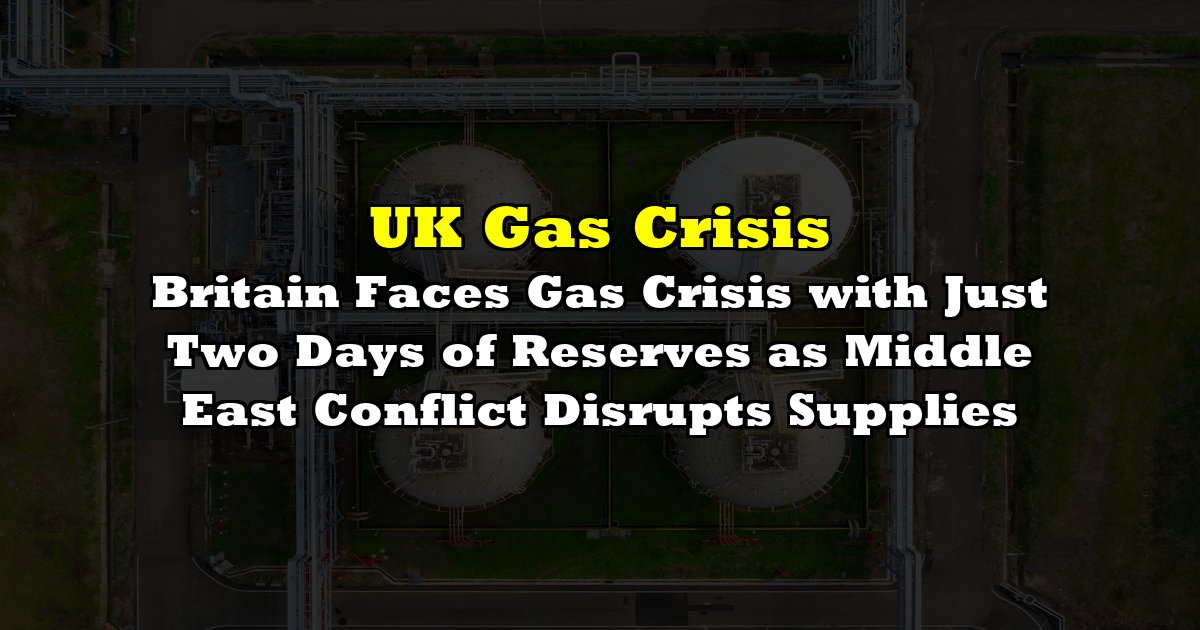

Britain is teetering on the edge of a gas supply crisis with only two days’ worth of natural gas in storage, as reserves have plummeted to 6,700 GWh from 18,000 GWh last year, according to National Gas data. This critically low level, enough for just 1.5 days of demand, comes as Middle East conflict disrupts global energy flows, exacerbating fears of shortages.
The situation has been worsened by Iran’s closure of the Strait of Hormuz, a vital waterway for 20% of the world’s oil and natural gas, halting shipments and triggering chaos in energy markets. Qatar, a key supplier, suspended production at Ras Laffan—the world’s largest liquefied natural gas (LNG) facility—after Iranian bombardment, further tightening global LNG availability. With Britain heavily reliant on imports, traders are capitalizing on the scarcity, charging the UK the highest wholesale gas prices in Europe.
Across the region, oil production is also taking a severe hit. Kuwait, OPEC’s fifth-largest producer with 2.6 million barrels per day as of January, has cut output due to tanker transit risks in the Persian Gulf. Iraq has already slashed production by 1.5 million barrels daily as storage capacity runs dry, and JPMorgan warns that Gulf Arab countries could see cuts exceeding 4 million barrels per day by next week if the Strait remains closed.
Energy prices are spiraling as a result. Brent crude futures jumped 8.52% to settle at $92.69 per barrel, while West Texas Intermediate soared 12.21% to $90.90, marking the largest weekly gains in U.S. crude futures history. Industry experts caution that oil could breach $100 per barrel soon, with some projections as high as $150 if the conflict persists.
Britain’s vulnerability stands in stark contrast to Europe, where weeks of gas reserves provide a buffer against supply shocks. The UK holds a similar quantity of LNG in storage, but it offers little relief against the immediate demand crunch.
As the crisis unfolds, oil barrels are piling up in the Middle East with no route to market, forcing further production cuts. JPMorgan estimates that Gulf storage capacity could be exhausted within three weeks, potentially driving Brent prices past $100 per barrel by mid-March 2026.
Information for this story was found via the sources and companies mentioned. The author has no securities or affiliations related to the organizations discussed. Not a recommendation to buy or sell. Always do additional research and consult a professional before purchasing a security. The author holds no licenses.