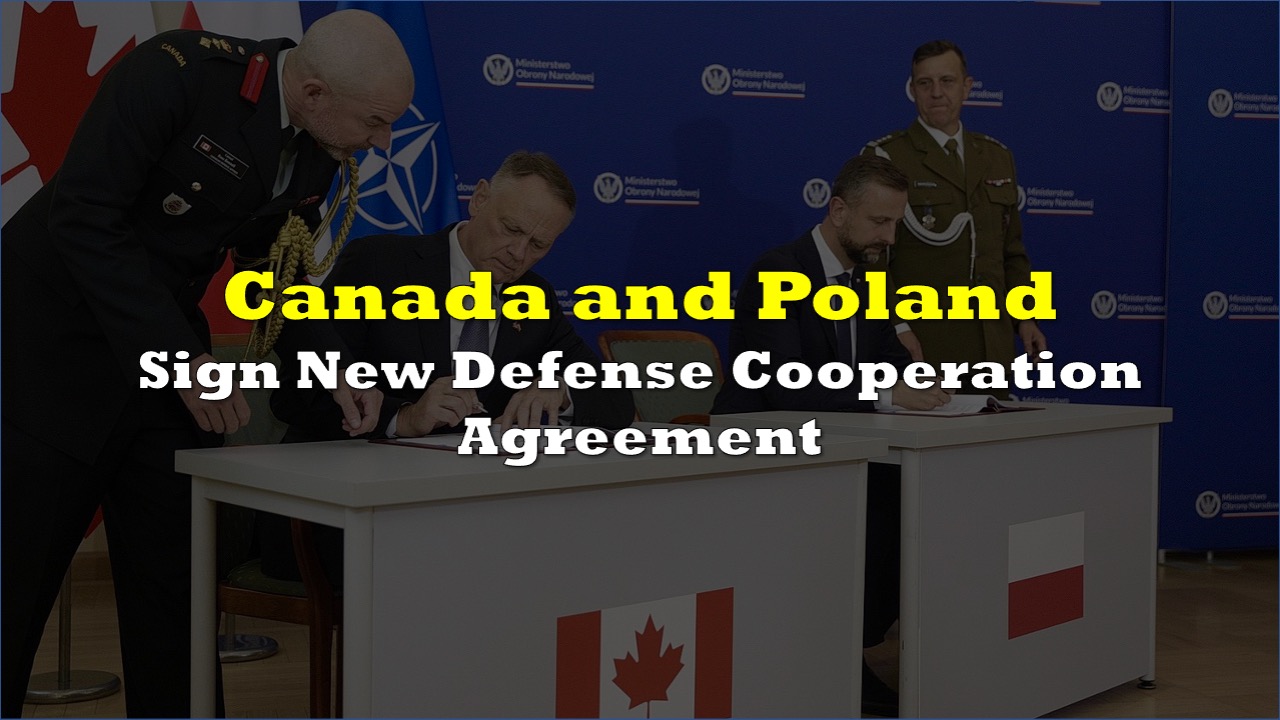

Canada and Poland signed a new Defense Cooperation Agreement in Kielce, Poland, on Monday, deepening a military and industrial relationship both countries have been building for months. Defense Minister David McGuinty signed the memorandum alongside Polish counterpart Władysław Kosiniak-Kamysz, calling Poland “an indispensable NATO Ally.”
Kosiniak-Kamysz traveled to Ottawa in May and signed a Letter of Intent with McGuinty covering Canadian purchases of Polish drones, joint military drills in the Arctic, and early discussions about building ammunition production capacity in Canada. That May visit also highlighted Canada’s status in the EU’s SAFE defense financing mechanism, worth up to €150 billion in loans and procurement support. Canada signed on in late 2025, making it the sole participant from outside Europe.
Read: Canada Lands First SAFE Defense Contract—A C$10 Million Radio Deal With Poland’s Cyber Command
 Sponsored · Cambria Gold Mines
The Kielce signing coincides with MSPO 2026, Europe’s major defense-industry exhibition, where Canada is this year’s lead nation, leading a trade mission of more than 200 organizations. McGuinty said Canada’s defense sector “contributed over $11 billion” to GDP and supports 82,000 jobs.
Kosiniak-Kamysz called the relationship the strongest it’s ever been. “Polish-Canadian relations have never been so good,” he said, crediting Poland’s early advocacy for Canada’s inclusion in the SAFE program even as the UK failed to meet the requirements to join.