
Prime Minister Mark Carney says Canadian artists “won’t pay tax on up to $45,000” of income from their creative work, but Budget 2026 only proposes a tax credit, and Ottawa has yet to set its cost, start date, or eligibility rules.
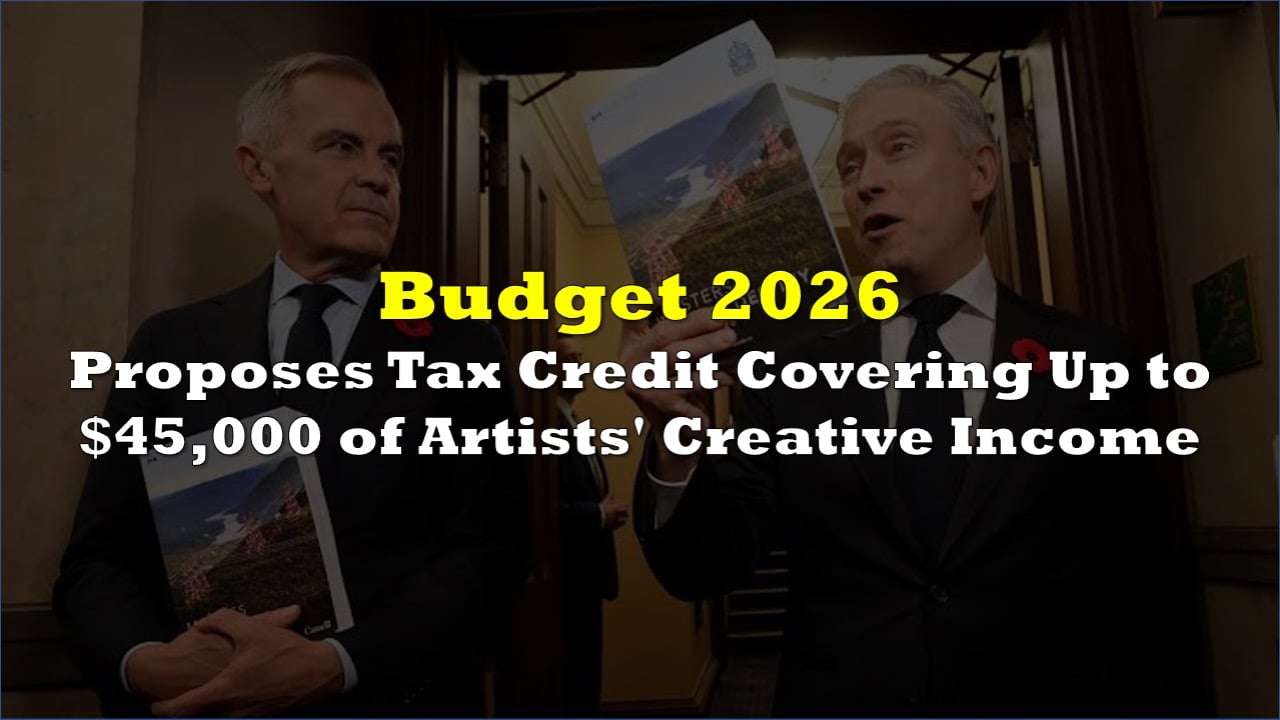
Carney posted the pledge on X on Thursday, after Finance Minister François-Philippe Champagne tabled the budget. The budget’s own wording is looser than his post. In its cover letter, Ottawa says artists’ earnings up to $45,000 would go untaxed. The detailed chapter on stories and places is narrower.
Ottawa expects a tax credit instead. Because the credit would be non-refundable, it lowers the tax a person owes but cannot produce a refund. Paired with the basic personal amount, it would give “tax recognition on up to $45,000” of yearly net business income from original creative works.
 Sponsored · Silver47 Exploration Inc.
Little else is settled at the time of the announcement. Ottawa plans to consult Canadians and the cultural sector on the design and to announce details in the spring 2027 economic update.
The budget’s other large tax proposal is further along. The $15 million capital gains exemption for qualifying founders, employees and investors comes with eligibility rules, covers shares issued from November 5 and carries a $565 million cost estimate through 2030-31. The budget’s impacts report labels that exemption strongly regressive and says nearly 84% of its beneficiaries would have adjusted gross income above $200,000.
Culture spending elsewhere in the budget does carry dollar figures. Ottawa will spend $783.1 million over five years on the National Arts Centre, Library and Archives Canada, the National Battlefields Commission and national museums. It will give people under 25 free entry to national museums for $46.3 million over five years, then $11.5 million a year.
Ottawa will also pay $32.2 million over four years for a free digital library of Canadian-authored books, which opens in 2027-28 with at least 200 titles. CBC/Radio-Canada gets $300 million over two years.