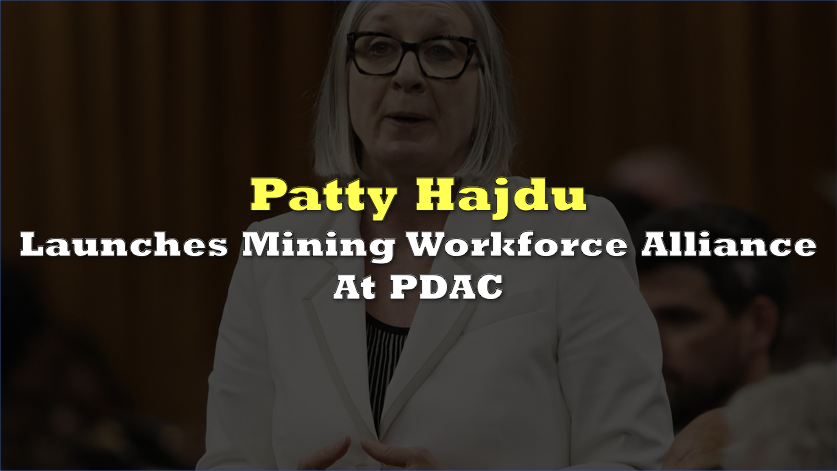

Canada is tying its critical minerals ambitions more directly to labour execution, with Minister Patty Hajdu using the PDAC convention in Toronto to convene industry stakeholders around a national plan aimed at easing workforce shortages across mining and mineral supply chains.
The immediate policy vehicle is the new Mining and Minerals Workforce Alliance, which Hajdu said is designed to protect workers and industry from current pressure points while supporting longer-term transition needs.
The pressures identified are sustained and cross-cutting, including tariffs, skills shortages, supply chain disruptions and broader economic shifts.
In 2024, Canada’s mining sector contributed $112 billion directly to GDP and directly employed about 438,000 workers while mineral production totaled $64 billion in 2024, underscoring the gap between production value and the sector’s broader GDP footprint.
Canada also produces about 60 minerals and metals across 200 mines plus thousands of sand and gravel pits and stone quarries.
Where the labour gap sits
The alliance is meant to address aging workforce demographics while aligning skills development with emerging technologies, automation and sustainable mining practices.
Participants are expected to include employers, unions, industry groups, post-secondary institutions and Indigenous partners involved in mineral exploration, extraction and processing.
Ryan Montpellier of the Mining Industry Human Resources Council said the opportunity is “unprecedented” as new mines move from concept to construction, while stressing that current labour market challenges must be addressed to build a safe and highly skilled workforce.
“Canada’s workforce is strongest when employers and training partners work together. As external pressures continue to affect key sectors, these investments will help empower Canadian workers with the skills they need to adapt,” Hadju said.
That larger framework dates back to September 5, 2025, when the federal government announced workforce support measures aimed at helping workers affected by tariffs. Budget 2025 echoed that direction, with Workforce Alliances positioned as a skills-gap response for labour-constrained industries.
Information for this story was found via the sources and companies mentioned. The author has no securities or affiliations related to the organizations discussed. Not a recommendation to buy or sell. Always do additional research and consult a professional before purchasing a security. The author holds no licenses.