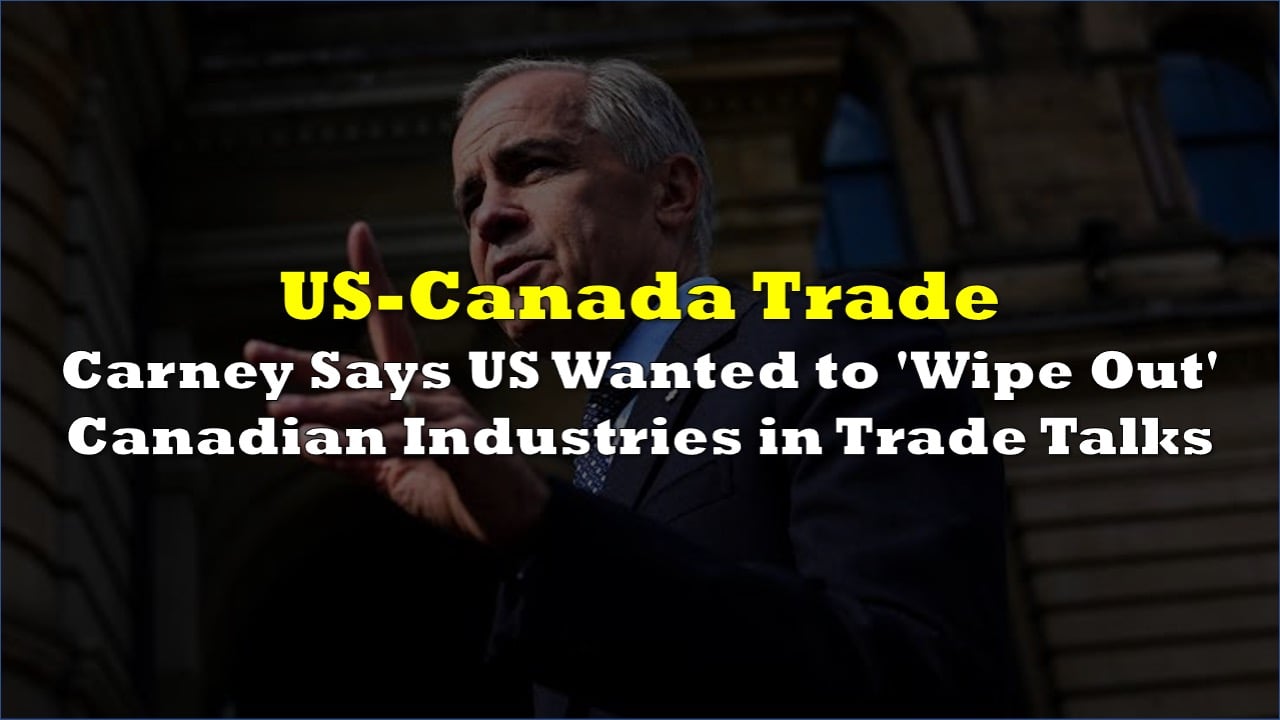

Prime Minister Mark Carney explained Tuesday why he suspended trade talks with the US last month. Speaking to reporters gathered outside his office, he said Washington’s position amounted to turning Canadian industries into US subsidiaries, or seeing them “gradually wound down in Canada and wiped out.” “Of course, we’re not going to accept those terms,” he said.
There were “mutually beneficial” elements of a deal on the table before Carney suspended negotiations ahead of a US-imposed August 22 deadline, but Washington’s demands on the auto sector and Canadian sovereignty went too far. Canada remains open to resuming talks once the US is ready for serious discussion, he added, telling reporters the Americans first need to “stop doing memes, stop throwing shade, stop trying to be tough.”
That’s a pointed reference to weeks of public trolling from the Trump administration, including a presidential order rebranding Lake Ontario as “Lake America” and a running stream of AI-generated memes ridiculing Canada across Trump’s cabinet.
 Sponsored · PTX Metals Inc.
Read: Carney Meets With Canadian Business Leaders on US Trade Relations
Carney raised the suspended talks in a separate meeting with labour leaders later Tuesday, a day after holding a similar session with 23 business leaders. The labour meeting included representatives from Unifor, the United Steelworkers, Canada’s Building Trades Unions, the United Food and Commercial Workers, and Teamsters Canada, according to a Prime Minister’s Office release.
Canadian Labour Congress President Bea Bruske, who attended alongside chief trade negotiator Janice Charette and Jobs Minister Patty Hajdu, said the session let unions “unpack the challenges and concerns that labour has in this moment.”
According to Bruske, the room was largely unified behind Ottawa’s choice to walk away from the table, and her organization wants stronger EI protections put in place for workers caught in the tariff crossfire. Canada’s own counter-tariffs, covering nearly $28 billion in US goods, remain in place.