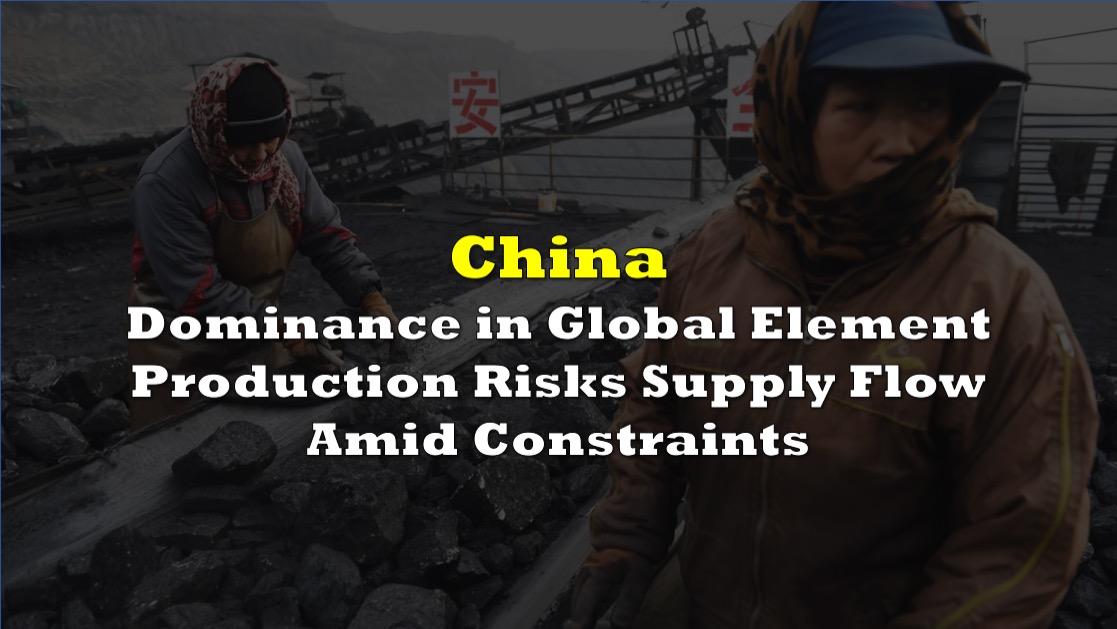

China’s dominance in global element production has become increasingly apparent, sparking concerns over supply disruptions and geopolitical implications. A recent analysis reveals that China stands as the leading producer of a significant portion of the periodic table, exerting substantial influence over various industries worldwide.
According to a thread by Balaji, China’s pivotal role in element production is strikingly evident. “Why is China running the periodic table?” he questioned, highlighting China’s status as the leading producer of 33 out of 69 elements.
Recent geopolitical turmoil, particularly the Russian invasion of Ukraine, has underscored the vulnerability of global supply chains. Until recently, Ukraine was a key producer of neon, krypton, and xenon, essential noble gases used in various applications ranging from advertising signage to silicon chip manufacturing. The disruption caused by the invasion has heightened concerns about the reliance on specific regions for critical elements.
 Sponsored · Cambria Gold Mines
The focus has shifted to China, whose mining industry has solidified its position as the primary producer of numerous elements. China’s dominance extends to rare-earth elements, where it controls a significant portion of global supply. Beijing’s recent threats of sanctions on companies like Lockheed Martin have intensified efforts to reduce dependence on Chinese sources.
Despite efforts to diversify supply chains, breaking China’s stranglehold over the rare-earth industry remains challenging. The country’s control over both mined supply and manufacturing processes of rare-earths underscores its position. Industries reliant on rare-earth materials, estimated to be worth $13 billion annually, face the risk of disruption in the event of further geopolitical tensions or trade disputes.
The implications of China’s dominance in element production extend beyond economic considerations, raising broader questions about global security and strategic autonomy. As nations grapple with these challenges, efforts to diversify supply chains and develop alternative sources of critical elements are likely to intensify.
Information for this briefing was found via the sources mentioned. The author has no securities or affiliations related to this organization. Not a recommendation to buy or sell. Always do additional research and consult a professional before purchasing a security. The author holds no licenses.