
General Motors is not simply cutting technology jobs. It is deciding which technology work still deserves capital inside an automaker trying to defend profits after the industry’s EV investment cycle became harder to justify.
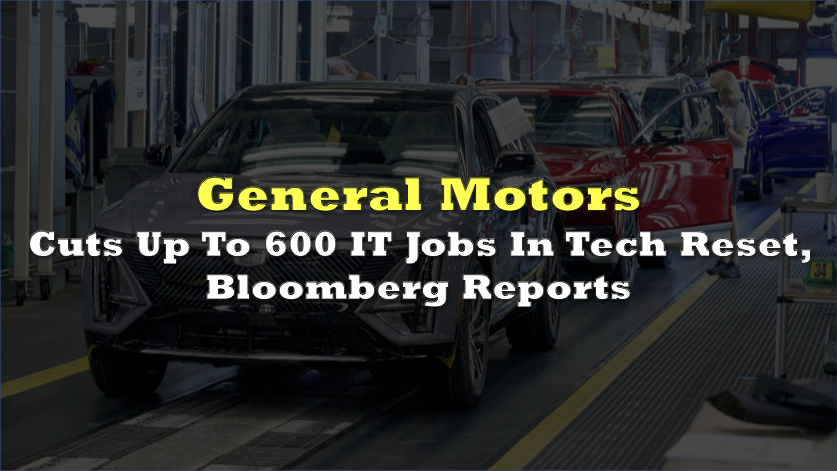
Bloomberg reported that GM plans to cut 500 to 600 workers in its IT organization, citing people familiar with the matter. The report added that notifications for said employees began Monday morning.
GM confirmed some job eliminations to Bloomberg but did not disclose the exact number.
 Sponsored · Silver47 Exploration Inc.
The company’s stated rationale turns the layoff into more than a cost-cutting story. GM framed the reduction as part of a broader overhaul of its IT organization, aligning the department with future business needs, while Bloomberg reported that the cuts are also meant to make room for staff “with skills in other technology areas.”
The move lands as automakers are sorting through a tougher post-hype phase of electrification. GM’s EV investments have already forced labor and capital discipline across parts of the business, while US sales stagnated to start the year, according to Bloomberg. In that environment, back-office technology is no longer insulated from the same return-on-investment scrutiny applied to plants, battery programs, and vehicle platforms.
This is not GM’s first reduction around salaried or software-linked work. In August 2024, Reuters reported a separate reduction of more than 1,000 software-and-services employees, including about 600 positions near Detroit.
Months after, Reuters also reported another global cut of almost 1,000 employees, mostly in the US, following earlier cuts in software and at a Kansas plant.
The latest IT cuts therefore fit a broader reset: GM is narrowing where labor dollars go while trying to preserve, or rebuild, the capabilities most tied to future vehicles, software systems, manufacturing efficiency, and customer-facing digital services.
For legacy automakers, that is a delicate trade. IT departments run the systems that hold large companies together, but the highest-value technology spending is increasingly tied to product software, data infrastructure, automation, cybersecurity, connected services, and tools that can improve margins after the vehicle leaves the lot.
That makes the workforce shift operationally risky. Cutting existing IT roles may lower near-term costs, but replacing institutional knowledge with new technical capability is not instant.
Information for this story was found via the sources and companies mentioned. The author has no securities or affiliations related to the organizations discussed. Not a recommendation to buy or sell. Always do additional research and consult a professional before purchasing a security. The author holds no licenses.