

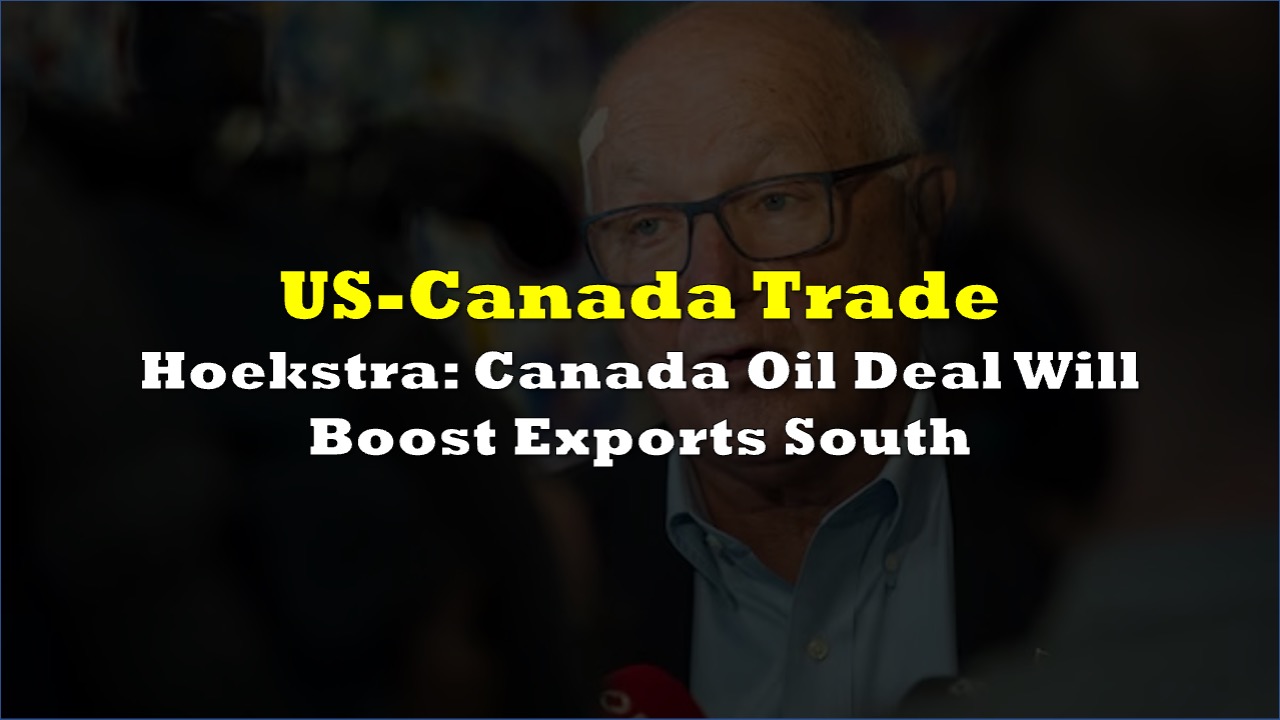

The US ambassador to Canada said Monday he expects Prime Minister Mark Carney’s energy pact with Alberta will increase oil shipments to the United States, even though the agreement aims to diversify Canadian exports to Asian markets.
Pete Hoekstra told the National Post that any trade deal between the two countries will include oil and that he feels “very encouraged” by Carney’s late November agreement with Alberta Premier Danielle Smith.
“What the expectations are on oil is that there would be more oil capacity, production and export opportunities down to the United States,” Hoekstra said in the interview published Tuesday.
US Ambassador Hoekstra says any agreement the U.S. strikes with Canada "will include oil."
— cbcwatcher (@cbcwatcher) December 9, 2025
“What the expectations are on oil is that there would be more oil capacity, production and export opportunities down to the United States,”
"…Hoekstra said the U.S. feels “very… pic.twitter.com/vpMbWc2cgv
The comments come as Carney faces domestic political fallout over the November 27 deal, which commits Ottawa to facilitating a new pipeline carrying one million barrels of oil daily from Alberta to the British Columbia coast. Environment Minister Steven Guilbeault resigned from cabinet the same day, saying the agreement undermines climate policies.
Hoekstra acknowledged the pipeline targets Asian markets but said most additional Canadian oil production would likely flow to US refineries, which currently process 93% of Canada’s oil exports. He said the United States takes no issue with Canada seeking alternative markets.
“Number one, we think it will result in the production of more oil and natural gas,” Hoekstra said of the Carney-Smith deal.
The agreement would exempt Alberta from federal clean electricity regulations and suspend the planned oil and gas emissions cap. In exchange, Alberta committed to raising its industrial carbon price to $130 per tonne by April and developing a major carbon capture project by 2040.
Oil had formed part of negotiations between Carney and President Donald Trump before talks collapsed in late October. Trump cut off discussions and imposed additional tariffs after Ontario aired anti-tariff advertisements on US television networks.
Hoekstra has said repeatedly since then that he does not expect trade negotiations to resume before the new year. He accused Canada of interfering in US politics with the ads, which featured quotes from former President Ronald Reagan criticizing tariffs.
Related: US Ambassador Says Fighter Jet Purchase Affects Trade Talk Prospects
The memorandum of understanding requires Indigenous co-ownership and consultation, though no private company has stepped forward to finance the project. A formal proposal is due by July 2026, with construction potentially starting in 2029 if all conditions are met.
Carney said the pipeline will only proceed with a private sector proponent and “full partnership, including equity ownership” with First Nations in both Alberta and British Columbia.
The agreement designates the pipeline as a project of “national interest” under the Building Canada Act, which could exempt it from some federal environmental laws. It also indicates Ottawa may adjust the tanker moratorium on BC’s northern coast to accommodate oil exports.
Some Indigenous leaders support the project. Stephen Buffalo, president of the Alberta-based Indian Resource Council, said First Nations view the pipeline as an opportunity to create wealth and address social issues in their communities.
The Liberal government voted down a Conservative motion Tuesday supporting the pipeline, with Natural Resources Minister Tim Hodgson calling it a “cynical ploy” that cherry-picked language from the comprehensive agreement while omitting environmental commitments.
Conservative Leader Pierre Poilievre criticized the agreement, saying the government does not know when construction would begin and questioning the lengthy approval process that could extend for years.
Canada exported approximately $140.8 billion in crude oil to the United States in 2024, with natural gas exports valued at $8.3 billion. The Canadian Energy Regulator reports that 93% of the country’s total oil exports went to the US in 2024.
The recently completed Trans Mountain pipeline, a publicly funded project to the BC south coast, generated $568 million in earnings in the first quarter of 2025 and opened new Asian markets for Canadian oil.
Broader Canada-US-Mexico Agreement renegotiations face an official July 1, 2026 review deadline. Hoekstra said in September that those talks could extend into 2027 because of the 2026 US midterm elections, which would complicate Senate ratification of any deal.
Related: Trump Administration Threatens Withdrawal from North American Trade Pact
Information for this story was found via the sources and companies mentioned. The author has no securities or affiliations related to the organizations discussed. Not a recommendation to buy or sell. Always do additional research and consult a professional before purchasing a security. The author holds no licenses.




One Response
Here are acouple of wishlist items. 1. Canada will not sell Western Canadian Select any lower than WTI. 2. No oil tanker oil goes to the US.