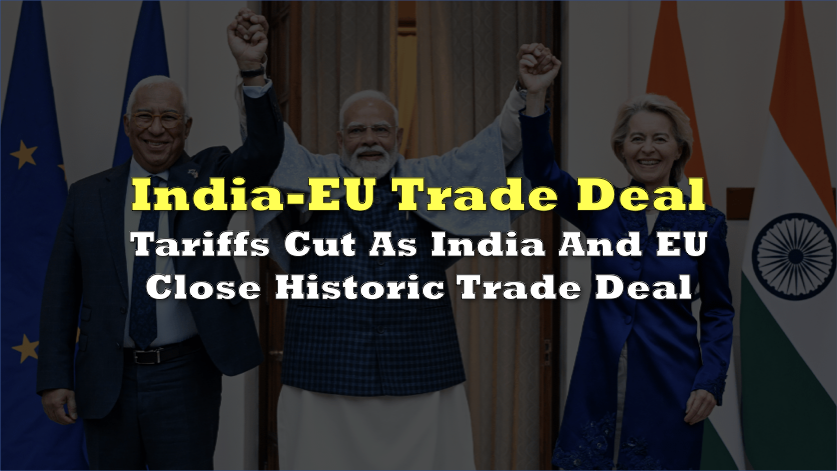

India and the EU say they have concluded a free trade agreement designed to expand market access and reduce high Indian import barriers, with the biggest single numeric signal a staged cut in Indian tariffs on EU cars from 110% to 10%.
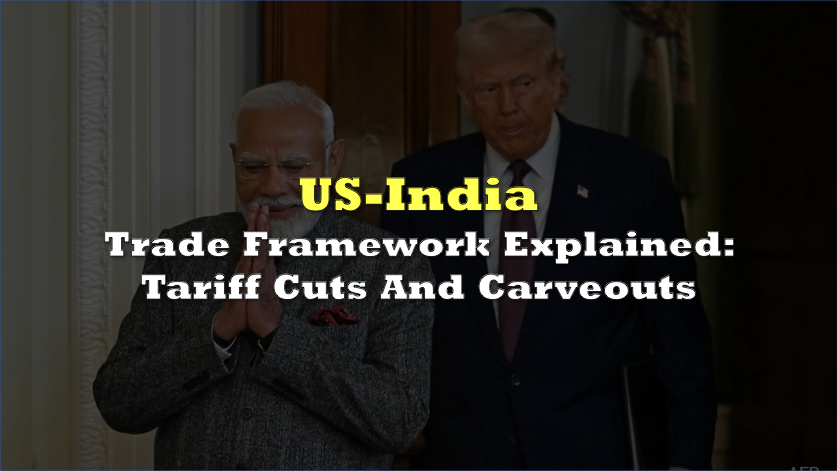
Indian Prime Minister Narendra Modi said that he, European Council President António Costa, and European Commission President Ursula von der Leyen were “delighted to announce the conclusion” of what he called the India–EU Free Trade Agreement, framing it as a milestone meant to strengthen economic ties, jobs, and supply chains.
Modi described the pact as a landmark agreement between the 2nd largest and 4th largest economies and said it would create “unprecedented opportunities,” including more mobility for youth, professional talent, students, and researchers, and growth tied to the digital age.
Today is a day that will be remembered forever, marked indelibly in our shared history.
— Narendra Modi (@narendramodi) January 27, 2026
European Council President António Costa and European Commission President Ursula von der Leyen and I are delighted to announce the conclusion of the historic India-EU Free Trade Agreement.… pic.twitter.com/yaSlPm2b2L
He also called it India’s largest free trade agreement in history, saying it carries “substantial benefits” for India’s 1.4 billion people, with easier access to European markets for farmers and small industries and new opportunities in manufacturing and services.
A separate account of the deal’s mechanics, attributed to von der Leyen, describes a free trade zone for around two billion people and lists tariff targets beyond autos, including duties up to 44% on machinery, 22% on chemicals, and 11% on pharmaceutical products that would be “mostly eliminated.”
Tariffs, market access, and security
On goods, the most concrete schedule in the provided material is autos, where the proposed glide path from 110% to 10% signals an attempt to open one of India’s most protected import categories while still phasing the impact over time.
The same tariff bundle also points to broad industrial relief for EU exporters in machinery, chemicals, and pharmaceuticals by targeting duties as high as 44%, 22%, and 11%, respectively, for removal or near-removal.
On agriculture, Modi’s framing centers on making access to European markets easier for Indian farmers and small industries, while the parallel description says European farmers gain access to India’s agricultural market with most restrictions lifted or significantly reduced.
On services, Modi highlights strengthened cooperation, while the parallel description specifies privileged access for EU firms into Indian services including financial services and maritime transport.
Alongside trade, EU–India also signed a “Security and Defence Partnership” that names maritime security, cybersecurity, and counter-terrorism cooperation, with language pointing to future co-development and co-production opportunities for defence companies.
Goodbye USA.
— Jürgen Nauditt 🇩🇪🇺🇦 (@jurgen_nauditt) January 27, 2026
The EU and India have signed a trade and security agreement in New Delhi.
According to Ursula von der Leyen, the new agreement creates a free trade zone for around two billion people. It provides for a gradual reduction of Indian tariffs on cars from the EU from… pic.twitter.com/KbtW6t0ppM
Information for this briefing was found via The New York Times and the sources mentioned. The author has no securities or affiliations related to this organization. Not a recommendation to buy or sell. Always do additional research and consult a professional before purchasing a security. The author holds no licenses.