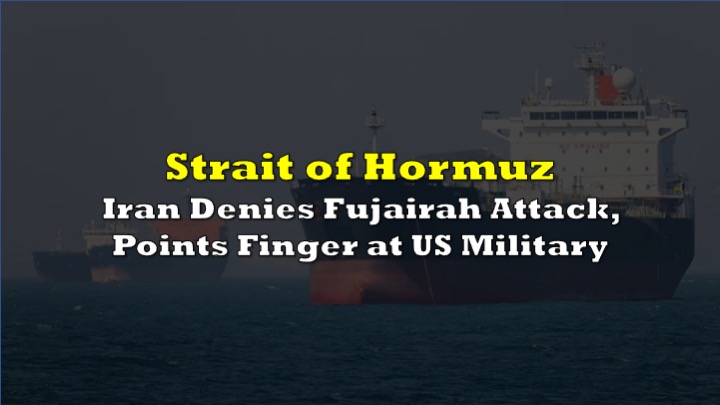

Iran’s military denied Monday that it deliberately targeted the United Arab Emirates or its oil port in Fujairah, blaming US military operations in the Strait of Hormuz for a strike that set a major energy facility ablaze and wounded three Indian nationals.
State broadcaster IRIB cited a senior military source who said Iranian forces had “no pre-planned programme to attack the mentioned oil facilities,” attributing the fire to American “adventurism” aimed at forcing commercial ships through the Strait without Iranian authorization. The US military denied responsibility.
The UAE rejected this claim. The Ministry of Defence documented 12 ballistic missiles, three cruise missiles, and four drones launched from Iranian territory — one of which broke through air defenses and ignited the blaze at the Fujairah Oil Industry Zone. The UAE’s Foreign Ministry called the attacks “a dangerous escalation and an unacceptable violation.”
 Sponsored · Selkirk Copper Mines
Iran’s Foreign Minister Abbas Araghchi did not directly deny involvement, warning instead that the US and UAE “should be wary of being dragged back into quagmire.”
The day before, President Donald Trump announced “Project Freedom” on Truth Social, directing US forces to begin escorting commercial vessels through the Strait of Hormuz on Monday morning, which Iran has controlled since the US-Israel war on Iran began February 28. US Central Command said American forces sank six Iranian small boats that attacked civilian ships during the operation; two American-flagged merchant vessels completed the transit.
Read: Tanker Struck as Project Freedom Launches; Iran Warns US Mission Violates Ceasefire
Monday’s events shattered the ceasefire Iran and the US reached on April 7. A South Korean-operated cargo ship also caught fire near the Strait, and Iranian drones struck an ADNOC tanker navigating the waterway — neither incident producing casualties.
Read: Iran Accused Of Targeting UAE’s Empty ADNOC Oil Tanker
The Strait carries roughly 20% of the global oil supply. Its closure since late February has pushed energy costs higher across Europe and Asia, and Fujairah — the eastern terminus of a UAE pipeline built to bypass the Strait — sits at the center of that pressure.
Read: China Tells Teapot Refineries to Ignore US Sanctions Against Buying Iranian Oil
Trump heads to Beijing next week with the Strait still closed and no deal with Tehran in sight. China — the world’s largest buyer of Gulf crude — has demanded the waterway’s reopening, and Xi Jinping has little incentive to offer Trump concessions while Iran’s blockade does Beijing’s pressure work for it.
Information for this story was found via the sources and companies mentioned. The author has no securities or affiliations related to the organizations discussed. Not a recommendation to buy or sell. Always do additional research and consult a professional before purchasing a security. The author holds no licenses.