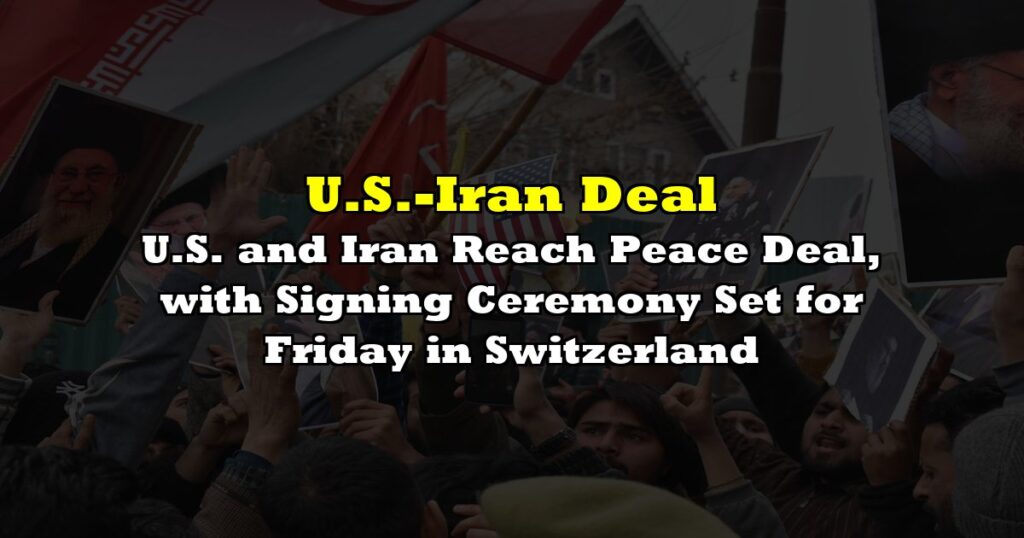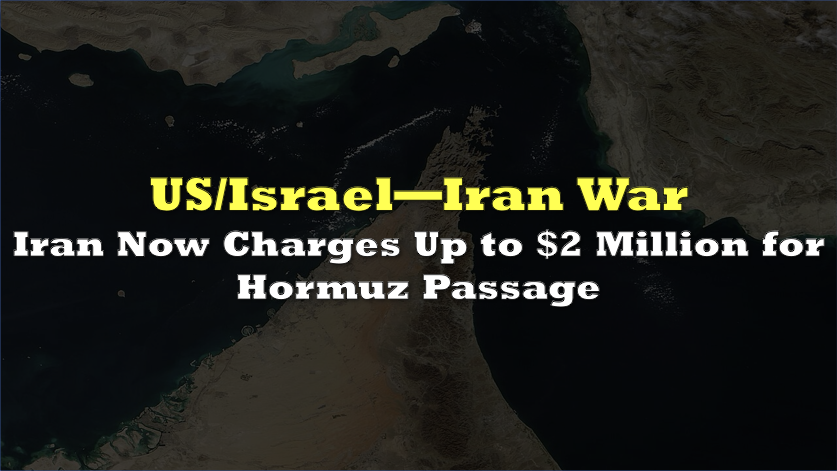

A draft deal between the United States and Iran would reopen the Strait of Hormuz toll-free for 60 days, give Tehran limited sanctions relief to sell oil freely, and launch parallel nuclear negotiations — with an announcement possible as early as Sunday, Axios reported Saturday.
The framework is built around a principle one U.S. official called “relief for performance.” Under the draft memorandum of understanding, Iran clears the mines it deployed in the Strait and the U.S. lifts its blockade on Iranian ports. Broader sanctions relief and the unfreezing of Iranian funds come only after Tehran demonstrates it is delivering — not before.
@TheKobeissiLetter outlined the expected terms Saturday, listing the 60-day ceasefire window, Hormuz reopening, free Iranian oil sales, and partial U.S. sanctions relief as the core components of the emerging framework.
Iran’s nuclear posture sits at the center of it all. Tehran has committed verbally to never pursue nuclear weapons and agreed to negotiate, during the 60-day window, both the suspension of its uranium enrichment program and the removal of its stockpile of highly enriched uranium. The MOU can be extended by mutual consent once the period expires. U.S. forces mobilized in the region in recent months would stay in place throughout.
 Sponsored · Altamira Gold Corp.
Trump spent Saturday working the phones. He held a conference call with the leaders of the UAE, Saudi Arabia, Qatar, Egypt, Turkey, and Pakistan — all of whom voiced support for the deal. Field Marshal Asim Munir of Pakistan had spent Friday and Saturday in Tehran as the primary mediator, making Islamabad’s hands-on role in brokering the framework impossible to miss.
One clause, however, immediately complicated the picture. The draft MOU states that the war between Israel and Hezbollah in Lebanon would end — a condition Israeli Prime Minister Benjamin Netanyahu raised directly with Trump on Saturday, expressing concern. A U.S. official was direct about the tension: “Bibi has his domestic considerations, but Trump has the interests of the U.S. and the global economy to think about.”
The same official offered a pointed read on the Hezbollah provision. “If Hezbollah behaves, Israel will behave.” That framing positions Netanyahu’s objections as manageable rather than fatal, though the clause remains live.
Trump himself has been pulled between ordering strikes against Iran and pursuing diplomacy, and as of Saturday evening was leaning toward the diplomatic path. Whether Iran’s leadership is prepared to follow through is the harder question.
The terms had not been finalized as of Saturday evening.
Information for this story was found via the sources and companies mentioned. The author has no securities or affiliations related to the organizations discussed. Not a recommendation to buy or sell. Always do additional research and consult a professional before purchasing a security. The author holds no licenses.