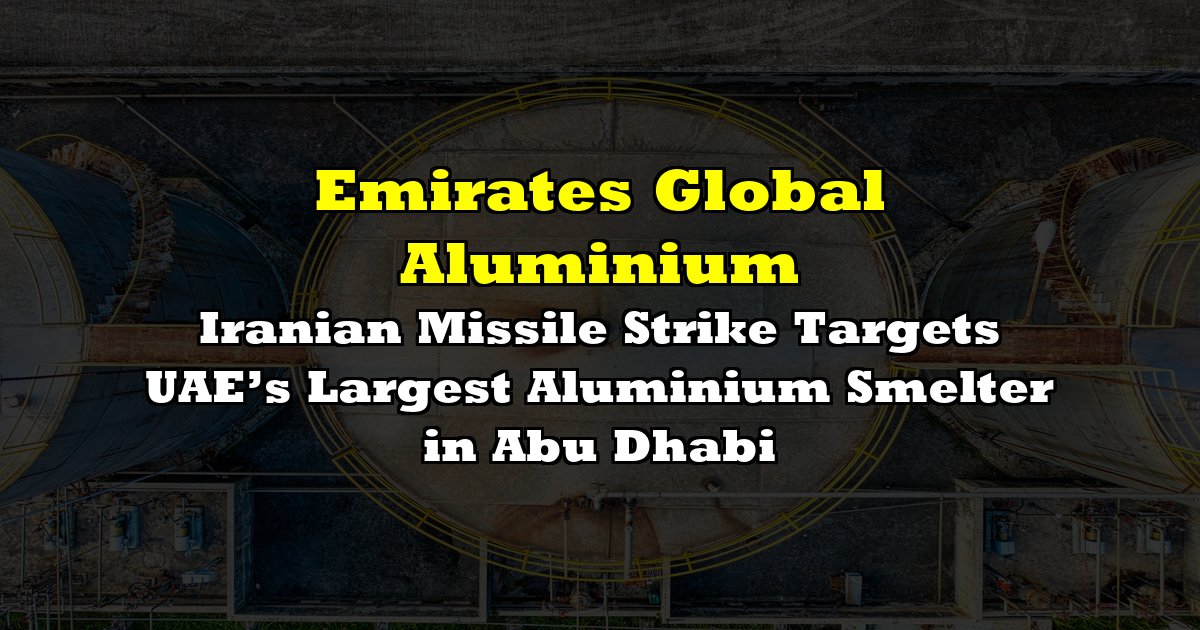

Emirates Global Aluminium, the UAE’s largest industrial company, reported extensive damage to its Abu Dhabi aluminium smelter and alumina refinery following a series of Iranian missile and drone strikes on March 28, 2026. The attack marks a sharp escalation in regional tensions, impacting a critical player in the global aluminium supply chain.
The strikes targeted key infrastructure at the company’s flagship operations, disrupting production at a facility that contributes significantly to the UAE’s industrial output. Several employees were injured in the assault, though none are in critical condition. The company has not yet provided a timeline for resuming full operations or an estimate of the financial impact.
The facility last year produced 1.6 million tonnes of cast metal, while an adjacent alumina refinery produced 2.4 million tonnes of aluminium raw material.
Emirates Global Aluminium's Abu Dhabi aluminium smelter and alumina refinery sustained major damage from Iranian missile and drone strikes; several employees injured but none critically.
— The Dive Feed (@TheDeepDiveFeed) March 28, 2026
This incident comes amid heightened geopolitical friction in the Middle East, with the UAE increasingly caught in the crosshairs of regional power struggles. Emirates Global Aluminium’s facilities are a cornerstone of the country’s diversification efforts away from oil, making the attack a symbolic and economic blow. The smelter’s output, a vital component of global aluminium markets, could face prolonged delays, potentially tightening supply at a time when demand for the metal remains robust in sectors like construction and automotive manufacturing.
Global aluminium prices are likely to feel the ripple effects of this disruption. The UAE accounts for a notable share of Middle Eastern aluminium production, and any sustained outage at Emirates Global Aluminium’s facilities could exacerbate existing supply chain constraints. Market participants are already factoring in heightened geopolitical risk premiums, with the potential for further volatility if tensions escalate.
The attack also raises questions about the security of critical industrial assets in the region. With Iran demonstrating its capability to strike high-value targets, other Gulf states with significant energy and industrial infrastructure may reassess their defensive measures. For now, the focus remains on the immediate aftermath at Emirates Global Aluminium, where repair costs and production losses are expected to weigh heavily on the company’s 2026 performance.
Information for this story was found via the sources and companies mentioned. The author has no securities or affiliations related to the organizations discussed. Not a recommendation to buy or sell. Always do additional research and consult a professional before purchasing a security. The author holds no licenses.