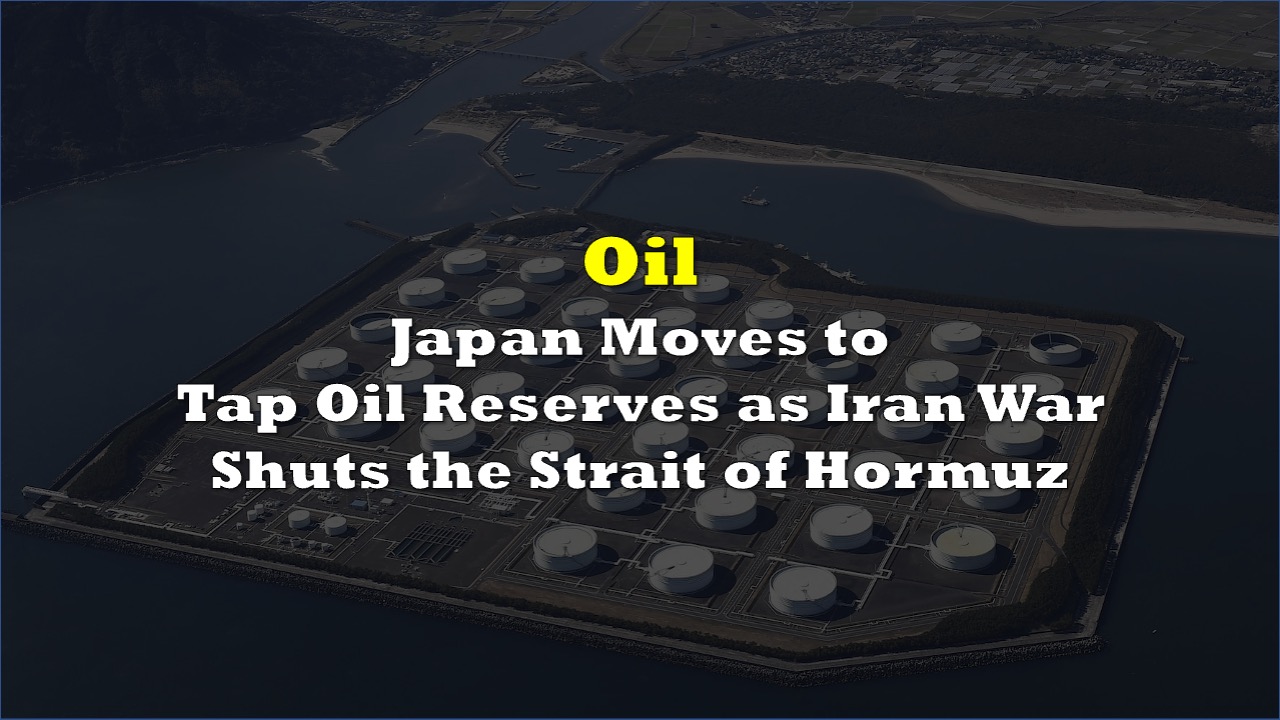

Japan directed a national oil storage facility to prepare for a possible crude release on Sunday, signaling that Tokyo may act unilaterally to cushion the blow of a Middle East war that has effectively closed the world’s most critical oil shipping lane.
An opposition lawmaker revealed that the Agency for Natural Resources and Energy had instructed the national oil storage base in Shibushi to ready itself for a potential drawdown. The directive marks a sharp shift from March 3, when Economy Minister Ryosei Akazawa said Tokyo had no immediate plans to tap its reserves.
To watch in the next 24 hours: Japan is on alert for a possible release of its strategic petroleum reserve, the world's 3rd largest (after China and US).
— Javier Blas (@JavierBlas) March 8, 2026
Tokyo may act alone, without US/IEA involvement.
The American SPR is very well known; so it's the Chinese — but Japan has… pic.twitter.com/rKcPcSdr1H
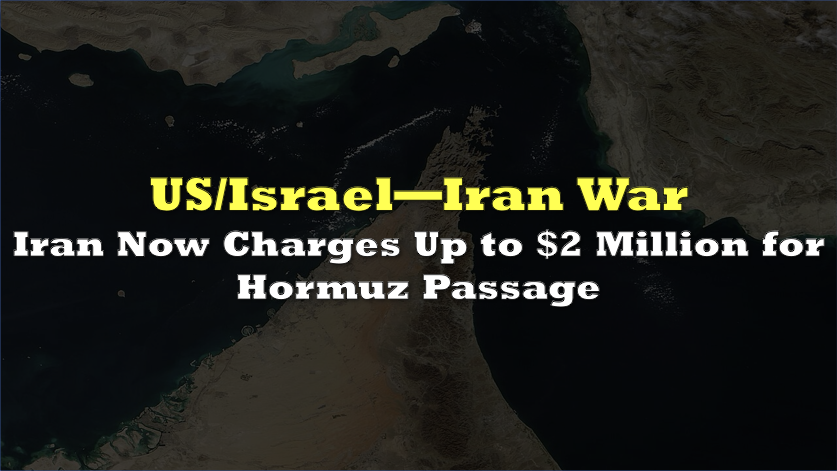
Japan sources around 95% of its crude from the Middle East, with roughly 70% transiting the Strait of Hormuz — a chokepoint effectively closed since US and Israeli strikes on Iran began on February 28.
Iran’s Islamic Revolutionary Guard Corps has warned it will target any vessel attempting to pass through, and major Japanese shipping firms have suspended Hormuz transits.
Related: US Navy Escorts for Strait of Hormuz Tankers Delayed by Weeks Amid Iran Tensions
Oil prices surged roughly 50% since February 28, crossing $100 a barrel for the first time since Russia’s 2022 invasion of Ukraine, with Brent briefly topping $114 on March 8.
Related: Gold Slides as Oil Surges Past $110, Fueling Inflation Fears and Margin Calls
Japan holds the world’s third-largest strategic petroleum reserve after China and the US — roughly 260 million barrels across 10 sites, with private-sector and joint storage agreements with Saudi Arabia, the UAE, and Kuwait bringing the total buffer to 254 days of imports as of December 31, 2025.
Tokyo is weighing whether to act with or without the International Energy Agency. Japan coordinated its post-Ukraine release in 2022 through the IEA, but acted independently after the 2011 earthquake and tsunami.
A unilateral move now would signal that Asia’s most exposed importer is no longer willing to wait.
Kuwait has already cut crude output as a precaution, Qatar has declared force majeure on LNG exports from Ras Laffan, and Egypt has warned of a near-emergency economic state — a cascade that leaves Japan with little room to hold back.
Information for this story was found via the sources and companies mentioned. The author has no securities or affiliations related to the organizations discussed. Not a recommendation to buy or sell. Always do additional research and consult a professional before purchasing a security. The author holds no licenses.