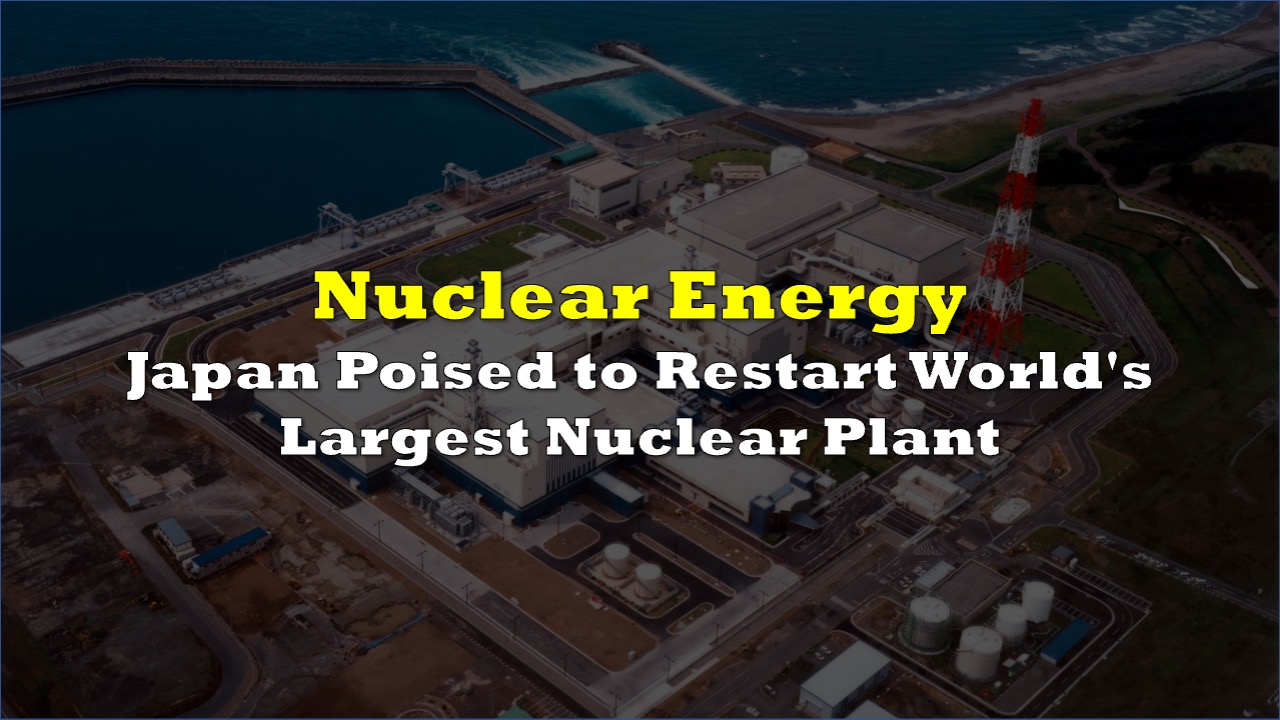

Japan’s Niigata Prefecture Assembly will vote by December 23 on whether to restart the world’s largest nuclear power plant. The decision could seal the country’s return to nuclear energy nearly 15 years after the Fukushima disaster.
The vote is the final hurdle before Tokyo Electric Power Company restarts the Kashiwazaki-Kariwa facility, which has remained dormant since authorities shut down Japan’s nuclear fleet following the 2011 earthquake and tsunami that triggered meltdowns at TEPCO’s Fukushima Daiichi plant.
TEPCO plans to activate Unit 6 in January 2026 if the assembly approves Governor Hideyo Hanazumi’s November consent decision, according to public broadcaster NHK. The 1,356-megawatt reactor would become TEPCO’s first to operate since Fukushima.
Japan brought two reactors back online last year. Tohoku Electric Power Co. reconnected its Onagawa Unit 2 in October 2024, while Chugoku Electric Power Co. activated Shimane Unit 2 in December 2024, according to the US Energy Information Administration. Those marked the first boiling water reactors to resume operations since the disaster.
Fourteen reactors now operate nationwide, a fraction of the 54 that generated power before 2011. Authorities shut down all nuclear plants by 2013, requiring extensive safety reviews and facility modifications.
Japan’s government revised its energy strategy in February, calling for nuclear power to supply 20% of electricity by 2040, according to Nippon.com. Rising demand from AI data centers and efforts to reduce fossil fuel imports drove the shift. The country’s fossil fuel import bill reached 10.7 trillion yen ($68 billion) in 2024, accounting for one-tenth of total import expenditures.
An October survey in Niigata Prefecture revealed 60% of residents view restart conditions as unmet, while nearly 70% harbor concerns about TEPCO’s role as operator. TEPCO pledged to invest 100 billion yen ($641 million) into the prefecture over the next decade to secure local support.
The International Atomic Energy Agency continues monitoring decommissioning work at Fukushima Daiichi. Operators expect full-scale fuel debris removal to begin in 2037 at the earliest, according to World Nuclear News.
Information for this story was found via the sources and companies mentioned. The author has no securities or affiliations related to the organizations discussed. Not a recommendation to buy or sell. Always do additional research and consult a professional before purchasing a security. The author holds no licenses.