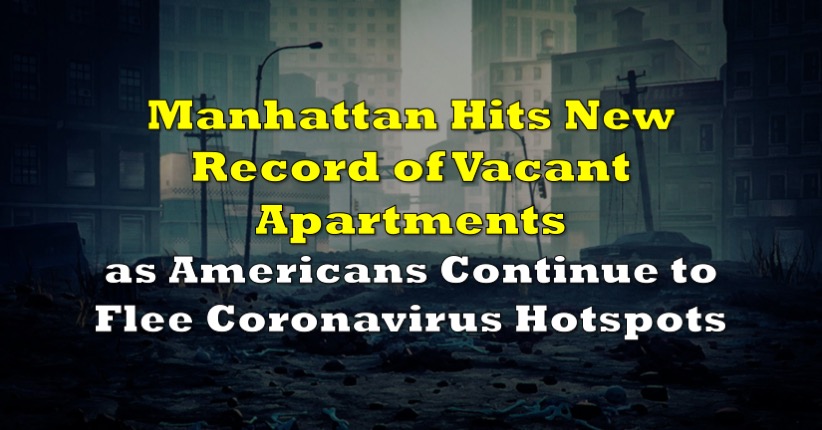

As the coronavirus pandemic continues to spiral out of control across the US, an increasing number of Americans have been fleeing heavily congested city areas to suburban and rural communities where the risk of virus transmission is lower. As a result, the city of Manhattan has been the subject of a record-high vacancy rate that has some concerning implications.
According to real estate company Douglas Elliman and appraiser Miller Samuel, the vacancy rate in Manhattan has skyrocketed above 5% for the first time on records that date back 14 years. Over the last several months, the vacancy rate has been steadily increasing, coinciding with the rising pandemic fallout. Miller Samuel president Jonathan Miller observed that an increasing number of renters have been moving to rural and suburban housing areas where the utility per rental dollar is higher.
Miller points that that many individuals that would normally seek rental apartments in Manhattan are now turning into first-time home buyers in the suburbs – causing the emergence of an interesting phenomenon indeed. As a result of the migration out of the city, the month of August saw 24% less leases being signed compared to the year prior, while the number of rental listings have increased by a staggering 166%. Along with a reduced demand for housing, the average rent for an apartment in Manhattan has fallen by 4% to $3,363 per month compared to August of last year.
 Sponsored · Selkirk Copper Mines
From a behavioural perspective, it appears that renters have come to question the true the value of more expensive living in Manhattan. Prior to the pandemic, Americans opted for city living as it put them in the hotspot of desired amenities such as restaurants, bars, cultural events and retail shopping. Now with many of those services no longer available as a result of the pandemic, those same people are now in search of cheaper housing accommodations.
With a demand reduction for rentals in Manhattan, landlords have been turning to incentives to spur dwindling interest. Almost half of all new leases signed in Manhattan in August were accompanied with some sort of landlord concession, resulting in the biggest share of concessions to date. Moreover, as a means of enticing renters Manhattan landlords have been offering more free rent. In fact, the amount of free rent in the city has increased by 60% compared to last August, rising from an average of 1.2 months to 1.9 months of free rent.
Although all rent levels were the subject of price declines, the lower price ranges saw the largest reductions. The average rent for a luxury Manhattan apartment declined by only 0.1% to $7,995 in August, meanwhile median rental prices dropped by a record 6.3% to an average of $2,250. However, rental accommodations that are in the lowest end of the pricing spectrum have actually been dissolving completely. With fewer college students coming to Manhattan and many young people opting to move back in with their parents as a result of employment changes such as working from home, the demand for lower-priced housing in the city is dwindling at an alarming rate.
Along with the migration of city dwellers into more rural areas come certain serious implications for the communities that they are abandoning. Many businesses that rely on high levels of population in city centres are now facing a lack of consumers – causing the decline in financial well being to be amplified along with the pandemic.
Information for this briefing was found via Douglas Elliman and Miller Samuel. The author has no securities or affiliations related to this organization. Not a recommendation to buy or sell. Always do additional research and consult a professional before purchasing a security. The author holds no licenses.