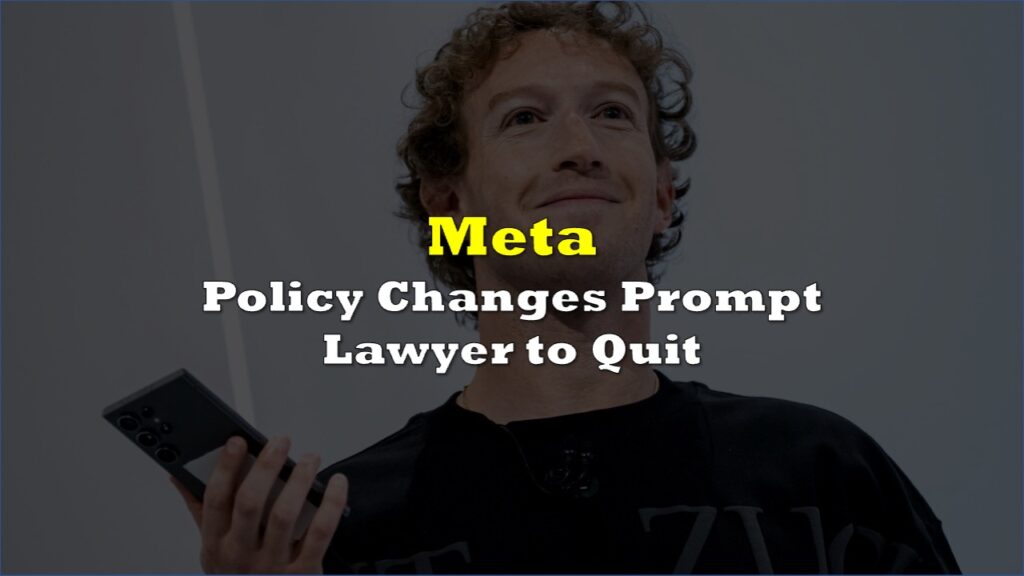

Meta (Nasdaq: META) has secured a patent for artificial intelligence technology that would allow a large language model to continue operating a deceased person’s social media account — generating posts, answering direct messages, and simulating audio and video calls — drawing on data the person created while alive.
The patent, first filed in 2023 and granted in late December 2025, outlines a system that trains an AI model on a user’s historical activity — including posts, comments, likes, and voice messages — to construct a digital persona capable of continuing to engage on the platform after the user’s death. Meta’s chief technology officer, Andrew Bosworth, is listed as the patent’s primary inventor.
The thought of losing a loved one and then seeing them active on social media is extremely disturbing
— 𝐃𝐈𝐆𝐁 (@_DIGB) February 17, 2026
There can’t be a single person of sound mind that wants this https://t.co/bCtI2w9OCe
The document describes the technology as a tool for simulating users who are either on a long break from social media or have died. It acknowledges that the latter case carries greater weight, noting the effect on surviving users is permanent when someone can never return to the platform.
Meta told Business Insider it has no plans to develop or launch the concept. A company spokesperson said patent filings often serve to protect early-stage ideas that may never reach production, and that this case is no exception.
The patent lands in an already crowded corner of the technology industry. Microsoft (Nasdaq: MSFT) secured a similar patent in 2021 for a chatbot capable of mimicking specific individuals, including deceased persons and public figures. A cluster of startups — sometimes grouped under labels like “grief tech” or “ghost bots” — has been exploring the space for years, several founded by people processing their own experiences of loss. Replika, one of the more prominent examples, launched in 2015 after its founder sought to preserve something of a close friend who had died.
Meta CEO Mark Zuckerberg also publicly floated the concept in a 2023 interview with podcaster Lex Fridman, suggesting that AI avatars could eventually allow people to interact with memories of loved ones who have passed.
If it sounds familiar, it’s because you’ve probably seen it on Black Mirror, the British anthology series that has spent over a decade dramatizing exactly this kind of technology. The show’s 2013 episode “Be Right Back” follows a woman who uses an AI service to communicate with a simulation of her deceased partner, constructed from his digital history. The premise once seemed speculative, but now reads more like a product roadmap.
Information for this story was found via the sources and companies mentioned. The author has no securities or affiliations related to the organizations discussed. Not a recommendation to buy or sell. Always do additional research and consult a professional before purchasing a security. The author holds no licenses.