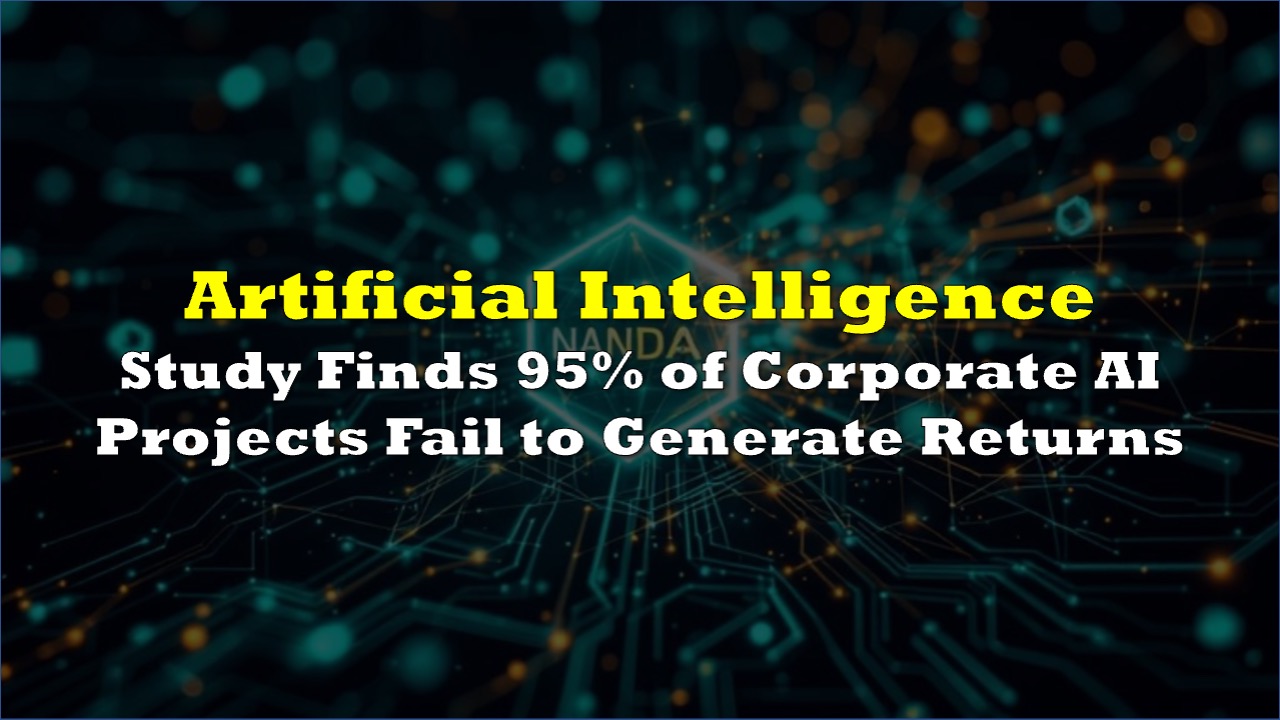

Despite investments estimated between $30 billion and $40 billion in generative artificial intelligence initiatives, 95% of US companies report zero meaningful returns from their AI efforts, according to a new study from the Massachusetts Institute of Technology.
The research, published by MIT’s NANDA initiative and titled “The GenAI Divide: State of AI in Business 2025,” determined that just 5% of enterprise AI pilots deliver significant revenue growth, with most projects remaining stalled at experimental stages.
Wow. 95% of organizations investing in generative AI have little or nothing to show for it, per @MIT. pic.twitter.com/ZY8z6ABm8G
— Markets & Mayhem 🤖 (@Mayhem4Markets) August 18, 2025
“Some large companies’ pilots and younger startups are really excelling with generative AI,” said Aditya Challapally, the study’s lead author and research contributor at MIT’s Media Lab. But for most organizations, he noted, implementation is falling short due to integration challenges rather than the quality of AI models themselves.
Drawing from structured interviews with dozens of enterprise leaders and surveys of more than 150 business professionals, plus analysis of over 300 public AI initiatives, the study reveals a stark divide between AI’s promise and corporate reality. Researchers point to what they call a “learning gap” as the primary culprit — referring to AI systems’ limited ability to retain organizational data, adapt to workflows, and improve performance over time within corporate settings.
According to the research, significant business transformation has occurred primarily within technology companies and media/telecommunications firms, while other major industries, including healthcare, financial services, and manufacturing, report minimal progress from their AI investments.
The study revealed an unexpected contradiction: while fewer than half of companies provide official AI tool access, employees across the overwhelming majority of organizations utilize personal AI platforms like ChatGPT for work purposes — typically without IT department knowledge or approval.
Research indicates that AI solutions purchased from external vendors achieve success roughly two-thirds of the time, compared to internal development efforts that fail at twice the rate. Rather than implementing widespread layoffs, companies are increasingly leaving vacant positions unfilled, especially roles previously handled through outsourcing.
Information for this story was found via the sources and companies mentioned. The author has no securities or affiliations related to the organizations discussed. Not a recommendation to buy or sell. Always do additional research and consult a professional before purchasing a security. The author holds no licenses.