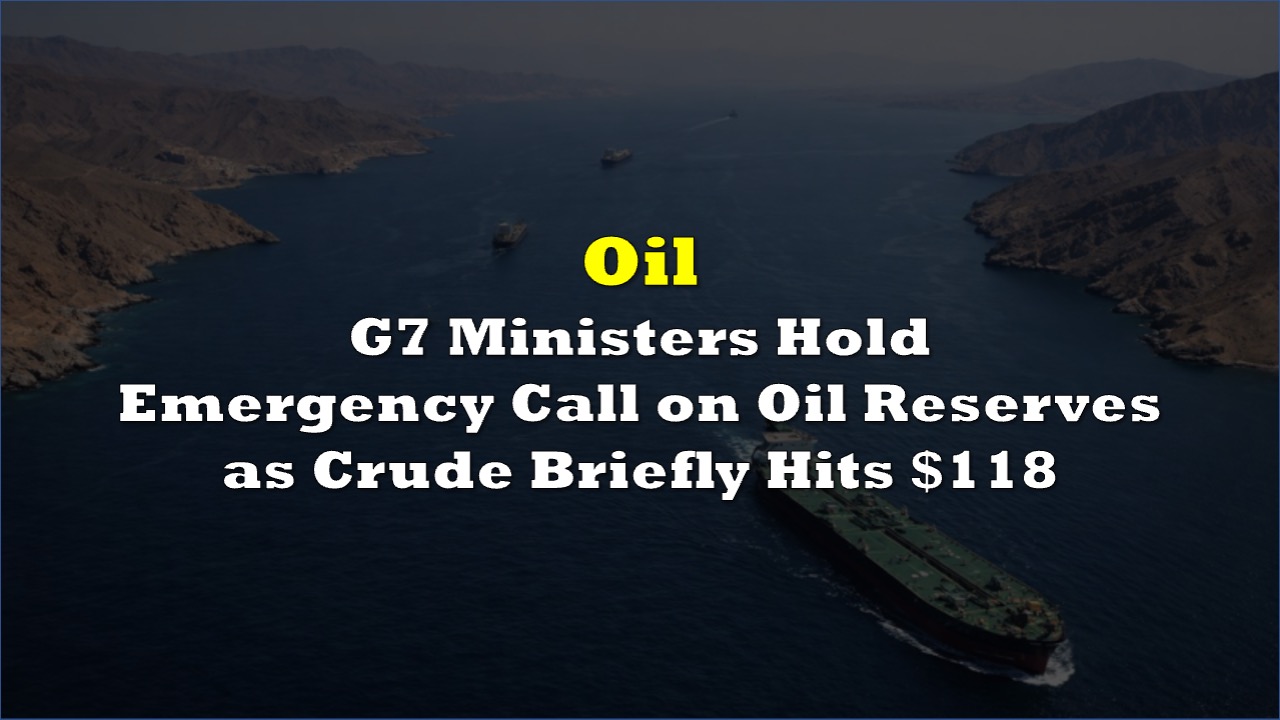

G7 finance ministers convened an emergency call with International Energy Agency Executive Director Fatih Birol on March 9 to discuss a possible coordinated release of strategic petroleum reserves, after crude oil briefly surged to nearly $120 a barrel — its highest level since 2022 — as the Iran war throttled Middle East energy exports.
The call, held at 6:30 a.m. New York time, came as markets opened to the full weight of a weekend that saw Iran install a new hardline supreme leader, Israeli strikes escalate into Lebanon, and Iraqi oil output fall roughly 60% due to tanker backlogs at the effectively closed Strait of Hormuz.
G7 is discussing a coordinated release of 300–400 million barrels from emergency oil reserves to counter Iran-related supply risks & tame Brent/WTI spikes (~$90–92).
— Saygun Research (@saygun_research) March 9, 2026
Coordinated via IEA, this would mostly come from US SPR (largest holder), Japan, & Europe, potentially adding… https://t.co/A9CCnhbPMp
Three G7 countries, including the US, have expressed support for a coordinated reserve release, with some US officials putting an appropriate figure in the range of 300 to 400 million barrels — roughly 25 to 30% of the IEA system’s total 1.24 billion barrel public reserve.
No decision has been announced as of this writing.
A sharp reversal
The emergency call marks a notable shift in posture. As recently as March 6, Birol told reporters in Brussels that “there are no plans for a collective action at this stage,” adding that there was “plenty of oil in the market.” The White House had also said as recently as last week that it had no plans to tap the US Strategic Petroleum Reserve. Oil was trading around $89 a barrel at that point.
It opened Monday above $106, peaked over $118, and pulled back to around $103 following the FT report on the G7 call.
BREAKING: US oil prices fall -$15/barrel in under 2 hours, now trading below $104/barrel, on reports that G7 countries are considering releasing 400 million barrels of crude oil reserves. pic.twitter.com/hMEJCK5QWZ
— The Kobeissi Letter (@KobeissiLetter) March 9, 2026
The 300–400 million barrel figure under discussion would dwarf previous IEA interventions. The 2022 coordinated release after Russia’s invasion of Ukraine — the largest in IEA history at the time — made 240 million barrels available in stages, with the US supplying roughly half. A release at the upper end of the range now being discussed would be the biggest coordinated drawdown since the IEA’s creation following the 1973 oil crisis.
What a release can and cannot do
Analysts caution that a reserve release is primarily a psychological tool — it adds crude supply to the market but cannot substitute for refining capacity, repair damaged Gulf infrastructure, or reopen the Strait of Hormuz.
The 2022 release provided roughly a $10–20 per barrel discount buffer before prices rebounded. If the Hormuz closure extends beyond four to five weeks, analysts warn prices could resume their climb regardless of any reserve action.
Goldman Sachs has estimated that a one-month Hormuz closure could more than double European gas prices from current levels. Qatar’s energy minister has warned that a prolonged conflict could push oil to $150 a barrel and effectively halt all Gulf energy exports, moves he said would “bring down economies of the world.”
Read: Qatar warns Gulf export halts could send oil to $150
Market reaction
Brent crude settled around $108 a barrel in early London trading after the G7 report broke — down from a session high of $118.91, but still more than 16% above Friday’s close of $92.69. Japan’s Nikkei 225 fell more than 7%, South Korea’s KOSPI dropped more than 8%, and US stock futures declined more than 1.5% as markets priced in a prolonged energy shock.
Information for this story was found via Financial Times, Bloomberg, IEA statements, and market data from Ship & Bunker and OilPrice.com, and the sources and companies mentioned. The author has no securities or affiliations related to the organizations discussed. Not a recommendation to buy or sell. Always do additional research and consult a professional before purchasing a security. The author holds no licenses.