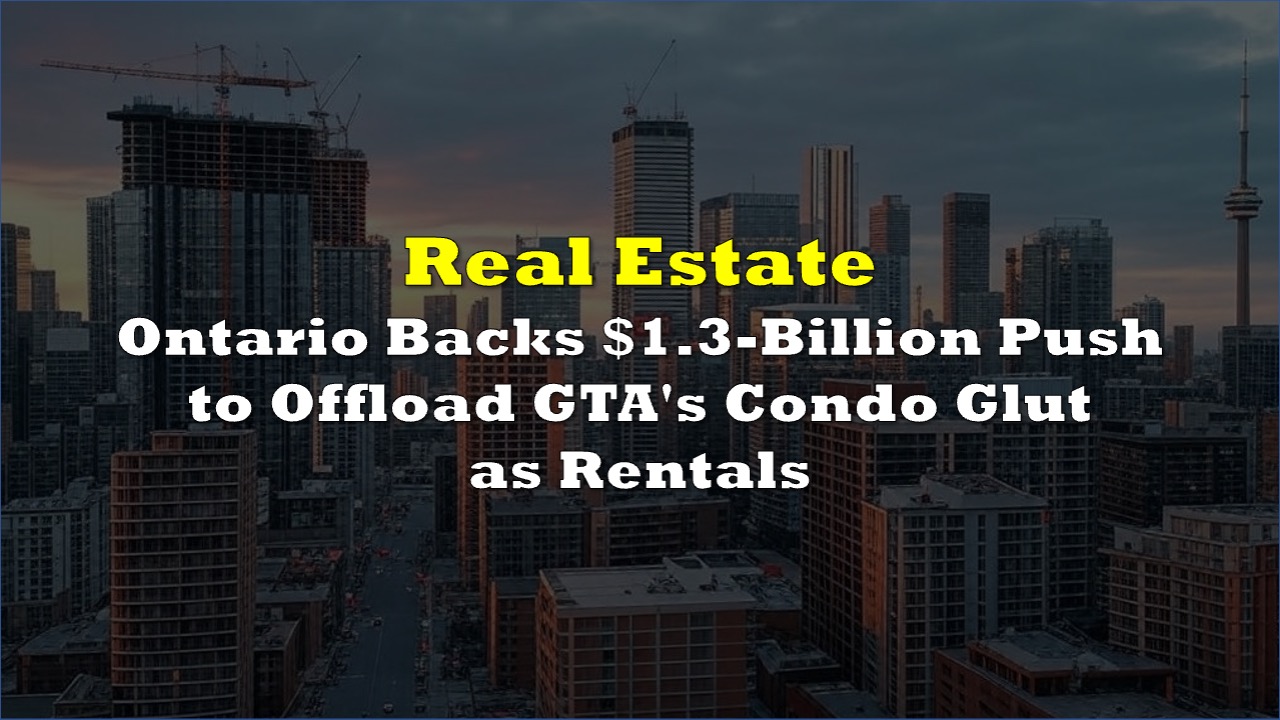

Ontario’s provincial infrastructure bank and a private investment firm announced March 10 a $1.3-billion fund to buy unsold condominiums across the Greater Toronto Area and convert them into long-term rentals — with a slice set aside as permanently affordable housing.
The deal pairs High Art Capital with the Building Ontario Fund, a Crown agency the Ford government set up in 2024. BOF is contributing up to $300 million in mezzanine debt — not a grant, meaning returns are expected — with the remainder coming from private investors.
Ten consecutive Bank of Canada rate hikes between 2022 and 2023 pushed the overnight rate from 0.25% to 5%, wiping out the investor demand that had long fuelled Toronto’s pre-construction condo sector.
New condo sales across the Toronto and Hamilton area fell to just 1,599 units in 2025 — the lowest since 1991 and roughly 5% of the 2021 peak. Urbanation Inc. reported the region ended the year with 3,897 completed but unsold units, a 131% year-over-year increase. In January 2026, the average GTA home price fell below $1 million for the first time since 2021.
Related: Toronto Home Prices Dip Below $1 Million Mark as Market Adjusts to Elevated Inventory
The supply picture looks worse further out. Developers cancelled 28 condo projects in 2025, erasing more than 7,000 units from the pipeline. Construction starts hit their lowest levels since the mid-1990s.
The Canada Mortgage and Housing Corporation has also flagged a unit-size mismatch: micro units make up roughly 60% of new supply, but only about 30% of new households want them. Industry observers warn the current glut could flip into a severe shortage by the late 2020s.
Related: Toronto New Home Sales Hit Four-Decade Low in January, Deepening Historic Slump
The fund aims to acquire roughly 2,200 units. About 550 will carry affordable designations, with rents capped at the lower of 25% below local market rate or 30% of the GTA’s median gross household income — locked in through title-based protections that survive any future property sale.
The target tenant is the one squeezed out of the middle: too expensive for market rents, but earning too much for subsidized housing.
Eligible submissions must include blocks of at least 10 vacant units in buildings completed on or after January 1, 2023, within Toronto or the regional municipalities of Durham, Halton, Peel, or York. Del Condominium Rentals, a Tridel Group affiliate, and Menkes Condominium Rentals will manage leasing; a not-for-profit partner will allocate the affordable units.
The province put no tax breaks or development charge waivers on the table. BOF CEO Michael Fedchyshyn called it “a first of its kind at this scale” — a model designed to absorb existing inventory without direct subsidies. Whether 550 affordable units registers as meaningful in a metro area of millions is another question.
But for developers carrying units they cannot sell, the fund offers an exit — and for Ontario, a way to show housing action at limited cost to the treasury.
Canaccord Genuity Corp. is acting as exclusive financial advisor to High Art Capital.
Information for this story was found via the sources and companies mentioned. The author has no securities or affiliations related to the organizations discussed. Not a recommendation to buy or sell. Always do additional research and consult a professional before purchasing a security. The author holds no licenses.