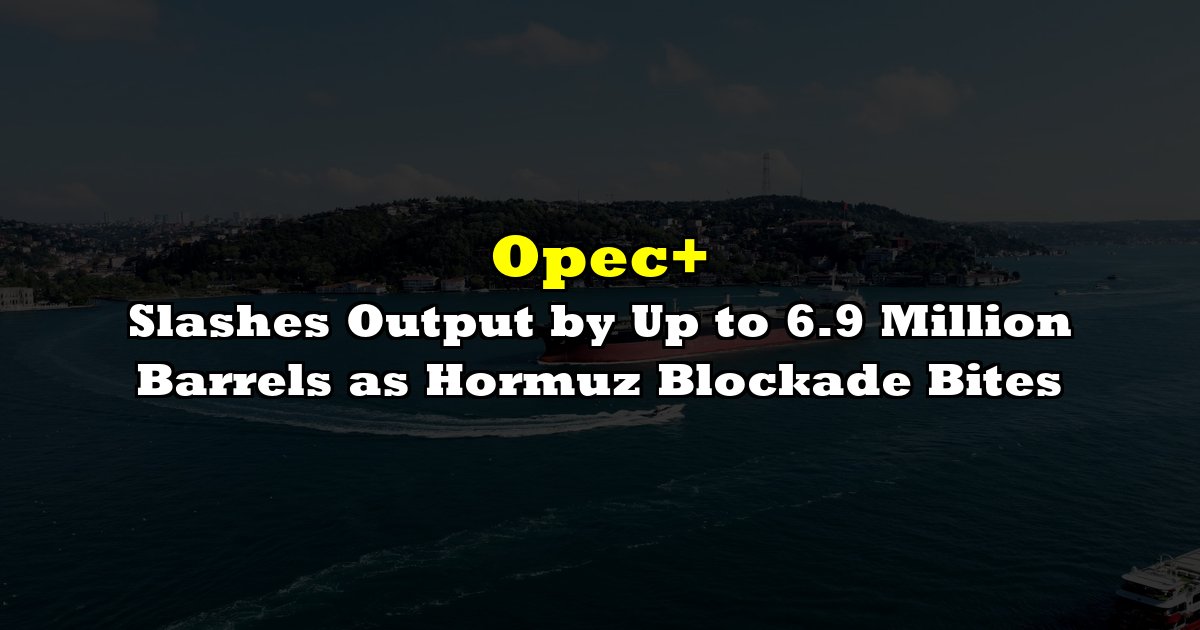

Opec+ producers, including Saudi Arabia, the UAE, and Iraq, have slashed crude output by an estimated 6.2 to 6.9 million barrels per day (b/d) as a near-total halt in tanker traffic through the Strait of Hormuz severs their primary export route amid escalating conflict. The latest estimates follow a report from Argus Media.
Saudi Arabia, the bloc’s largest producer, has shut down key offshore fields like Safaniya and Marjan, curbing output by 2 to 2.5 million b/d. The kingdom, which pumped 10.88 million b/d in February, has pivoted to its Red Sea port of Yanbu, leveraging the 7 million b/d east-west pipeline to bypass Hormuz, though volumes remain far below capacity.
Iraq’s production has cratered from 4.42 million b/d in February to 1.5-1.7 million b/d by March 8, with further cuts expected to push output down to 1.2-1.3 million b/d. Unable to export, Iraq is redirecting crude to domestic refineries while storing excess refined products, though storage is nearing capacity. The closure of a key pipeline to Turkey’s Ceyhan port, previously moving 50,000 b/d of Kirkuk crude, has compounded the bottleneck.
Kuwait, meanwhile, has dropped to 2 million b/d from 2.59 million b/d, with state-owned KPC declaring force majeure on exports and throttling refinery runs to 50 percent of their 1.615 million b/d capacity. Output could soon fall to 1.5 million b/d if constraints persist.
The UAE has trimmed production to 2.7-3 million b/d from 3.53 million b/d, despite continuing to load crude from ports inside Hormuz. Adnoc is utilizing the Adcop pipeline at 1.7-1.8 million b/d—above its 1.5 million b/d capacity—and diverting supply to the Ruwais refinery complex.
Bahrain’s Bapco Energies also declared force majeure after a direct attack on its 405,000 b/d Sitra refinery. The disruptions, fueled by the ongoing US-Iran conflict now in its second week, have sent Brent crude soaring past $100 per barrel, marking one of the sharpest single-day gains on record.
Information for this story was found via the sources and companies mentioned. The author has no securities or affiliations related to the organizations discussed. Not a recommendation to buy or sell. Always do additional research and consult a professional before purchasing a security. The author holds no licenses.