


In August Canada’s new Major Projects Office (MPO) was established to accelerate the most important resource and infrastructure developments in the country. Projects that can generate billions in tax revenue, create long-term jobs, build strategic infrastructure, and strengthen Canada’s geopolitical resilience.
After two tranches of referrals, several projects that clearly meet those standards have not been included. That omission raises legitimate concerns about how transparently and how strategically the government plans to allocate capital.
Many political observers, including Conservative Leader Pierre Poilievre, dismissed the office outright as another bureaucratic step that would slow development rather than speed it up. Others fear it has simply become a mechanism for political favouritism, allowing Ottawa to hand-pick winners.
Mining executives and financiers I’ve spoken with share a version of that tension. They remain wary of deeper government involvement in projects they see as the domain of the private sector. But they also acknowledge the need for an office capable of reducing permitting bottlenecks, especially when Canada’s fragmented regulatory system has stalled some of the world’s most promising mining developments.
Two of the most notable omissions are a proposed oil pipeline from Alberta to B.C.—which hasn’t been officially added, but has generated it’s own pathway—and Equinor’s Bay du Nord offshore project. Newfoundland’s Conservative government has publicly voiced its disappointment that Bay du Nord was left off the list and has pressed the Prime Minister’s Office for support. Their absence only deepens questions about the MPO’s early decision-making.
Outside of oil and gas, a common theme behind the office’s mandate is the dominant influence China holds over global battery-metals supply chains. China’s downstream control allows them to undermine Western competitors and suppress prices, slowing the advancement of strategically important projects in countries like Canada. If the MPO is meant to counter that, its project list needs to reflect it.
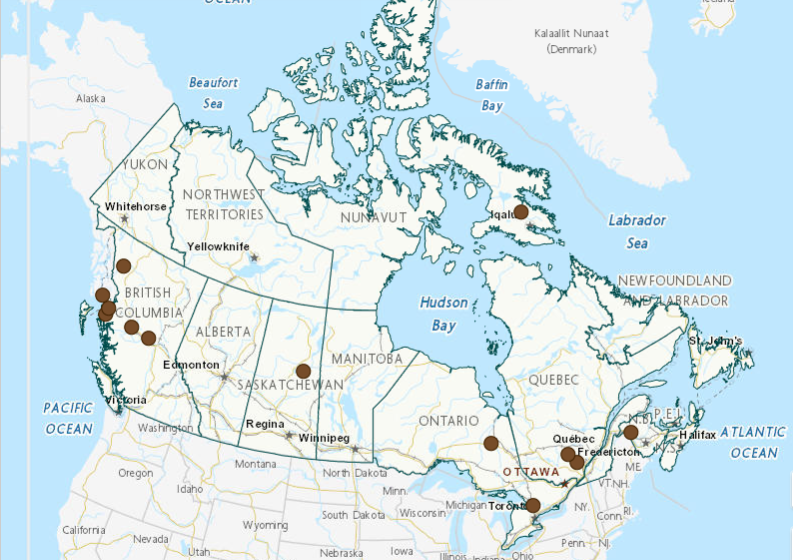
To the office’s credit, there have been early positive signs. The federally backed offtake agreement for 30,000 tonnes of graphite concentrate from Nouveau Monde’s (TSX: NOU) Matawinie project materially de-risks that project as it heads toward a final investment decision. This is precisely the type of targeted intervention that can unlock private capital and accelerate development.
Frontier Lithium’s (TSX: FL) PAK Project is another example that clearly aligns with the MPO’s stated goals. Both levels of government pledged up to $240 million last year to support its proposed lithium-hydroxide plant. Given lithium’s extreme price volatility, a federal offtake structure similar to Nouveau Monde’s would provide the stability Frontier needs ahead of its planned 2027 decision.
Seabridge Gold’s (TSX: SEA) KSM Project in northwestern British Columbia also stands out as a textbook MPO candidate. Mining.com recently ranked KSM the largest undeveloped gold–copper project in the world. Seabridge estimates it would contribute over $50 billion to Canada’s GDP, create roughly 1,550 construction jobs, and support more than 1,400 long-term onsite roles over its multi-decade life. The project is also integrated with the transmission line expansion that the MPO has already endorsed.
But the most glaring omission is NexGen Energy’s (TSX: NXE) Rook I Project, widely considered the most economic uranium development project globally. According to its 2021 feasibility study, Rook I could generate more than $8 billion in federal and provincial tax revenues, with the total economic impact estimated to be in the neighbourhood of $37 billion. It also has strong provincial and Indigenous support. Its absence from the MPO list is difficult to reconcile with the office’s stated mandate.
Other projects worthy of consideration include Wyloo Metals’ Eagle’s Nest nickel-copper deposit in Ontario’s Ring of Fire, Generation Mining’s (TSX: GENM) Marathon palladium project, and Newmont’s (NYSE: NEM) Galore Creek copper-gold project. And there are more than a dozen Canadian gold projects boasting over five million measured and indicated ounces currently stuck in regulatory limbo.
If Canada is serious about restoring its status as a mining superpower and serious about addressing a widening fiscal deficit, then transparency and consistency in how projects are selected is essential. The MPO has the potential to streamline development and unlock billions in economic value. But that will only happen if the country’s most impactful projects are at the front of the line.
Information for this briefing was found via Sedar and the sources mentioned. The author has no securities or affiliations related to this organization. Not a recommendation to buy or sell. Always do additional research and consult a professional before purchasing a security. The author holds no licenses.




One Response
My guess is that, politically, releasing the announcement of these projects in bunches carries far more weight and the delay of mere months is acceptable.