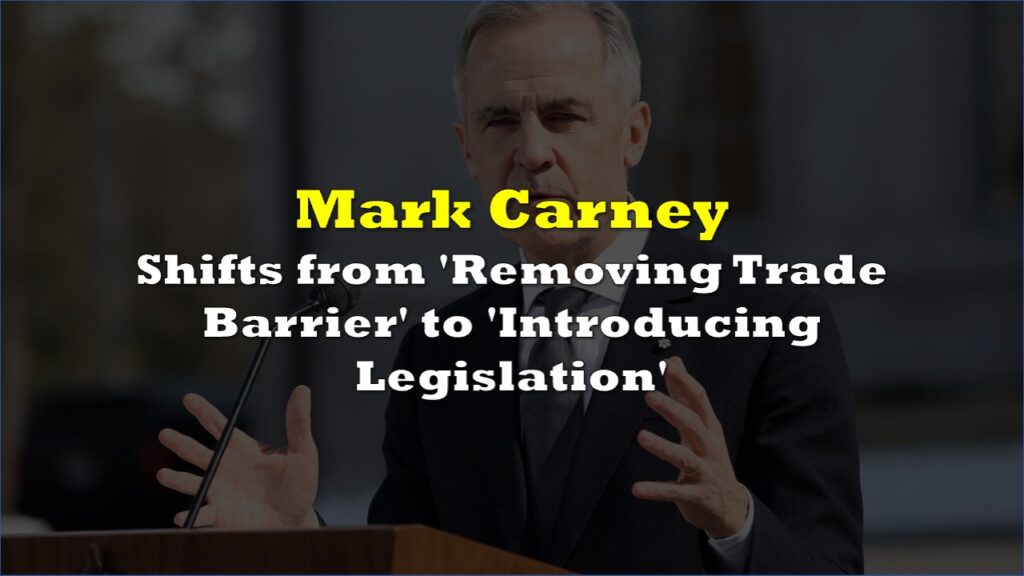
Prime Minister Mark Carney’s flagship fasttrack agenda has hit an early wall as New Brunswick confirmed the Sisson Mine has met none of the 40 conditions required under its environmental impact assessment and will not yet be approved to proceed to construction.
Sisson was promoted in Carney’s second wave of “nation-building” projects and referred earlier this month to Ottawa’s new Major Projects Office, which is supposed to strip out regulatory red tape. Yet the decisive gate remains provincial. Environment Minister Gilles LePage told reporters that “the 40 are not complied [with] yet,” and stressed that 28 of those conditions must be satisfied before any construction can start.
The 40 conditions span core environmental and safety safeguards. They include approvals for air and water quality, a comprehensive emergency response plan, modelling for potential tailings pond failures, and a requirement that construction begin within five years.
 Sponsored · Cambria Gold Mines
None of these boxes has been ticked, putting the project into renewed limbo despite its upgraded status in Ottawa.
New Brunswick’s EIA review for Sisson began in 2015. The province extended the EIA deadline in 2020, again in 2022, and then a third time earlier this month, now pushing the horizon out to 2030. LePage described the EIA as “a living process,” signalling that the province is prepared to keep the file open but not to lower the bar.
Crucially, LePage said the 40 conditions will be tested against current environmental regulations rather than those in force a decade ago.
“They’re still valid, but we have to make sure that they are up to date,” he said, adding that “the standard of the response from the proponent has to be up to date with today’s regulations — municipal, provincial and federal.”
 Sponsored · Selkirk Copper Mines
Among those upgrades is a requirement to produce a new wetland map to further identify at-risk species in the project area. This adds fresh biodiversity obligations on top of water, air and tailings risk, tightening the technical and permitting envelope at the very moment Ottawa is trying to accelerate critical minerals supply.
On paper, Sisson is exactly the kind of project Carney wants to showcase. The mine would produce tungsten and molybdenum, metals used in batteries and other clean-technology applications. By sending the project to the Major Projects Office earlier this month, the federal government signalled it wants Sisson in the fast-lane, even as the provincial EIA decision confirms that none of the 40 prerequisite steps has been cleared.
New Brunswick Premier Susan Holt has tried to square that circle by welcoming the opportunity while flagging hard economic tests. She pledged to “ensure this opportunity strengthens our province, supports good paying jobs for New Brunswickers, and helps grow our provincial economy,” but her government is also pressing for guarantees that Sisson can achieve viable mineral prices once operating. The mine has already suffered years of delay due to weak investment interest, driven in part by cheaper competing supply from China.
Indigenous consent adds another structural layer to the approval stack. The Wolastoqey chiefs and the provincial government signed an accommodation agreement for Sisson in 2017, but final First Nations approval is explicitly conditional on the 40 provincial EIA conditions being met.
In a joint statement after Carney’s announcement, the six chiefs reaffirmed that linkage and their insistence on process.
“The Wolastoqey Chiefs insist that all proper processes will be followed and the conditions upon which the mine was established will be maintained,” they said, underscoring that this “includes ensuring the EIA conditions put forth by the province are met along with the accommodations outlined in the agreements signed by our communities.” They added that they are monitoring new information, reviewing implications for existing legal matters, and “pressing governments to uphold Wolastoqey Rights at every step.”
Information for this story was found via Juno News and the sources and companies mentioned. The author has no securities or affiliations related to the organizations discussed. Not a recommendation to buy or sell. Always do additional research and consult a professional before purchasing a security. The author holds no licenses.