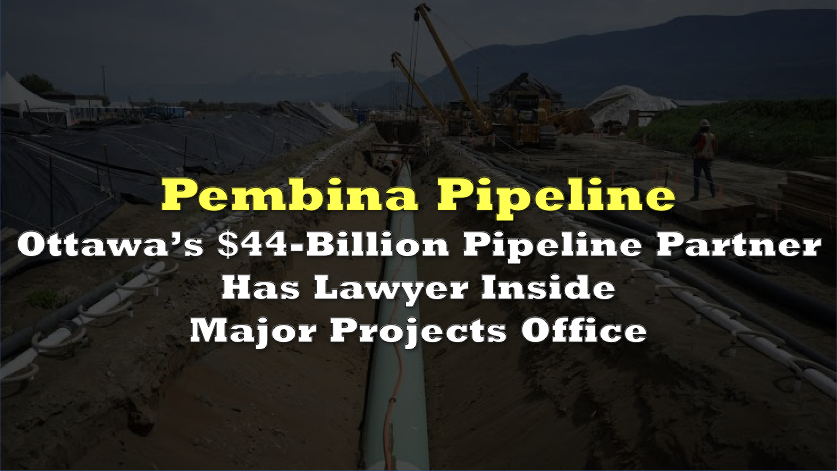

Canada’s proposed $35.2 billion to $43.7 billion Pacific Link pipeline has a corporate investor seeking protection against development risks, while the federal office charged with shaping the project’s regulatory conditions employs a lawyer seconded from that same company.
Pembina Pipeline signed a non-binding agreement in July for a proposed 10% economic interest during construction, with an option to acquire up to another 10% once the pipeline begins operating. Its agreement contemplates protections concerning cost overruns and returns.
The company retains control over its final investment decision and says it will have no at-risk development capital beforehand.
 Sponsored · Silver47 Exploration Inc.
Those terms matter because the federal Major Projects Office, supported by the Canada Energy Regulator, is responsible for developing conditions governing Pacific Link’s ownership, environmental protections, Indigenous rights, and local employment. Ottawa has set September 1, 2027, as the target for completing that process.
The government designated Pacific Link a project of national interest on October 1. It would transport roughly one million barrels of crude daily from Alberta to British Columbia’s coast. Trans Mountain is designated lead proponent, while Ottawa and Alberta plan to share ownership and offer Indigenous communities a minimum 10% stake.
Corporate employees inside the federal office
The connection inside the office became public Tuesday, when Ottawa released a list of 41 seconded employees and their employers, dated November 4. Seventeen came from private companies, including four from RBC, BMO, and Scotiabank combined. Two additional secondees came from Trans Mountain, a federal Crown corporation and Pacific Link’s lead proponent.
The document names Pembina employee Samuel Denstedt but does not state his government duties. The Trillium, citing his LinkedIn profile, reported that Denstedt is a regulatory lawyer serving as the MPO’s director of regulatory affairs, with his secondment beginning in July.
That overlap does not establish that Denstedt handled Pacific Link files or influenced a decision. MPO chief executive Dawn Farrell has told lawmakers that secondees undergo ethics screening and cannot work on matters involving conflicts they disclose.
The disclosed list identifies employers, not the projects each secondee may access.
The financial arrangements are also not fully public. Under the Build Canada Exchange program, originating employers continue paying salary and benefits, with host organizations typically reimbursing costs. A Privy Council Office spokesperson told The Trillium the MPO reimburses predetermined amounts aligned with federal pay scales, without disclosing individual terms.
As of October, the MPO had 194 employees. The corporate secondees are a minority of that workforce, but the project conditions the office develops will influence capital commitments, regulatory obligations, and the allocation of costs on an infrastructure proposal worth tens of billions of dollars.