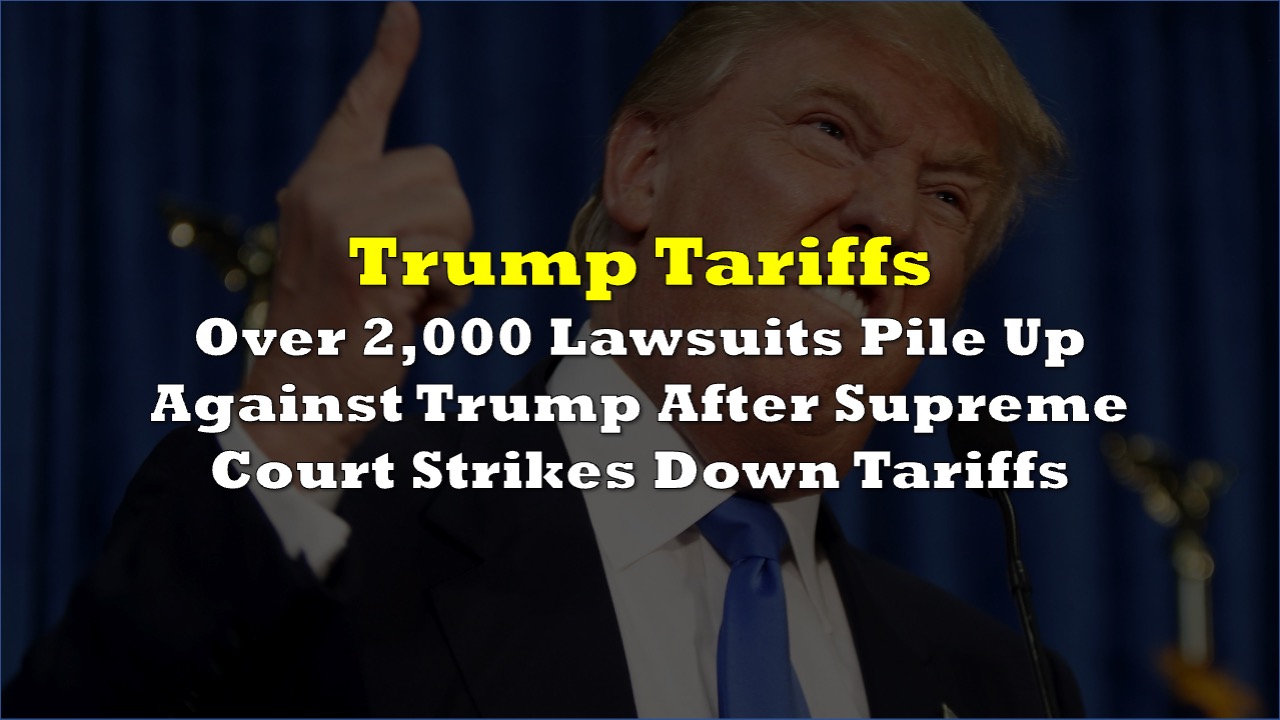

Companies ranging from global logistics giants to small importers have flooded federal trade courts with more than 2,000 lawsuits demanding refunds on tariffs the US Supreme Court declared illegal, setting up what legal experts warn could be a years-long battle over more than $170 billion in duties already collected.
The litigation follows the court’s February 20 ruling in Learning Resources, Inc. v. Trump, in which a 6-3 majority held that the International Emergency Economic Powers Act does not grant the president authority to unilaterally impose import tariffs. Chief Justice John Roberts wrote the majority opinion, joined by Justices Sonia Sotomayor, Elena Kagan, Neil Gorsuch, Amy Coney Barrett, and Ketanji Brown Jackson.
Read: Supreme Court rules Trump tariffs illegal
More than 100 companies filed new suits in the ruling’s immediate aftermath, pushing active cases past 2,000. Household names, including FedEx Corp., Dyson Inc., Dollar General Corp., Bausch & Lomb Inc., Brooks Brothers, L’Oréal SA, On Holding AG, and Skechers USA Inc., have all moved to recoup import duties paid over the past 10 months.
🚨BREAKING: ALL OF WALL STREET IS SUING TRUMP AT THE SAME TIME pic.twitter.com/wRsIR3unaa
— Spencer Hakimian (@SpencerHakimian) February 27, 2026
FedEx, which filed suit on February 23, said it “has taken necessary action to protect the company’s rights as an importer of record to seek duty refunds,” and pledged to pass any recovered funds to affected customers. “If refunds are issued to FedEx, we will issue refunds to the shippers and consumers who originally bore those charges,” the company said.
The 2,000-plus cases still represent only a fraction of potential claimants. Trade attorneys and customs experts estimate roughly 300,000 shippers paid the now-invalidated tariffs — suggesting the wave is far from its peak.
The Supreme Court left the refund mechanism undefined, assigning the question to the US Court of International Trade. That court managed several thousand repayment claims after striking down a harbor maintenance tax on exports in 1998, but the current docket is on a scale the court has never faced.
The Trump administration has given no indication that it plans to move quickly. President Donald Trump said at a press conference following the ruling that the dispute would take time to resolve.
“I guess it has to get litigated,” he said. Treasury Secretary Scott Bessent separately called potential refunds “ultimate corporate welfare” in a Fox News interview, though he later said the administration would follow court direction.
Sources told Politico officials are also weighing tactics to slow or limit payments, including retroactively legalizing collected duties under new authority, discouraging claims, and offering expedited processing in exchange for partial forfeiture.
Within hours of the ruling, Trump announced a fresh set of global levies under alternative statutory authority, signaling an intent to preserve broad import duties through other legal means.
Read: More Trump tariffs coming after Supreme Court decision
Trade attorney Joyce Adetutu, a partner at Vinson & Elkins, said that the government is “well positioned to make this as difficult as possible,” and that many importers may be forced to litigate individually to see any money returned.
Attorneys for Learning Resources, the lead Supreme Court plaintiff, took the opposite view. “It is clear that the importers of record that paid the unlawful tariffs are entitled to the amounts they paid,” said Pratik A. Shah, head of the Supreme Court practice at Akin Gump Strauss Hauer & Feld.
The Department of Justice faced a February 27 deadline to weigh in on next steps in the original case — an early test of how aggressively the administration intends to contest the refund process.
Information for this story was found via Bloomberg, and the sources and companies mentioned. The author has no securities or affiliations related to the organizations discussed. Not a recommendation to buy or sell. Always do additional research and consult a professional before purchasing a security. The author holds no licenses.