
Conservstive Leader Pierre Poilievre moved quickly to turn Prime Minister Mark Carney’s latest address on Canada-US relations into an affordability attack, accusing the prime minister of “pushing fear” one day before fresh inflation data showed Canada’s annual CPI accelerated to 2.4% in March from 1.8% in February.
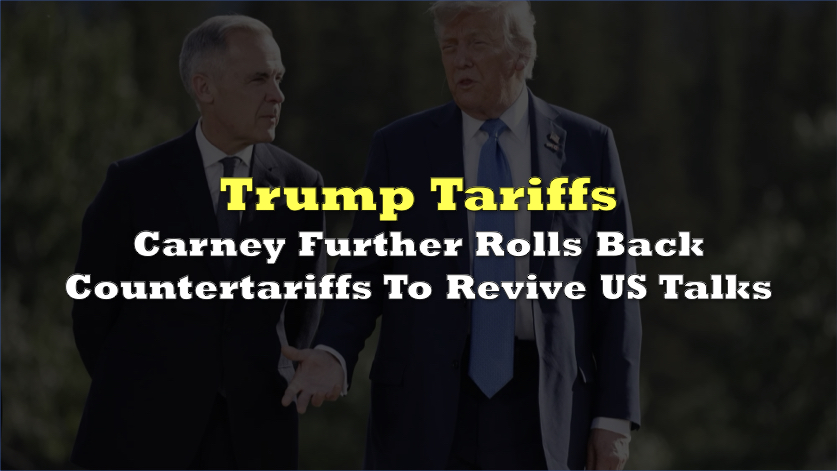
The exchange began after Carney released a 10-minute video on Sunday, arguing that Canada’s deep economic ties with the US, once a major strength, had become a weakness that “must be corrected.” He said Ottawa could not wait for a return to the old cross-border status quo and would instead press ahead with trade diversification, new investment, internal market reforms, energy corridors, and regular public updates on what is and is not working.
Poilievre’s response framed that address as a political distraction timed ahead of the inflation release.
 Sponsored · Selkirk Copper Mines
“It’s not surprising that the prime minister wants to distract from his costly failures by pushing fear and re-upping his rhetoric yesterday,” he said.
In the video, he argued Carney was recycling old lines while failing to deliver results on homebuilding, major projects, business investment, and negotiations with Washington.
“We do not need more costly illusions from Mr. Carney. We need real-world results at your grocery store, your gas pump and in your bank account,” he added.
Poilievre argues that Carney promised to double homebuilding, accelerate major projects, expand trade beyond the US, and negotiate a better outcome with Washington, but says those promises have not translated into visible results.
 Sponsored · Cambria Gold Mines
“His new major projects office has approved not one single new major project, not one major pipeline, not one major development, nothing,” he noted.
He also attacks the government for keeping what he calls “Trudeau-era” anti-development laws and bureaucracy in place while increasing spending and deficits.
“How many new trade deals with other countries do you think he has negotiated in his year in office? Zero,” he pointed out.
For their part, Poilievre relayed his party’s proposals: eliminate all carbon taxes, suspend gas and diesel taxes for the rest of the year, cancel EV rebates and mandates, remove the sales tax on vehicles made in Canada, cut red tape and taxes on homebuilding, impose six-month approval timelines for projects, repeal laws such as Bills C-69 and C-48, adopt a “one project, one approval” rule, and use Bill C-5 powers to fast-track pipelines, including a Pacific pipeline.
He also proposes a “Canadian Sovereignty Act,” along with a strategic domestic energy and mineral reserve, to strengthen Canada’s negotiating position and push for tariff-free trade on products such as steel, aluminum, lumber, and autos.
That inflation backdrop gave the Conservatives a live data point. Statistics Canada said March CPI rose 0.9% from February, the fastest monthly gain in 14 months, driven largely by energy. Transportation prices rose 3.7% year over year, while food inflation remained elevated.
Carney, however, is speaking from a stronger parliamentary position than he had even a week ago. Liberals now control 174 of 343 seats after recent byelection wins, giving the government a House majority and removing its dependence on opposition support.
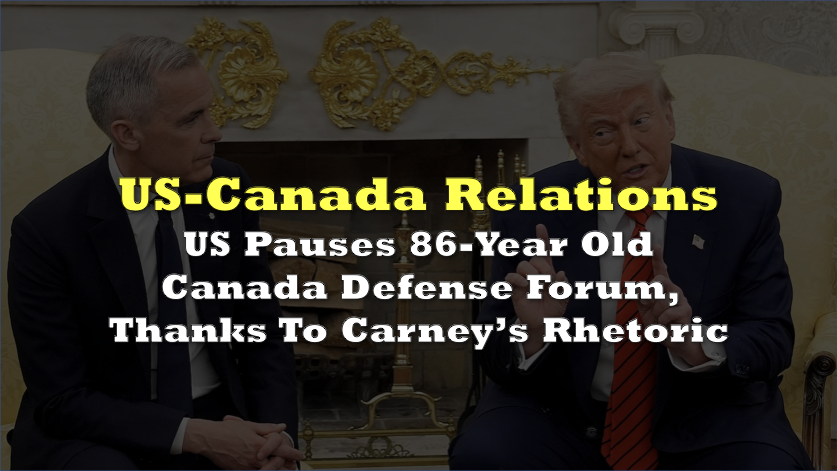
On the trade file itself, Carney has argued that US tariffs are threatening sectors including lumber, steel, and autos, and the July 1 CUSMA review deadline is not shaping up as a clean resolution point. US Trade Representative Jamieson Greer said earlier this month that negotiations over the pact are unlikely to be resolved by July 1.
The premiers’ reactions showed that even Carney’s allies are not fully aligned on the wording. Prince Edward Island Premier Rob Lantz said he did not like describing US ties as a “weakness,” though he agreed Canada should broaden trade relationships. Ontario Premier Doug Ford backed continued diversification while stressing that the US remains Canada’s top customer. New Brunswick Premier Susan Holt was more explicit, saying dependence on one market is a vulnerability, noting that 92% of her province’s exports go to the US. Northwest Territories Premier R.J. Simpson said the current situation itself shows the relationship can be a weakness if Canada becomes too dependent.
For Poilievre, the attack also serves an internal political purpose. Angus Reid data released this week showed 57% of past Conservative voters want him to lead the party into the next election, down from 68% in August, while 30% now want a leadership change, up from 18%.
This also comes after Poilievre’s attack on Carney’s economics education background, which the prime minister seemed to have shrugged off.
Information for this story was found via the sources and companies mentioned. The author has no securities or affiliations related to the organizations discussed. Not a recommendation to buy or sell. Always do additional research and consult a professional before purchasing a security. The author holds no licenses.