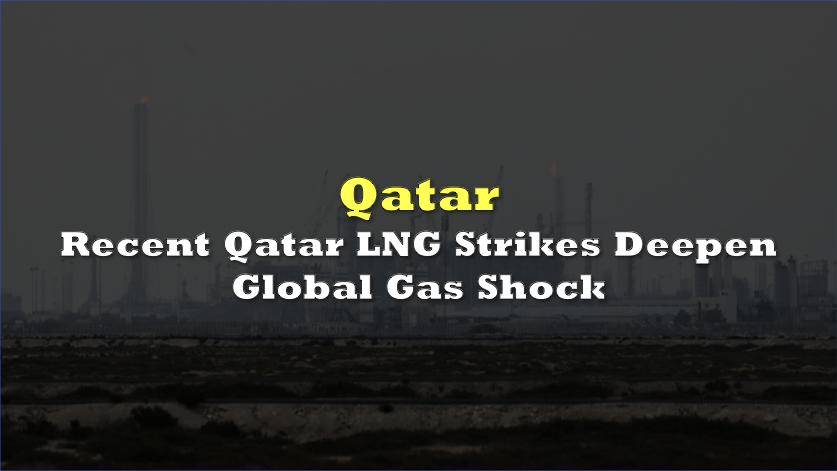

The Qatar story is no longer about temporary disruption but about damage to infrastructure that anchors roughly one-fifth of global LNG exports, with QatarEnergy confirming two rounds of attacks that caused fires and extensive damage at Ras Laffan and its LNG facilities.
QatarEnergy first said Ras Laffan Industrial City had been hit on Wednesday with emergency teams deployed, all personnel accounted for, and no casualties reported. It then said in a second statement on Thursday that several LNG facilities were struck in the early hours of the day, causing sizeable fires and “extensive further damage,” and specified that the earlier strike had already caused extensive damage at the Pearl GTL facility.
I hate to be the bearer of bad news but if infrastructure like this 👇 gets blown up, as of this moment it will take at least a decade to recover from this war – and the truth is that the world's energy picture is probably changed forever.
— Arnaud Bertrand (@RnaudBertrand) March 19, 2026
This single facility 👇produced roughly… https://t.co/CZzO6y19g9
The supply implications are immediate because Qatar had already halted production earlier this month at its 77 million ton-per-annum LNG facility and declared force majeure on shipments amid the wider conflict. QatarEnergy had offered five unloading, storage and regasification slots at Belgium’s Zeebrugge terminal for April.
That matters because Zeebrugge normally receives up to three Qatari cargoes per month, meaning the five April slots are not routine housekeeping but a visible sign of commercial rerouting as Qatar tries to preserve delivery chains into Europe.
Qatari Energy Minister Saad al-Kaabi told the Financial Times, as cited by Reuters, that returning to normal deliveries would take “weeks to months” even if the war ended immediately.
Qatar accounts for about 20% of global LNG exports, while AP separately described Ras Laffan as supplying about 20% of worldwide LNG. Qatar’s own exports reached nearly 81 million metric tons in 2025, and all of that LNG flows through infrastructure clustered at Ras Laffan and through the Strait of Hormuz chokepoint.
The escalation chain also widened fast. Israel’s strike on Iran’s South Pars gas infrastructure was reportedly coordinated with and approved by the Trump administration, directly contradicting President Donald Trump’s public claim that the US had no advance knowledge of the attack. This comes as Trump then publicly warned that if Iran attacked Qatar again, the US could “massively blow up the entirety” of South Pars.
South Pars and Qatar’s North Field are two sides of the same reservoir, the world’s largest gas field.
Markets have already started repricing that reality. European gas prices jumped 28% and oil climbed above $114 per barrel after the Gulf energy attacks, while Brent neared $115 and highlighted the inflation risk tied to disrupted Gulf energy flows.
Information for this story was found via Reuters and the sources and companies mentioned. The author has no securities or affiliations related to the organizations discussed. Not a recommendation to buy or sell. Always do additional research and consult a professional before purchasing a security. The author holds no licenses.