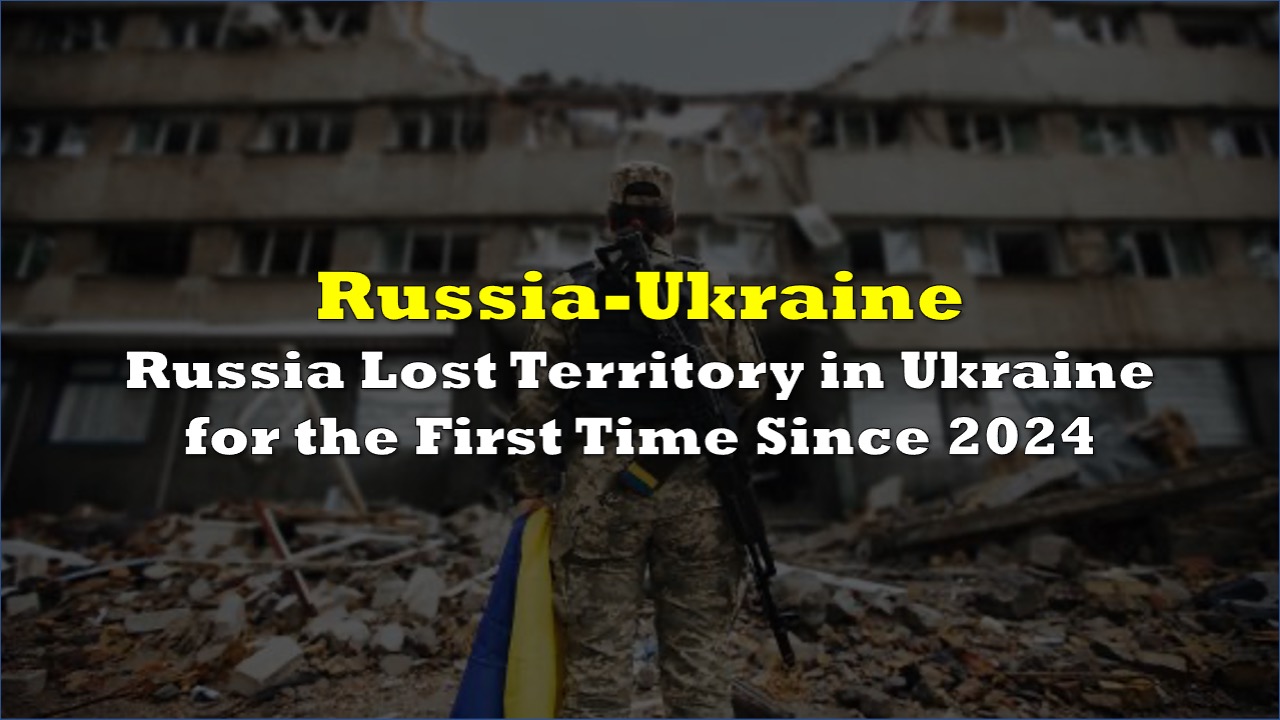

For the first time in nearly two years, Russia ended a month having lost more Ukrainian territory than it gained. The ceasefire announced to stop the killing lasted less than a weekend.
ISW reported Russian forces suffered a net loss of 116 square kilometres during April, with Ukrainian gains in the Sumy region north of Kharkiv and Zaporizhzhia province in the south — the first month of net Russian territorial loss in over a year and a half.
Russian forces averaged 9.76 sq km of gains per day in early 2025. By early 2026, that had fallen to 2.9 sq km per day — a two-thirds reduction over 18 months. In the four weeks to May 5, Russia suffered a net loss of 46 square miles — roughly double the size of Manhattan — compared to a net gain of 17 square miles in the preceding four-week period.
 Sponsored · PTX Metals Inc.
Ukraine claims more than 35,000 Russian soldiers were killed or seriously wounded in April, marking the fifth consecutive month where losses exceeded Moscow’s rate of new recruitment.
ISW cautioned against overstating the shift. “Russian forces have been using infiltration tactics in part to create the perception of continuous Russian advances across the front and to support Kremlin cognitive warfare efforts to exaggerate Russian successes,” it wrote in its May 2 assessment.
“Russian forces, however, do not control these infiltration areas, which are often collocated among Ukrainian positions in contested ‘grey zones.'” Erik Stijnman of the Dutch Clingendael Institute described April’s losses as tactical withdrawals rather than a strategic retreat — both sides probing defences at different points along the front, not a wholesale repositioning.
Trump announced a three-day ceasefire covering May 9-11 on Friday, and it is already under serious strain. The announcement came hours after Secretary of State Marco Rubio told reporters that US mediation had not led to a “fruitful outcome” and that efforts had “stagnated” — a rare contradiction between senior officials on the same day.
 Sponsored · Mercado Minerals Ltd.
Three people were killed in Russian drone strikes over the weekend, with more than 200 battlefield clashes recorded since Saturday. Russia’s Defence Ministry said it downed 57 Ukrainian drones and “responded in kind.” Ukraine held off explicitly accusing Russia of breach.
Russia announced a unilateral pause for May 8-9 to protect its Victory Day parade. Ukraine announced its own separate ceasefire starting May 5. Neither coordinated with the other — and Russian missile and drone attacks killed 22 Ukrainians on May 5, hours before Kyiv’s declared ceasefire took effect.
US-backed peace talks have stalled on Russia’s demand that Ukraine cede the rest of Donetsk and control of the Zaporizhzhia nuclear power plant. US envoy Steve Witkoff and Jared Kushner are expected in Moscow “soon” to continue negotiations.
Russian Finance Minister Anton Siluanov said he expected May oil revenues to be $2.7 billion higher than projected — a windfall from Iran war-driven oil prices that directly subsidises the Russian military. Ukraine has struck Russian oil export infrastructure repeatedly in recent months, including multiple hits on the Tuapse refinery and Baltic port terminals, with roughly 40% of Russia’s oil export capacity offline as of late March.
Related: Ukraine Strikes Russia’s Largest Baltic Oil Port in Escalating Energy War
Information for this story was found via the sources and companies mentioned. The author has no securities or affiliations related to the organizations discussed. Not a recommendation to buy or sell. Always do additional research and consult a professional before purchasing a security. The author holds no licenses.