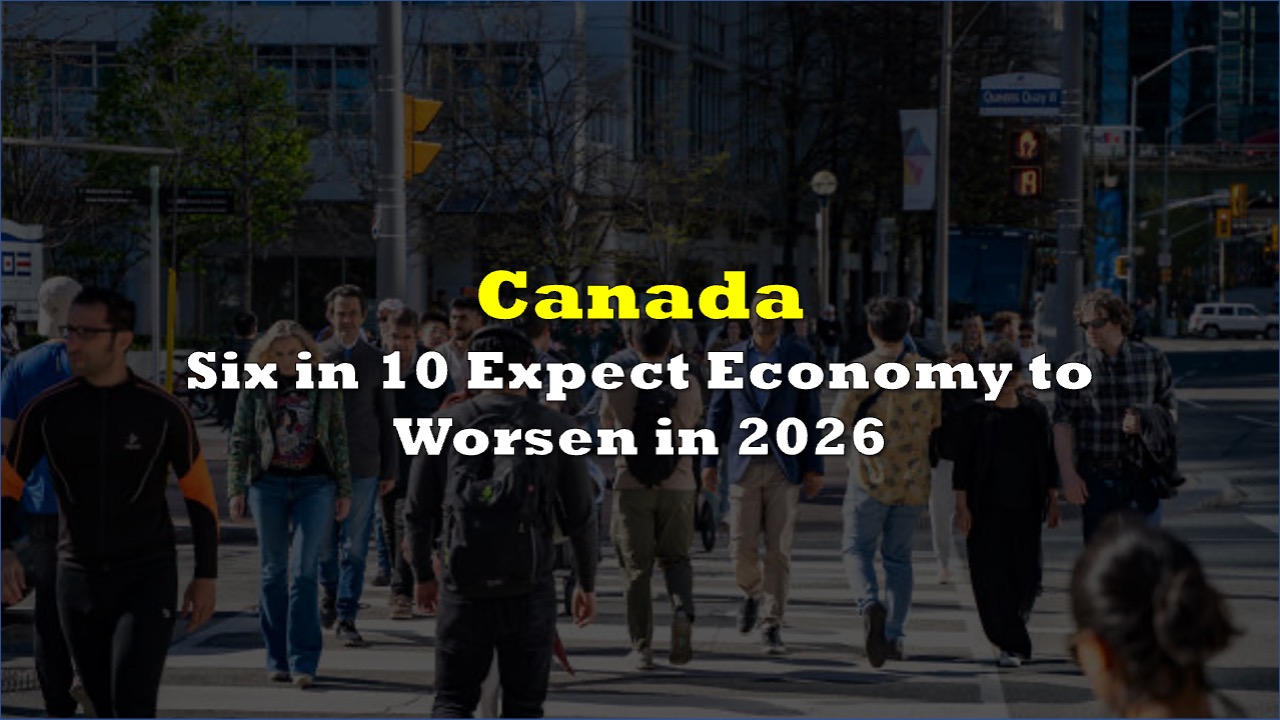

Nearly six in 10 Canadians expect the economy to deteriorate in 2026, with more than seven in 10 bracing for higher living costs, according to a survey released Monday by consumer insolvency firm MNP Ltd.
The survey found 59% anticipate the economy will worsen, while 71% expect living expenses to rise. Another 59% predict rising housing pressure, and 54% believe higher interest rates and inflation will add financial strain.
“There is a widespread sense that household finances will come under increasing pressure, fuelling heightened anxiety about economic security in the year ahead,” MNP president Grant Bazian said.
The findings contrast sharply with recent labor market data showing improvement. Canada’s unemployment rate fell to 6.5% in November from 6.9% in October, reaching a 16-month low, according to Statistics Canada. The economy added 54,000 jobs, the third consecutive monthly increase.
December data showed unemployment ticked back up to 6.8% as more people entered the labor market, with net employment rising by only 8,200.
The survey, conducted by Ipsos for MNP between November 28 and December 1, reached 2,001 Canadians aged 18 and over.
The Bank of Canada held its key interest rate at 2.25% on December 10, describing the economy as “resilient overall” despite US tariffs hitting steel, aluminum, automotive, and lumber sectors.
The survey found 41% of Canadians are $200 or less away from insolvency each month, though this marks a seven percentage point decline from the previous quarter. The average amount left at month’s end rose to $907, up $163 from the previous quarter. However, less than half report having six months of emergency savings.
17% now rely on credit to cover essential expenses. Another 12% avoid thinking about their finances, while 15% avoid discussing finances with family or professionals.
Alberta residents expressed particularly grim expectations, with 75% anticipating worsening living conditions and 67% expecting economic downturn. Additionally, 64% brace for heavier impacts from interest rates and inflation.
Deloitte projects Canadian GDP growth of 1.5% in 2026, down from expectations of 1.7% growth in 2025. The consulting firm cited trade uncertainty, weak business confidence, and a dramatic reversal in population growth.
The upcoming review of the Canada-United States-Mexico Agreement in July represents a significant risk, economists warn. Manufacturing employment fell by almost 30,000 jobs since March 2025, according to Canadian Manufacturers & Exporters. Steel exports declined 25%, aluminum exports dropped 6%, and automotive exports fell 5% following tariff implementation.
Despite consumer pessimism, Vanguard Canada forecasts real GDP growth of around 1.6% in 2026, supported by resilient consumption, improving labor conditions, fiscal stimulus and a competitive trade position.
Statistics Canada published upward revisions to GDP for 2022, 2023 and 2024, suggesting the economy entered 2025 on a stronger footing than previously believed. After contracting 1.8% in the second quarter, GDP grew 2.6% in the third quarter.
Consumer spending accounts for about 60% of GDP. However, business investment has remained weak amid trade uncertainty.
Inflation stood at 2.2% in October, slightly above the Bank of Canada’s 2% target. Core measures remain in the range of 2.5% to 3%.
A separate Ipsos poll conducted between December 8 and 15 found 62% feeling generally optimistic about 2026, suggesting hope despite expectations of continued challenges.
Seven in 10 said they fear a recession, though that number is four percentage points lower than three years prior. Meanwhile, 41% said 2025 made them more fearful about job security, 11 percentage points higher than in 2022.
The Bank of Canada’s next interest rate announcement is scheduled for January 28. Most economists expect the central bank to hold rates steady at 2.25% throughout 2026.
Information for this story was found via the sources and companies mentioned. The author has no securities or affiliations related to the organizations discussed. Not a recommendation to buy or sell. Always do additional research and consult a professional before purchasing a security. The author holds no licenses.