
South Korea’s stock market more than doubled in just over a year, drew a wave of first-time investors into margin-funded bets on two semiconductor companies, and is now lurching, with the most exposed investors the least able to absorb losses.
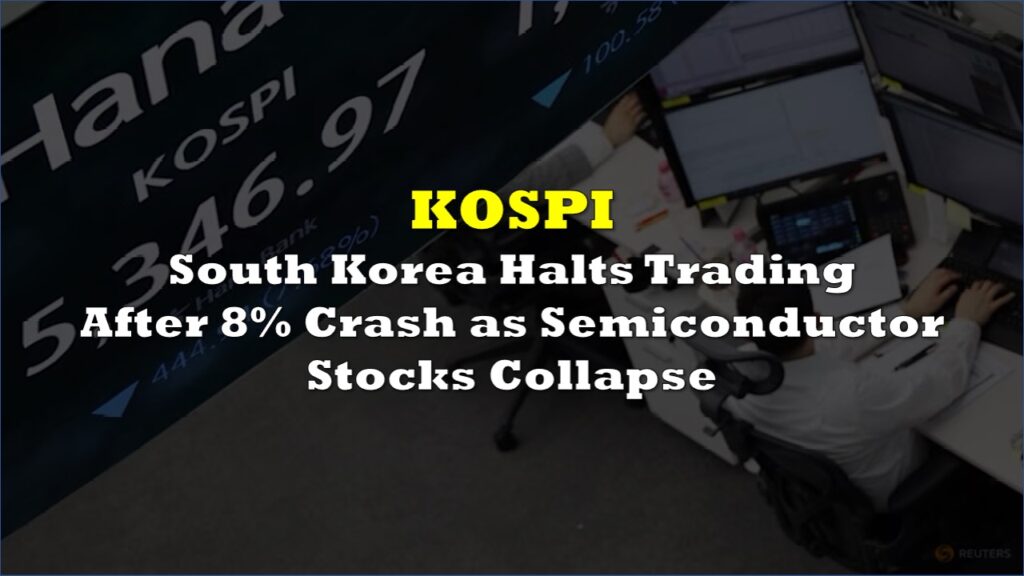
The KOSPI surged from roughly 2,400 in early 2025 to a record 8,046 on May 15, 2026, before collapsing 6.12% in a single session — its steepest single-day drop since March. The index has since slid further, falling an additional 3–4% Tuesday as semiconductor weakness tracked overnight losses on Wall Street.
Samsung Electronics and SK Hynix together account for more than 40% of the KOSPI’s total index weight. Over the past year, Samsung surged more than 375% and SK Hynix approximately 790%. Excluding those two, projected operating profit growth for the other 187 listed electronics companies in 2026 is roughly 2%.n 2026 is roughly 2%.
 Sponsored · Selkirk Copper Mines
Korea Financial Investment Association data shows the total stock-purchase margin loan balance reached a record ₩36.47 trillion ($24.3 billion) by May 16, 140% higher than at the start of 2025. The ten biggest brokerages collectively booked ₩600 billion in margin lending interest in Q1, a 55.9% jump year-on-year.
South Korea’s Financial Supervisory Service found that investors aged 50 and older held more than 60% of the total margin loan balance across the country’s top 10 brokerages in Q1 — a share that more than doubled in a year. This is a generation that traditionally kept savings in fixed deposits and real estate. Older borrowers also drew down more than ₩3 trillion in overdraft and credit card facilities at major banks by early 2026 compared with end-2024.
“Until now, for people in their 50s and 60s, real estate was the dominant means of wealth accumulation,” said Hong Ki-yong, a business administration professor at Incheon National University. “But with the current government placing heavier pressure on the property market, the rapidly rising stock market has emerged as an attractive alternative.” He cautioned that retirement savings could take a severe hit if the rally reverses.
Posts on Blind, an anonymous workplace forum, captured the mood. One civil servant disclosed pouring ₩2.3 billion ($1.7 million) into SK Hynix shares — ₩1.7 billion of it on margin — writing that he intended to “grow assets faster.” A Seoul Metro employee in her 20s posted that she would “risk complete collapse” rather than sit out the rally, noting she had taken on 150% margin financing to go all-in.
Foreign funds sold a net $13.2 billion worth of Korean equities last week — part of a broader $17 billion outflow from emerging Asian markets excluding China, the second-largest weekly exodus on record according to Goldman Sachs. Since November 2025, cumulative net foreign selling has reached approximately ₩80 trillion ($53.6 billion). The KOSPI Volatility Index surged to near its March crash peaks.
 Sponsored · Silver47 Exploration Inc.
Citi trimmed its bullish KOSPI call this week, warning the index showed more signs of “exuberance” than US markets. “KOSPI appears much more overbought than in the US,” the bank’s strategists wrote. Christian Heck of First Eagle Investments called it “a high-risk bet on the semiconductor sector.”
In early March, the KOSPI plunged roughly 18% over two days — triggered by energy price shocks from Middle East tensions — as forced margin calls cascaded across the market. The index recovered, but margin debt kept climbing rather than falling.
The structural problem is concentration. When the index is dominated by two stocks and the rally is funded by borrowed money, a sustained selloff triggers forced liquidations that accelerate the decline — exactly what happened in March. With margin debt now at record highs, the exposure is larger.
South Korea’s financial regulator has urged investors to trade only within their means. The market is still pricing in a semiconductor supercycle.
Information for this story was found via the sources and companies mentioned. The author has no securities or affiliations related to the organizations discussed. Not a recommendation to buy or sell. Always do additional research and consult a professional before purchasing a security. The author holds no licenses.