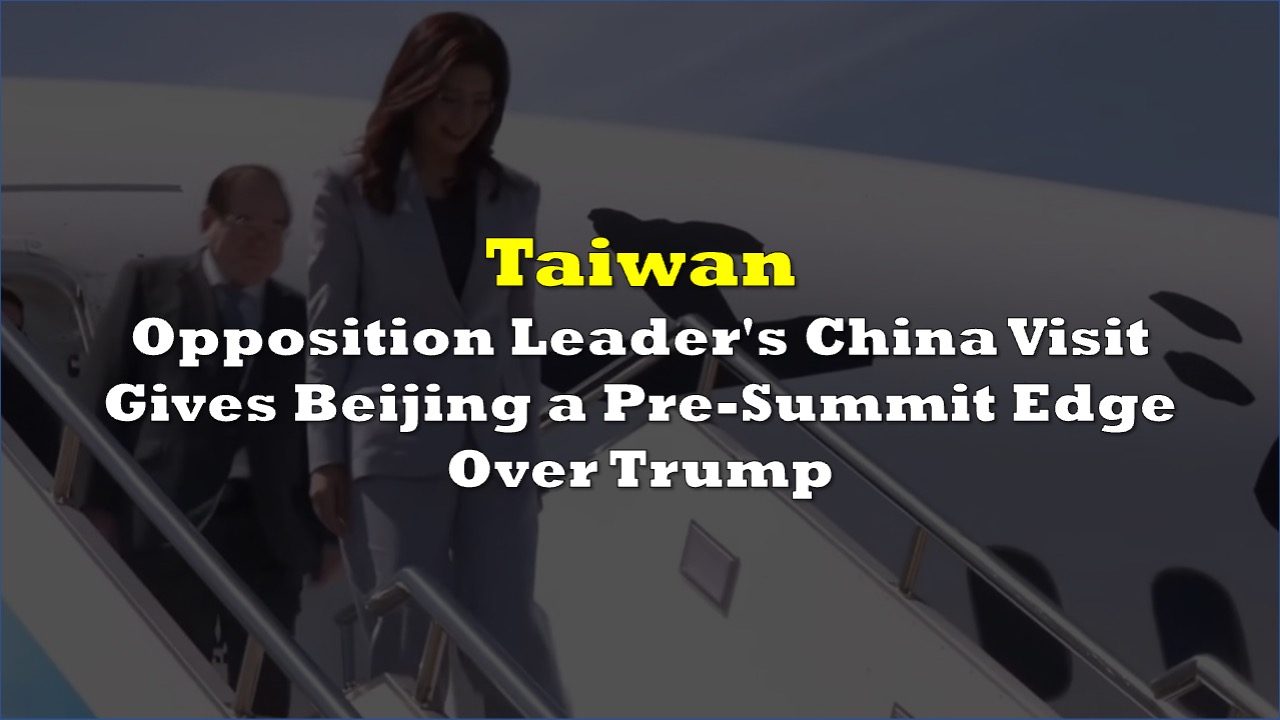

Weeks before President Xi Jinping sits down with Donald Trump in Beijing, China has handed itself a significant advantage on the summit’s thorniest issue: Taiwan.
Xi invited Taiwan’s main opposition leader, Kuomintang (KMT) Chairwoman Cheng Li-wun, to China for a six-day visit beginning April 7 — the first by a sitting KMT leader in a decade.
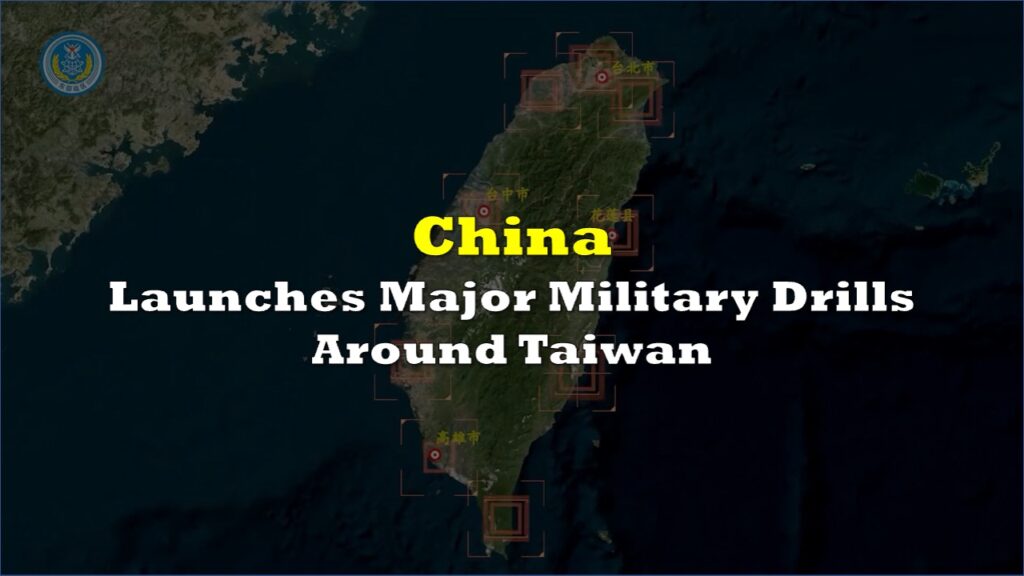
China filed airspace restriction notices over the Yellow Sea and East China Sea running through May 6, the kind typically used to signal military exercises, without announcing any drills. And Beijing watched as the KMT-dominated legislature in Taipei continued blocking the ruling government’s push to unlock $40 billion for weapons procurement and defense development — a budget that would fund, among other things, US arms already approved for sale.
Trump gave Beijing an opening it quickly moved to use. Ahead of the summit, he suggested he would be open to discussing future arms sales to Taiwan with Xi — rattling Taipei and, analysts say, providing Cheng the political cover she needed to make the trip.
The world has taken note of what the US does to its pawns.
— Jason Smith – 上官杰文 (@ShangguanJiewen) April 8, 2026
As such, the head of Taiwan China's KMT is set to meet with China's president Xi Jinping to take a new path, away from being a mere pawn of the US empire.
This is historic. pic.twitter.com/vkGTePE04F
“After meeting with the opposition, Xi Jinping can use this opportunity to emphasize that cross-strait affairs should be resolved by China itself and that the United States should not interfere,” Shen Ming-Shih, director of national security research at Taipei’s Institute for National Defense and Security Research, told Vision Times.
Xi now arrives at the May summit having demonstrated, in quick succession, that he can engage Taiwan’s opposition directly, sustain military pressure without triggering a crisis, and exploit Washington’s own ambiguity on arms.
Wen-Ti Sung, a fellow at the Atlantic Council, noted that the visit alone “may sideline the Taiwan Strait tension issue from the Xi-Trump summit, thus enabling the US-China summit to focus on business areas of common interest” — an outcome that’s far more beneficial to Beijing than Taipei.
None of this reflects a shift in China’s actual position. Beijing’s 15th Five-Year Plan, published in March, maintains the same goals of unification and opposition to independence, now packaged with economic incentives — what The Diplomat called “old wine in a new bottle.”
China has not budged on its refusal to engage DPP President Lai Ching-te, whom it labels a “separatist,” and has given no indication it will halt military pressure around the island.
What has changed is the leverage. By hosting Cheng, Beijing can tell Trump it has Taiwanese interlocutors willing to talk — and use whatever she says to undercut Lai’s government on arms, defense spending, and Taiwan’s relationship with Washington.
The Mainland Affairs Council acknowledged the risk before Cheng departed, warning Beijing would try to “cut off Taiwan’s military purchases from the US and cooperation with other countries.”
Cheng has rejected reunification talks as premature while insisting Taiwan can engage Beijing without sidelining Washington.
“If you truly love Taiwan, you will seize even the slightest chance, every possible opportunity, to keep Taiwan from being ravaged by war,” she told reporters before departing Taipei.
Information for this story was found via the sources and companies mentioned. The author has no securities or affiliations related to the organizations discussed. Not a recommendation to buy or sell. Always do additional research and consult a professional before purchasing a security. The author holds no licenses.