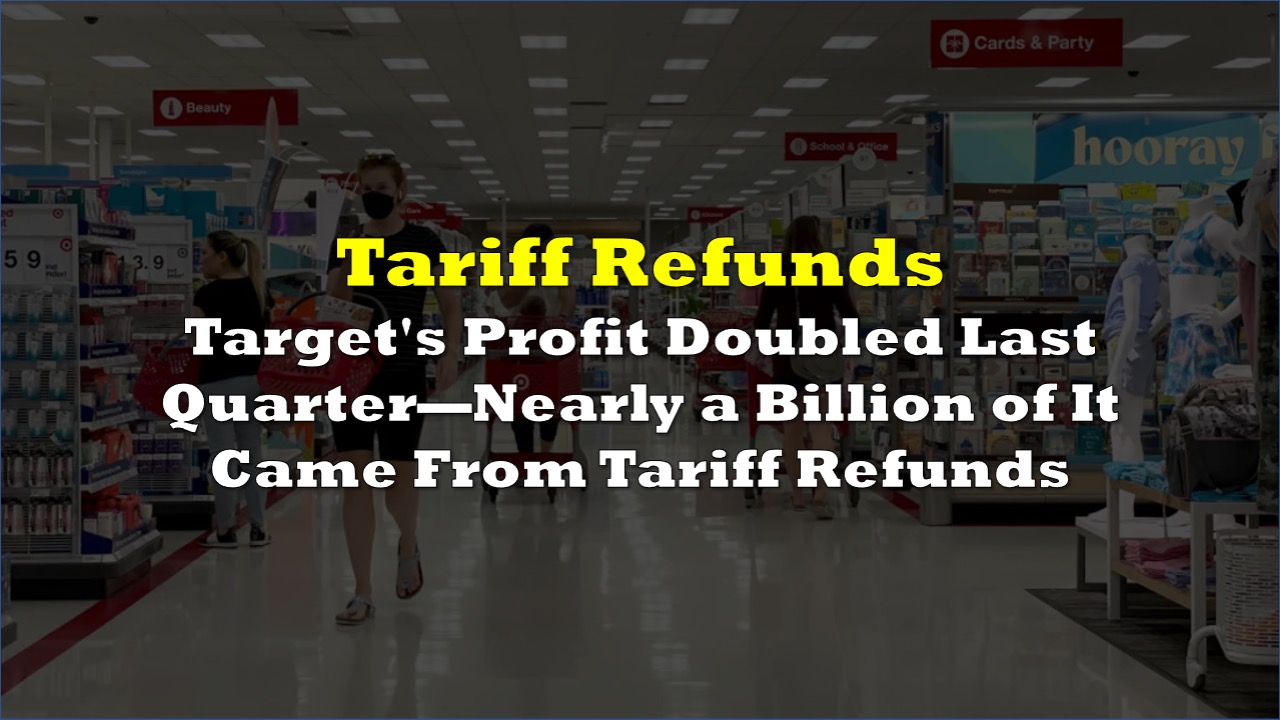

Target‘s (NYSE: TGT) second-quarter earnings per share came in at $4.11, more than double last year’s $2.05 — and $994 million of that windfall was money the company hadn’t earned so much as gotten back, a pretax benefit from refunded tariffs that alone contributed $752 million to net earnings, or $1.65 per share.
The refund traces back to a Supreme Court ruling in February that found the Trump administration exceeded its authority by using the International Emergency Economic Powers Act to impose the tariffs in the first place.
US Customs and Border Protection had certified roughly $100 billion in refunds, plus interest, as of the end of July, out of about $165 billion collected under the levies — meaning Target’s payout is one slice of a much larger repayment working its way through the system. Target CFO Jim Lee said on the earnings call that more refunds are likely coming, with the $994 million so far covering most of what the company had applied for.
 Sponsored · Cambria Gold Mines
Strip the refund out and Target’s quarter still looks solid — earnings per share still grew about 20% year over year on the underlying business alone, and comparable sales rose 3.8%, the second straight quarterly gain after a stretch of flat-to-declining results. Net sales climbed 5.3% to $26.54 billion, beating Wall Street’s expectations of roughly $26.14 billion.
Target has said the extra money is going toward the same effort it was already funding — lower prices. Lee told the earnings call the company has “already lowered prices on more than 10,000 items over the last 12 months” and said more cuts are coming before year’s end, though he didn’t say how directly the refund itself was funding those cuts.
The results were strong enough that Target raised its full-year outlook, projecting EPS of $9.90 to $10.90 including the tariff windfall — or $8.25 to $9.25 without it, up from a prior forecast of $7.50 to $8.50. Target’s stock dipped in premarket trading before climbing 4% by the close.
CEO Michael Fiddelke, who took over the company in February, kept the tone measured despite the beat: “Two strong quarters is not the goal,” he told reporters.
Amazon reported a smaller refund — about $600 million — and said it had eaten most of the original tariff cost itself, automatically refunding only a narrow group of customers it had hit with import surcharges. Apple‘s refund came to roughly $2.2 billion, which CEO Tim Cook has said the company plans to reinvest domestically rather than share with customers. Walmart, meanwhile, cited its own tariff refunds as a factor in a 9.4% jump in second-quarter gross profit and says it’s putting the money toward price cuts.
Senator Elizabeth Warren wrote to Target and four other major retailers this month pressing them to pass refunds on to the customers who paid the original tariffs, while Senator Rand Paul has made a similar case from the other side of the aisle.