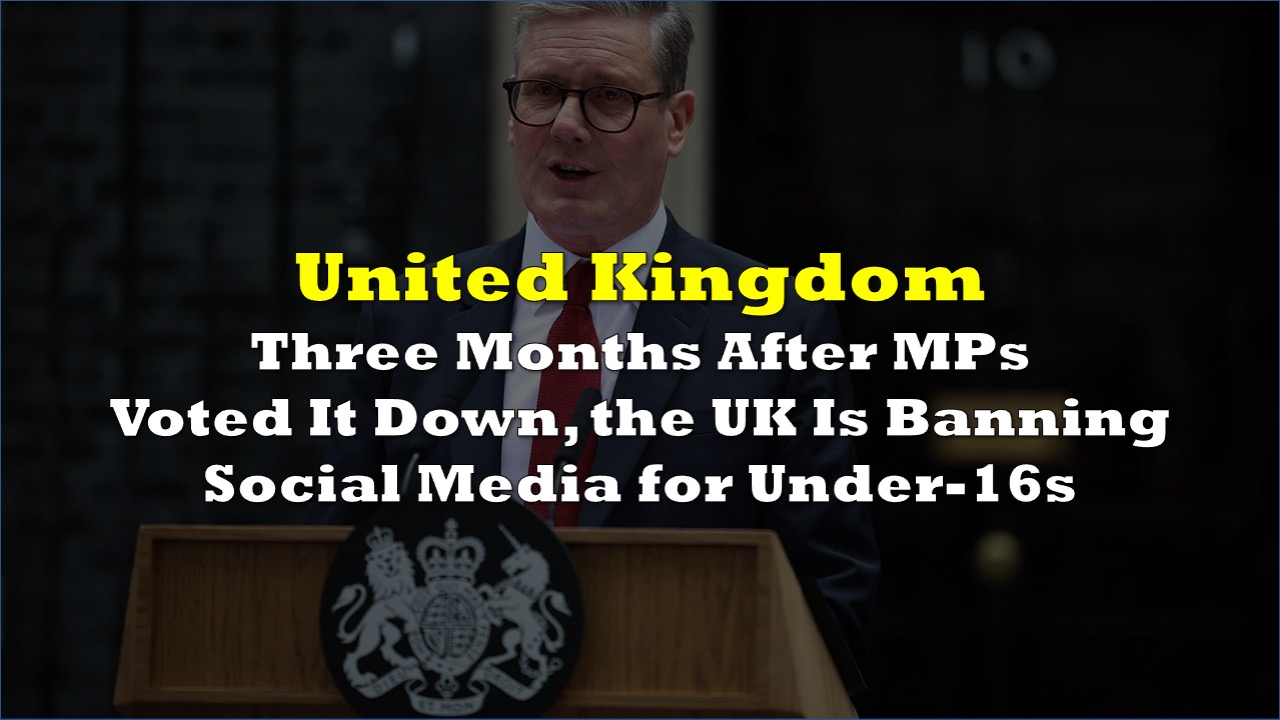

Prime Minister Keir Starmer announced Monday that the UK will ban children under 16 from social media platforms, including Snapchat, TikTok, YouTube, Instagram, Facebook, and X. This move comes three months after Parliament voted down a comparable measure.
At a Downing Street press conference, Starmer said the government intended to give children their childhoods back. The ban covers major social platforms but excludes messaging services, including WhatsApp and Signal.
The government also announced additional restrictions covering livestreaming, stranger communication features, and AI chatbot use for minors. Legislation is expected before Christmas 2026, with protections taking effect in spring 2027.
 Sponsored · Silver47 Exploration Inc.
The announcement follows a three-month national consultation launched in March that found more than 83% of parents believe the risks of social media outweigh the benefits for children, and 90% support a minimum access age of 16. Starmer acknowledged enforcement would not be easy but said he intended to fight back against technology companies that treat the current situation as unchangeable.
The NSPCC praised the government’s ambition while calling for robust age verification enforcement. The Open Rights Group raised concerns about age verification companies and data protection. A YouTube spokesperson warned the ban could push children toward “anonymous, less-safe services.”
Telegram founder Pavel Durov pushed back in a series of posts on X, arguing the ban would make teenagers less safe rather than more. “When the Russian government banned Telegram, 95% of Russian teenagers kept using it,” Durov wrote. “They just moved to VPNs.” He argued that banning platforms drives minors toward unmoderated alternatives where genuinely harmful content is harder to police. Durov also raised the age verification mechanism — which would require users to prove they are over 16 via ID, face scan, or bank card — as a civil liberties concern, noting that thousands of people in the UK are already arrested annually over political posts online.
The UK joins a growing list of countries moving against social media access for minors. Australia enacted the world’s first such ban in December 2025. Canada introduced its own version — Bill C-34 — this month. Spain, Greece, and Slovenia are also developing comparable legislation.
Information for this story was found via the sources and companies mentioned. The author has no securities or affiliations related to the organizations discussed. Not a recommendation to buy or sell. Always do additional research and consult a professional before purchasing a security. The author holds no licenses.