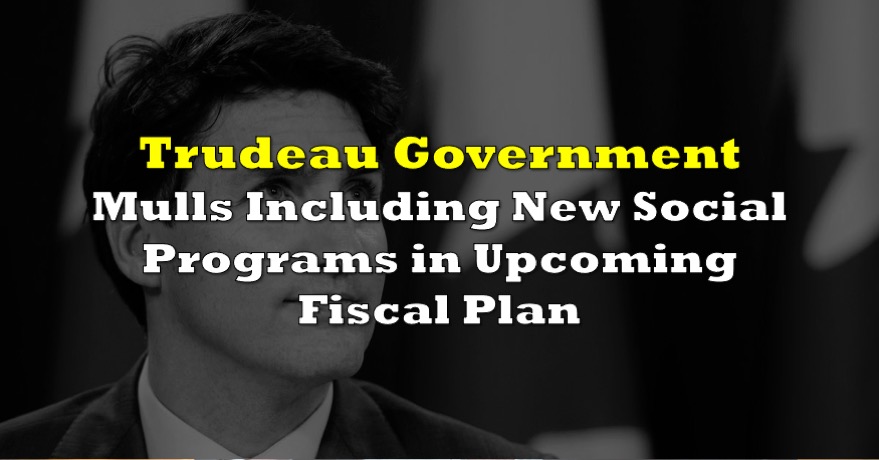

It appears that the Liberal government’s fiscal plan will soon be expanded to include permanent spending unrelated to immediate COVID-19 measures.
According to a senior government official familiar with recent private talks, Finance Minister Chrystia Freeland’s upcoming November fiscal statement will likely include details regarding additional long-term government spending. The new spending plans will likely include prescription drugs, child care, as well as other long-term projects such as green innovation, hydrogen fuel capacity, and transit.
Although the details surrounding the daycare program have yet to be determined, it will likely be offered to provincial governments via a cost-share plan. With respect to pharmacare, the Liberal government has not yet acknowledged the spending extent of the program or its eligibility criteria. Nonetheless, the upcoming November economic statement is anticipated to be divided into two sections: the first part will concentrate on emergency COVID-19 funding and will lack a specific spending cap, while the second portion will focus on post-pandemic growth initiatives and long-term spending.
Albeit the finance department first needs to determine the extent of fiscal room before such spending initiatives can be conducted, the government official noted $20 billion as an example, which would amount to approximately 1% of Canada’s GDP levels. If the latest plans do in fact materialize, then this would be the first time that the Liberal government has attached a price tag to its many spending ambitions. However, Freeland notes that any additional fiscal contributions would come with a guardrail, unlike the spending approach thus far, which has involved bottomless emergency spending in the face of COVID-19.
Back in July, the Liberal government forecast its budget deficit will grow to $343 billion in 2020, which amounts to approximately 16% of total GDP. Since then however, the federal government has announced $40 billion in further spending. Meanwhile, the Department of Finance anticipates the federal government debt levels will reach 49.1% by the end of the year.

Information for this briefing was found via Bloomberg and the Department of Finance. The author has no securities or affiliations related to this organization. Not a recommendation to buy or sell. Always do additional research and consult a professional before purchasing a security. The author holds no licenses.