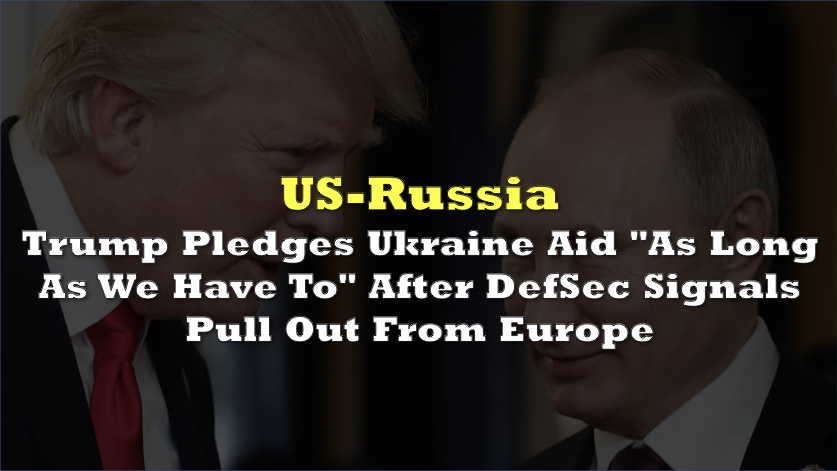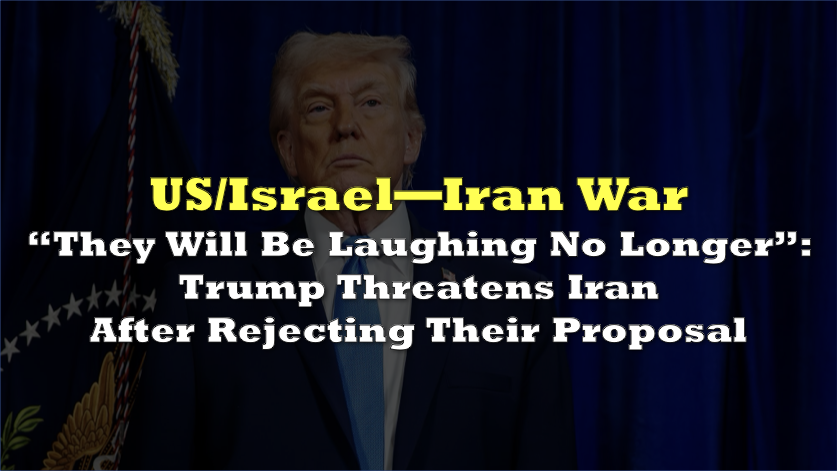

Trump escalated his rejection of Iran’s counterproposal into a warning, accusing Tehran of decades of bad-faith bargaining and signaling that US patience may be running out.
The exchange began with Iran’s response to Washington’s latest proposal to end the conflict. Trump said he had read the reply from Iran’s “so-called ‘Representatives’” and dismissed it as “TOTALLY UNACCEPTABLE,” without releasing the details of Tehran’s offer.
But Trump’s sharper message came in a second post, where he accused Iran of “playing games” with the US for nearly 50 years and warned: “They will be laughing no longer.”
 Sponsored · Altamira Gold Corp.
The post also accused Iran of killing Americans with roadside bombs, suppressing protests, and recently killing 42,000 unarmed protesters.
The immediate pressure point is the Strait of Hormuz, the chokepoint tied to roughly 20% of global oil trade. Blockades by both parties have turned a nuclear and sanctions dispute into a live energy-market risk, with the conflict now in its third month and US efforts focused on restoring shipping access through deadlines and mediators.
Markets treated the rejection as an energy-risk event. Barron’s reported Brent rose 3% to more than $104 per barrel and WTI climbed 3% to about $98, while Dow futures fell 160 points, or 0.3%, and S&P 500 and Nasdaq 100 futures also slipped 0.3%.
The US position centers on reopening shipping lanes and extracting hard nuclear limits, including dismantling nuclear facilities and accepting a 20-year enrichment ban.
Iran’s reported response rejected those terms and instead demanded sanctions relief, asset releases, war reparations, and recognition of its authority over the strait. According to Washington Post reporting, Iran sent its reply through Pakistani mediation, while public details of the response remained limited. The Times reported, citing The Wall Street Journal, that Iran’s response included a ceasefire proposal and limited nuclear concessions, including a temporary suspension of uranium enrichment, but not dismantling its nuclear infrastructure.
The strategic risk is that Trump’s public rejection narrows room for a face-saving compromise while keeping military options in the foreground. The administration has already been using deadlines and intermediaries to pressure Tehran, but Iran’s reported counteroffer suggests it is trying to convert control over Hormuz into bargaining power over sanctions, frozen assets, and nuclear constraints.
For markets, the key issue is not whether talks continue. It is whether shipping risk declines before oil prices build the disruption into fuel, inflation, and growth assumptions. The longer Hormuz remains contested, the more the negotiation becomes an energy shock channel rather than a diplomatic track.
Information for this story was found via the sources and companies mentioned. The author has no securities or affiliations related to the organizations discussed. Not a recommendation to buy or sell. Always do additional research and consult a professional before purchasing a security. The author holds no licenses.