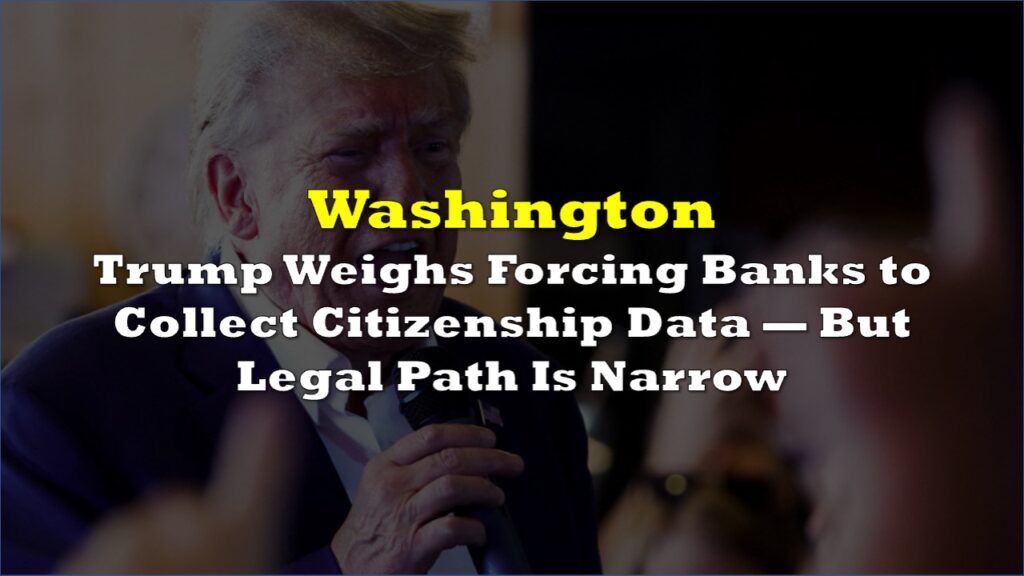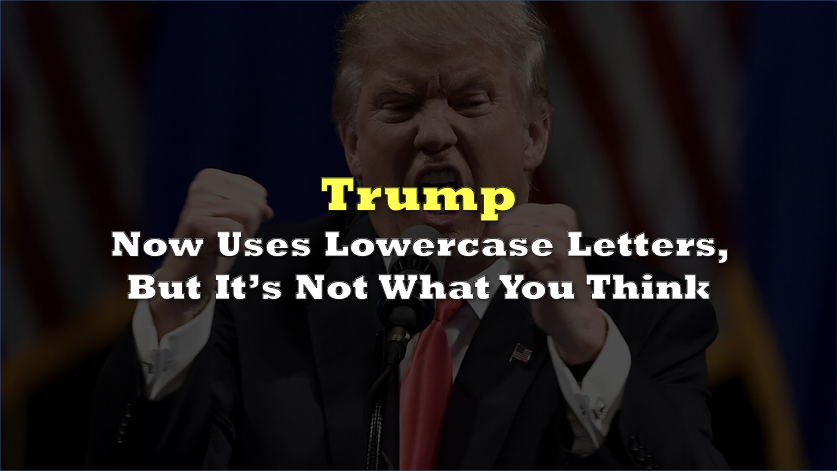

President Donald Trump said he will refer to the “supreme court” in lowercase for a while as “a complete lack of respect” for a supposedly co-equal government branch.
In a Truth Social post, Trump wrote that the court’s ruling on the legality of his tariffs was “ridiculous, dumb, and very internationally divisive.”
But, he also claimed it created a clearer runway for other tools that can be applied “with legal certainty” in a “much more powerful and obnoxious way” than his prior tariff approach.
“The supreme court (will be using lower case letters for a while based on a complete lack of respect!) of the United States accidentally and unwittingly gave me, as President of the United States, far more powers and strength than I had prior to their ridiculous, dumb, and very internationally divisive ruling,” he started.
The post’s central operational claim is a shift from tariffs to “Licenses.”
“I can use Licenses to do absolutely ‘terrible’ things to foreign countries,” Trump claimed, particularly those he says have been “RIPPING US OFF for many decades.”
“The supreme court (will be using lower case letters for a while based on a complete lack of respect!) of the United States…” pic.twitter.com/S2Iw8oYv74
— Annmarie Hordern (@annmarie) February 23, 2026
Trump asserted that, according to the ruling, he cannot “charge them a License fee,” then argued that “ALL LICENSES CHARGE FEES” and framed the inability to charge a fee as illogical.
“The opinion doesn’t explain that, but I know the answer,” he said.
Trump’s “licenses” comment is potentially him pointing at the sanctions-style playbook: under the IEEPA, the President can regulate or prohibit certain cross-border transactions “by means of instructions, licenses, or otherwise,” and in practice Treasury’s OFAC uses “licenses” as permissions to do transactions that would otherwise be banned.
In other words, he’s implying he can flip trade from “allowed by default” to “allowed only if licensed,” which can feel like an embargo button even if it’s implemented as transaction restrictions and authorizations.
He can use licensing in that sanctions sense, but the “license fee” workaround is not automatically real. OFAC licenses are defined as authorizations, not “you pay a fee to get a license,” so “ALL LICENSES CHARGE FEES” is false as a general rule. The Supreme Court ruling also held that IEEPA does not authorize the president to impose tariffs, so a “license fee” that functions like a tariff would likely draw the same legal fire.
Further down, Trump then claimed a broader opening remains intact, saying the court has also approved “all other tariffs” and said these can be used more forcefully than before.
The Supreme Court did not “approve all other tariffs” but it ruled narrowly that IEEPA does not authorize tariffs, and it repeatedly limited its holding to the question presented. Simply, the tariffs imposed under other statutes with their own procedures and limits were not decided, so they remain legally available to the extent those separate authorities allow them.
Regarding the decision, Trump labeled the court incompetent, said it did a great job for the wrong people, and wrote that they should be ashamed of themselves, while carving out an exception for “the Great Three,” implying the three justices he views favorably who also voted against the ruling.
“The next thing you know they will rule in favor of China and others,” Trump said.
Trump wrote that China and others are “making an absolute fortune on Birthright Citizenship,” and asserted the 14th Amendment “was NOT written to take care of the ‘babies of slaves’.”
“But this supreme court will find a way to come to the wrong conclusion, one that again will make China, and various other Nations, happy and rich. Let our supreme court keep making decisions that are so bad and deleterious to the future of our Nation – I have a job to do,” Trump ended.
Earlier, Trump also threatened the possibility of a trade embargo after the so-called “deeply disappointing” ruling of the Supreme Court.
Information for this story was found via the sources and companies mentioned. The author has no securities or affiliations related to the organizations discussed. Not a recommendation to buy or sell. Always do additional research and consult a professional before purchasing a security. The author holds no licenses.