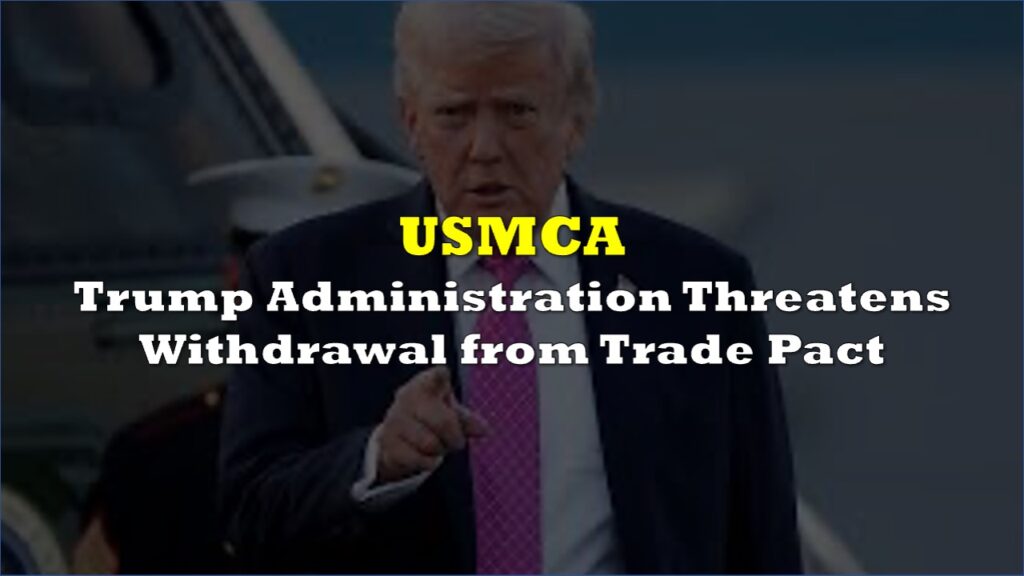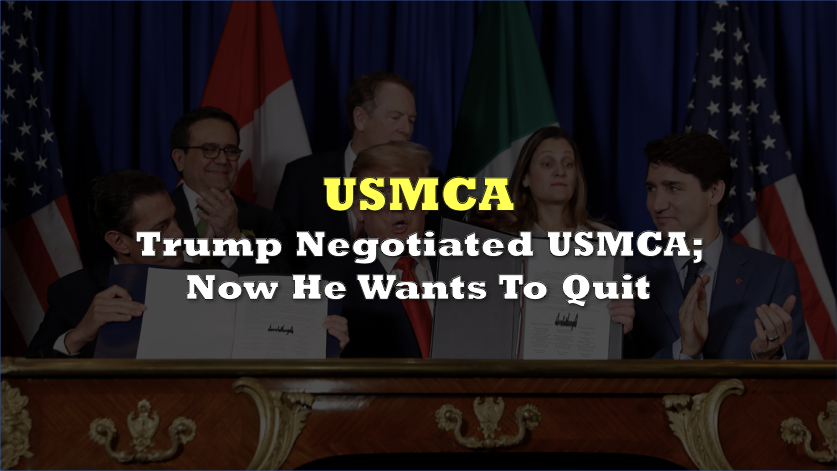

President Donald Trump is privately asking aides why he should not withdraw from the US-Mexico-Canada Agreement, a posture that adds a new cliff-edge to renegotiations ahead of the pact’s mandatory July 1, 2026 joint review.
USMCA’s review-and-extension design requires all three partners to confirm continuation at the joint review to extend the agreement for another 16 years. If they do not, the pact does not immediately end, but shifts into annual reviews for up to 10 years until a scheduled July 1, 2036 termination. Any party can trigger a withdrawal by providing six months notice.
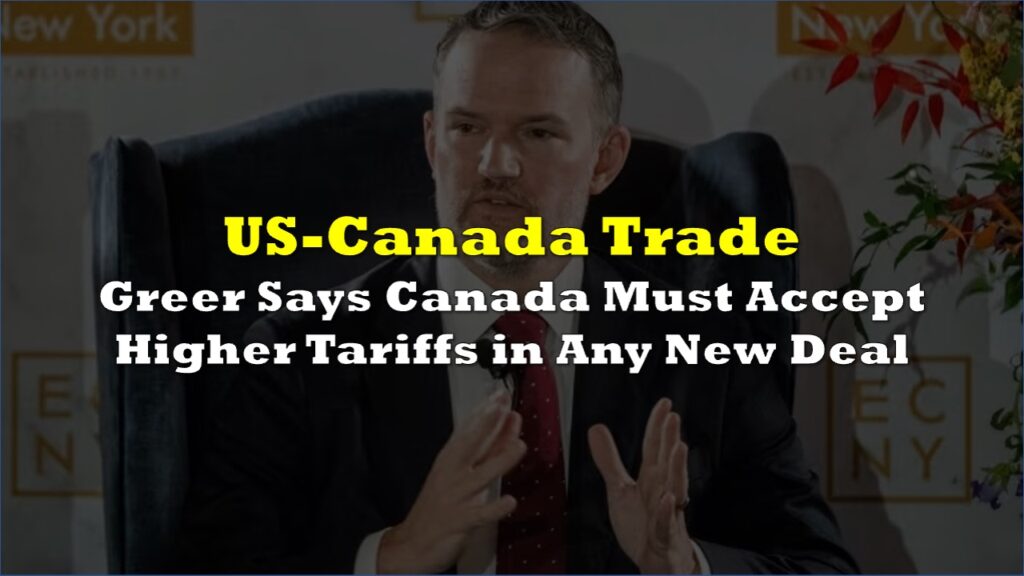
An official in US Trade Representative Jamieson Greer’s office said a rubber-stamp of 2019 terms is not in the US national interest and the administration is keeping options open, with potential focus areas including stronger rules of origin for key industrial goods, enhanced critical minerals collaboration, worker protections, and action against dumping.
Greer has publicly described the process as bilateral and separate, saying Mexico has been “quite pragmatic” while Canada is “more challenging,” and he has highlighted that US-Canada trade ties are more strained.
Earlier this year, Trump called USMCA “irrelevant” during a Ford visit near Detroit while arguing the US does not need Canadian or Mexican vehicle production, but he previously described the agreement as “good” and “great for all countries” while noting the 2026 renegotiation could “adjust it or terminate it.”
The Trump administration has already signaled earlier that it may withdraw from the trilateral agreement, threatening the trade deal Trump himself negotiated during his first term.
“The president’s view is he only wants deals that are a good deal,” Greer said. “The reason why we built a review period into USMCA was in case we needed to revise it, review it or exit it.”
The trade relationship covered by the pact totals roughly $2 trillion in goods and services, and the report warned that even a threat of US departure could stoke investor and leader uncertainty.
In addition, most goods traded under USMCA are exempt from Trump’s global tariffs, with notable exceptions including automobiles, implying that an exit would expose more Canadian and Mexican exports to higher US duties and potentially invite retaliation.
Trump’s pressure campaign has included threats of tariffs as high as 100% on Canadian goods if Canada brokers a trade deal with China, 50% levies on aircraft from Canada tied to Gulfstream approvals, and broader vows of duties on products from Mexico and others that ship oil to Cuba.
The Canada-US dispute over the Gordie Howe International Bridge is explicitly in the mix, with Prime Minister Mark Carney saying the issue will be settled after what he called a “positive” conversation with Trump.
Information for this briefing was found via Bloomberg and the sources mentioned. The author has no securities or affiliations related to this organization. Not a recommendation to buy or sell. Always do additional research and consult a professional before purchasing a security. The author holds no licenses.