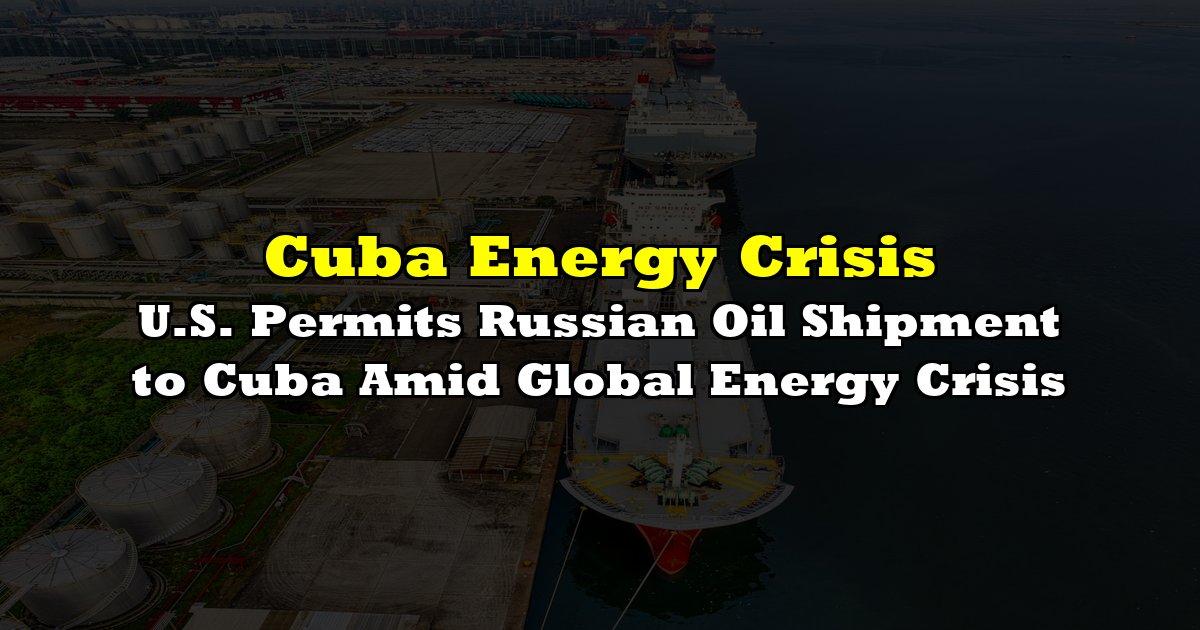

The United States has authorized a Russian oil tanker, the Anatoly Kolodkin, to deliver between 650,000 and 730,000 barrels of crude to Cuba, marking a rare breach in the de facto blockade of fuel shipments to the island nation. This tactical shift signals Washington’s attempt to balance geopolitical pressures with the urgent need to stabilize global energy markets rattled by the ongoing Iran war.
Cuba has endured severe fuel shortages for three months, with no oil imports, leading to strict gasoline rationing and widespread power outages that have strained its economy. The arrival of this shipment offers a temporary reprieve for an island under immense pressure, providing enough crude to ease immediate humanitarian and stability concerns. The decision to allow the tanker, which departed from Russia’s Primorsk port, comes as a critical lifeline for Havana.
BREAKING: U.S. lifts restrictions allowing Russian oil tanker to deliver fuel to Cuba, ending months-long effective blockade of critical energy supplies.
— The Dive Feed (@TheDeepDiveFeed) March 29, 2026
Wider global energy disruptions, particularly from military strikes in the Middle East involving the U.S. and Israel, have tightened oil supplies and forced policymakers to rethink rigid sanctions frameworks. The Iran conflict has constricted Middle Eastern output, pushing Washington to temporarily relax certain restrictions on Russian oil flows. This pragmatic recalibration aims to prevent further strain on already volatile supply chains, even as it introduces a layer of policy unpredictability for energy markets.
The move is less about Cuba’s specific needs and more about a broader trend of situational flexibility in sanctions enforcement. As supply shocks intensify, governments are increasingly adjusting restrictions to maintain energy availability while navigating strategic objectives. This development suggests that energy security is beginning to take precedence over unwavering geopolitical stances in certain contexts.
Cuba’s economic hardship, exacerbated by the lack of fuel, has been a mounting concern in the Caribbean, with regional stability risks looming large. The approved shipment, while significant at up to 730,000 barrels, is not a permanent fix but a stopgap measure amid a complex web of international tensions and market dynamics. For now, the tanker’s journey stands as a concrete step toward alleviating Cuba’s immediate energy crisis, with the delivery expected to make a measurable impact on fuel availability in the coming weeks.
Information for this story was found via the sources and companies mentioned. The author has no securities or affiliations related to the organizations discussed. Not a recommendation to buy or sell. Always do additional research and consult a professional before purchasing a security. The author holds no licenses.