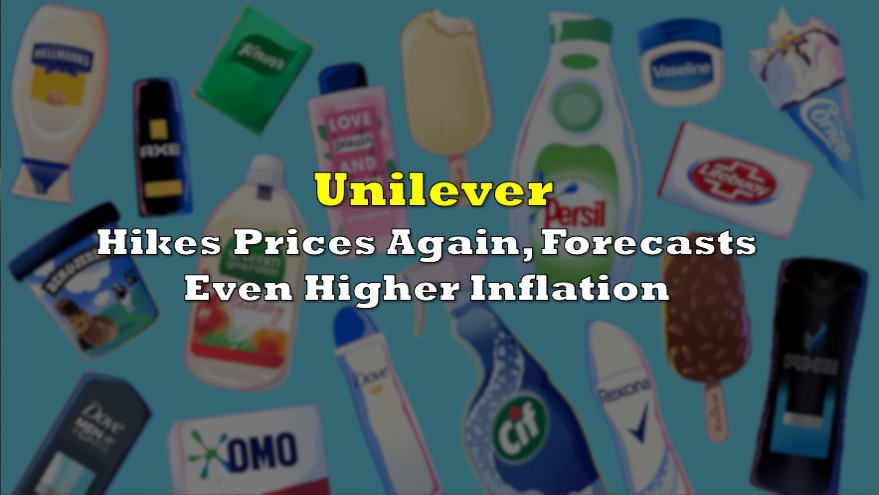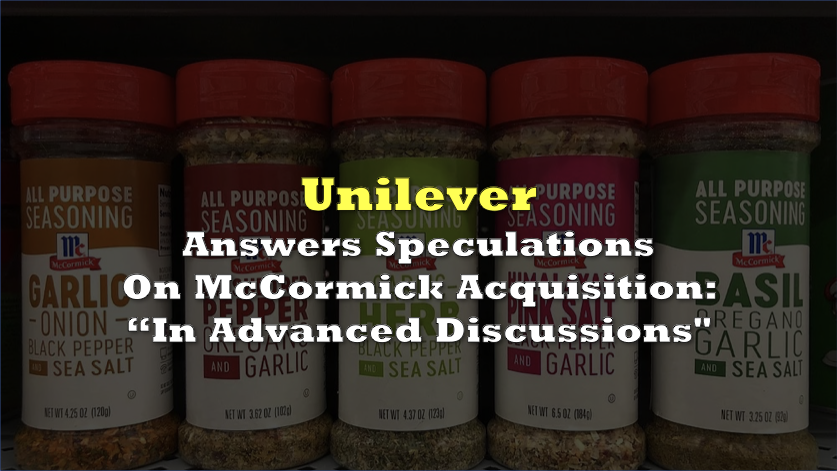

Food giant Unilever (NYSE: UL) said it is in advanced discussions with McCormick & Company on a potential transaction involving most of its Foods business, but the disclosed structure shows this is not a straightforward sale: the current outline includes about $15.7 billion of upfront cash, majority consideration in McCormick equity, and post-closing ownership that would leave Unilever and its shareholders with 65% of the combined company.
The announcement followed an earlier statement and acknowledged recent media speculation around a strategic transaction involving elements of Unilever’s Foods business. Unilever said work remains ongoing and that an agreement could be concluded on Tuesday, though it added there is no certainty that a transaction will be agreed.
Based on the current framework, the transaction would combine Unilever Foods, excluding certain parts of the portfolio including its business in India, with McCormick. Unilever said the structure under consideration is a Reverse Morris Trust, intended to be tax-free for US federal income tax purposes for Unilever and its shareholders. Full terms would be announced only if a deal is agreed.
The deal seems to include an upfront cash component of approximately $15.7 billion, but the majority of the consideration is in McCormick equity.
It is worth noting that if Unilever and its shareholders are expected to own 65% of the combined company after completion, then Unilever is not fully exiting the economics of the Foods business. Instead, it would be exchanging full ownership of a large internal unit for majority ownership of a combined food platform alongside McCormick shareholders, plus a large upfront cash payment.
Currently, McCormick’s business generates about half of Unilever’s food unit. McCormick is best known for Old Bay, French’s, and Frank’s RedHot, while the Unilever side of the proposed combination includes much larger food assets.
Information for this story was found via the sources and companies mentioned. The author has no securities or affiliations related to the organizations discussed. Not a recommendation to buy or sell. Always do additional research and consult a professional before purchasing a security. The author holds no licenses.